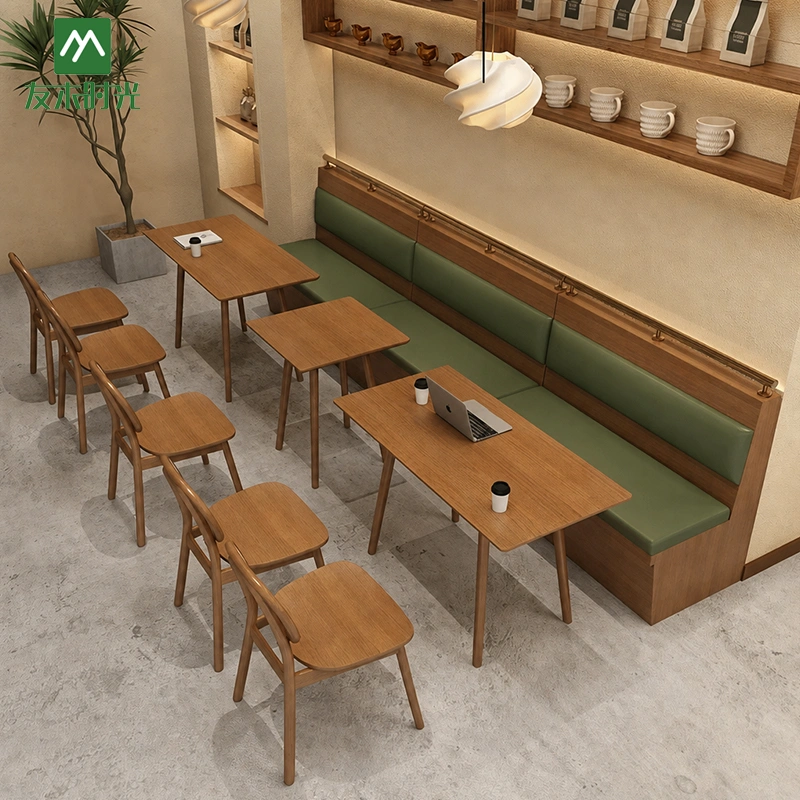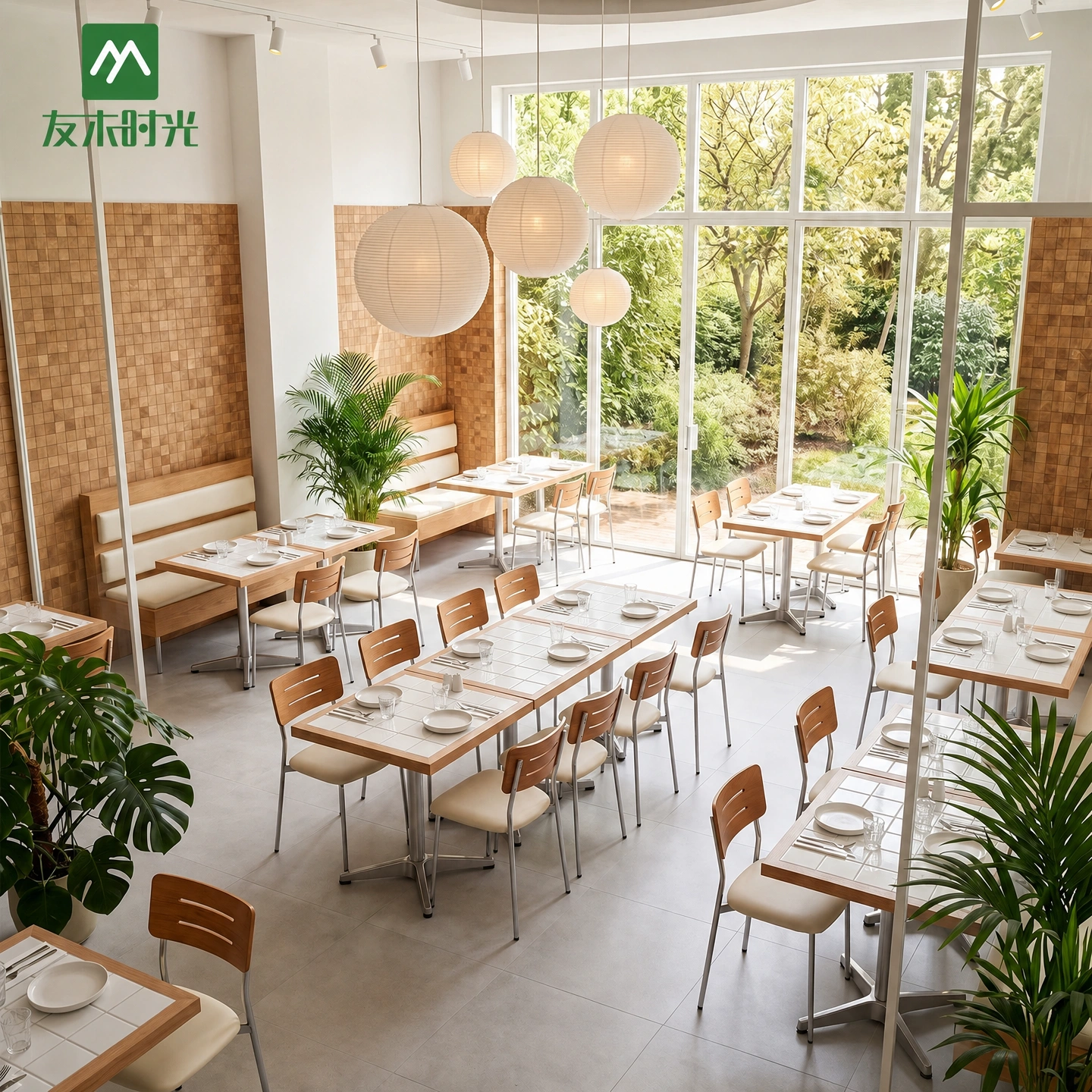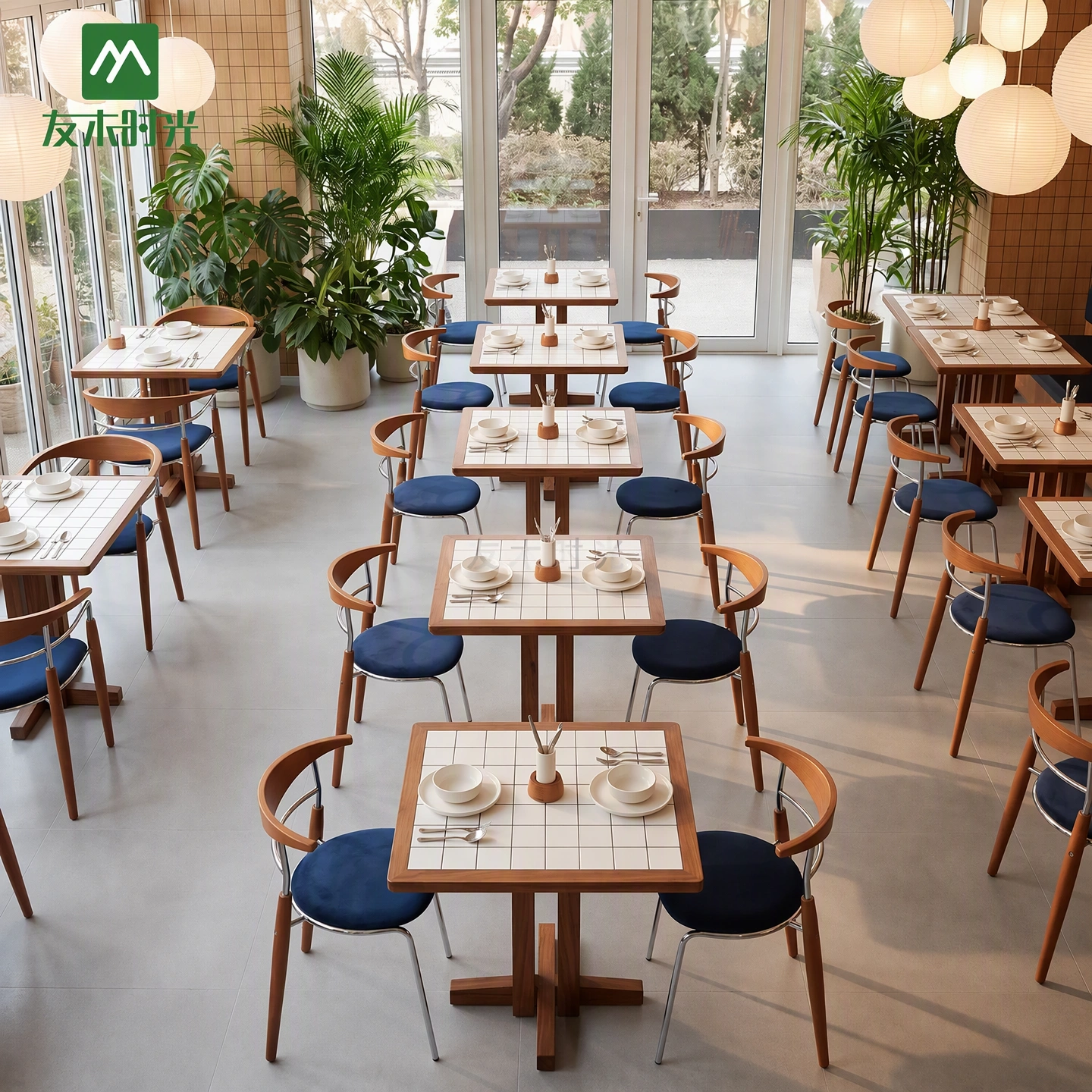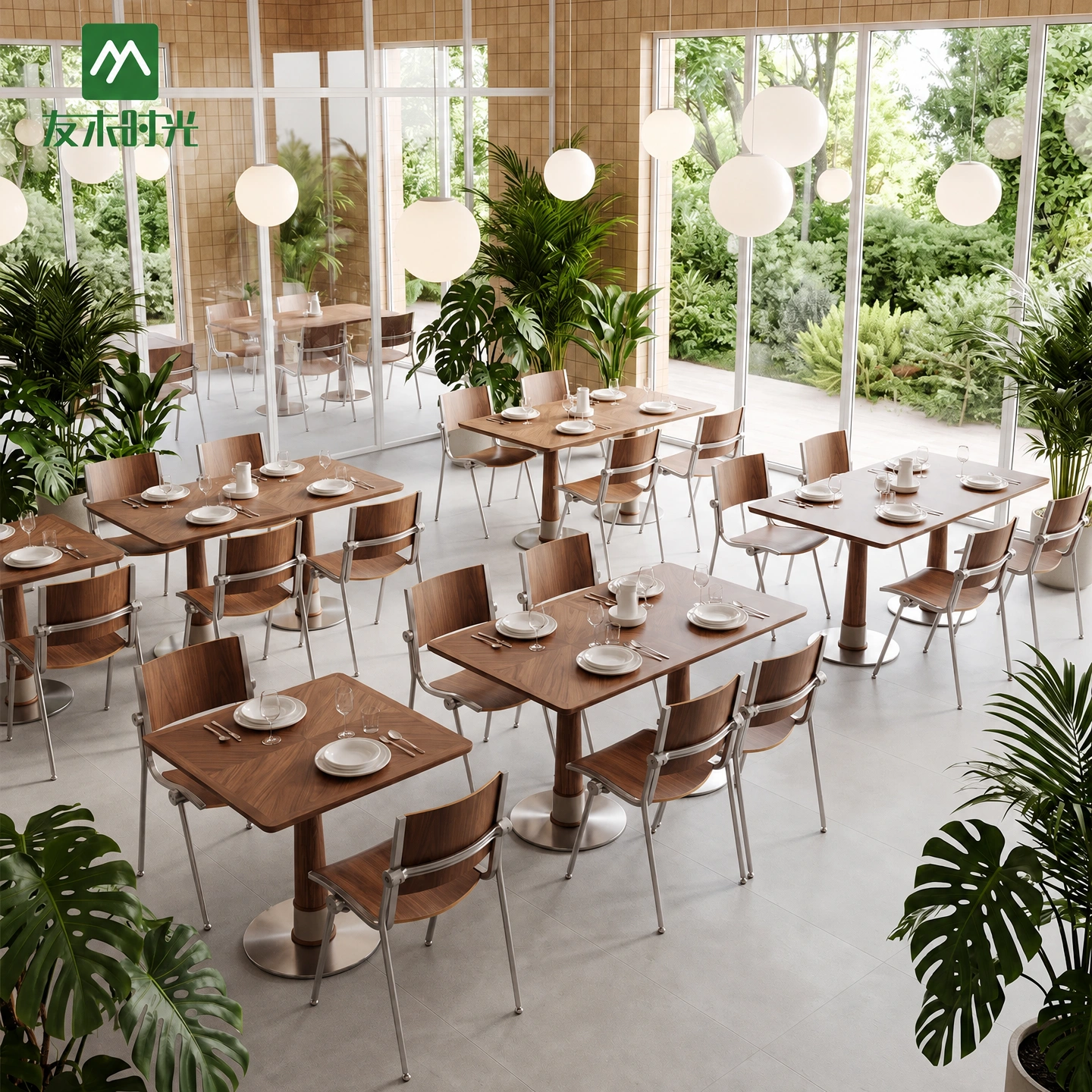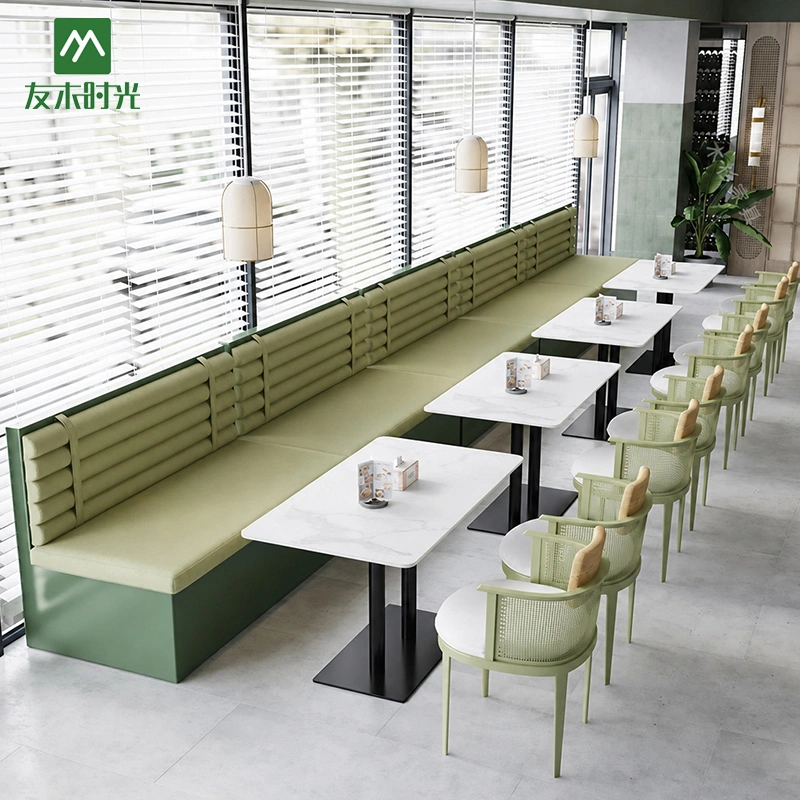
Compared to a house, commercial settings have harsher conditions. Commercial furnishings such as those used in a cafe will endure much more use due to the constantly high turnover in seating, the need for continual cleaning due to spills, and higher liability exposure. Commercial cafe furniture is built for durability, serviceability, and safety.
Here are some of the practical checkpoints summarized by us, Youmu Shiguang Furniture, a leading commercial furniture manufacturer, to validate product claims and make procurement decisions you can defend.
Material Quality: The First Indicator of Commercial Grade
Materials determine the longevity of the commercial cafe furniture. Inspect frames, tops, and upholstery closely.
- Frames: Prefer steel (powder-coated or stainless) or structural aluminum over thin-gauge tubular metal. For wood, look for solid hardwood or multi-layer plywood cores rather than particleboard.
- Tabletops: HPL, compact laminate, engineered wood, or sealed solid wood are standard commercial choices; avoid consumer-grade melamine.
- Upholstery: Commercial fabrics (Martindale figures) or coated leathers that resist staining and repeated cleaning are essential.
Ask suppliers for material specifications (e.g., tube wall thickness, plywood grade, fabric Martindale rating) and require them in the RFP so bids are comparable.
Structural Strength & Engineering
Aesthetic design must be backed by sound engineering.
- Joints and welds: Check for welded gussets, reinforced corners, and hidden steel plates in load points. Bolted connections should use standard fasteners (M8/M10) for serviceability.
- Anti-wobble features: Cross-bracing and correct leg geometry prevent wobble under lateral loads.
- Table stability: Bases should be weighted and designed to prevent tipping, especially in two-top or pedestal-table configurations.
Demand inspection photos of joinery and ask for construction drawings for larger contracts.

Durability Tests & Verified Performance
Don’t accept untested claims — require objective proof in a commercial cafe furniture RFQ.
- Abrasion: For upholstery, look for Martindale ≥30,000–40,000 rubs, depending on expected traffic.
- Corrosion resistance: For metal outdoors or coastal sites, insist on salt-spray (ASTM B117) reports and passivation certificates for stainless steel.
- UV resistance: Outdoor fabrics and polymers should undergo accelerated weathering tests (Xenon or UV chamber).
- Fatigue and load tests: EN, ASTM, or BIFMA test reports for seating and tables show how products perform over time.
Third-party lab reports or accredited factory test results are negotiable deliverables in B2B contracts.
Comfort, Ergonomics & the Cozy Factor
Comfort is not soft vs hard — it’s a dedicated, measured, and engineered design in commercial cafe furniture.
- Seat geometry: Define seat height, depth, and back angle ranges in your spec. Common cafe standards: seat height 43–48 cm; seat depth 40–50 cm.
- Foam & springing: Use HR foam (higher density) and resilient webbing or sinuous springs for longevity.
- Cozy atmosphere: Warm materials, tactile upholstery, and rounded forms make a space feel inviting. The “cozy” effect increases dwell time and repeat visits — important metrics for café economics.
Include sample approvals in your procurement process so decision-makers can test comfort, not just review photos.
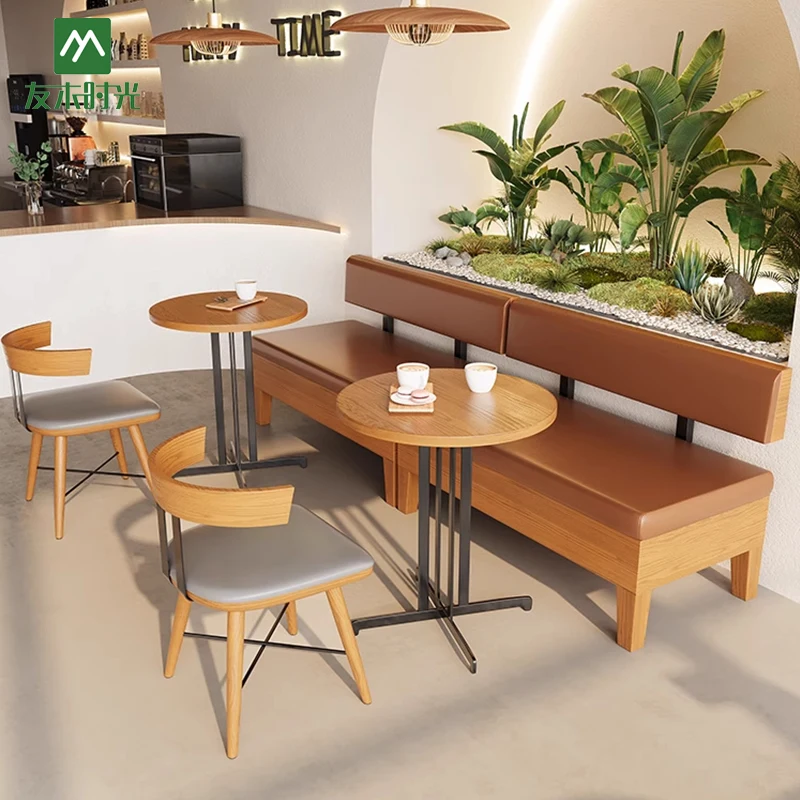
Design Consistency & Brand Compatibility
For multi-location operators and franchises, repeatability in commercial cafe furniture matters.
- Color and finish matching: Require color codes and finish samples; batch-to-batch variation must be controlled.
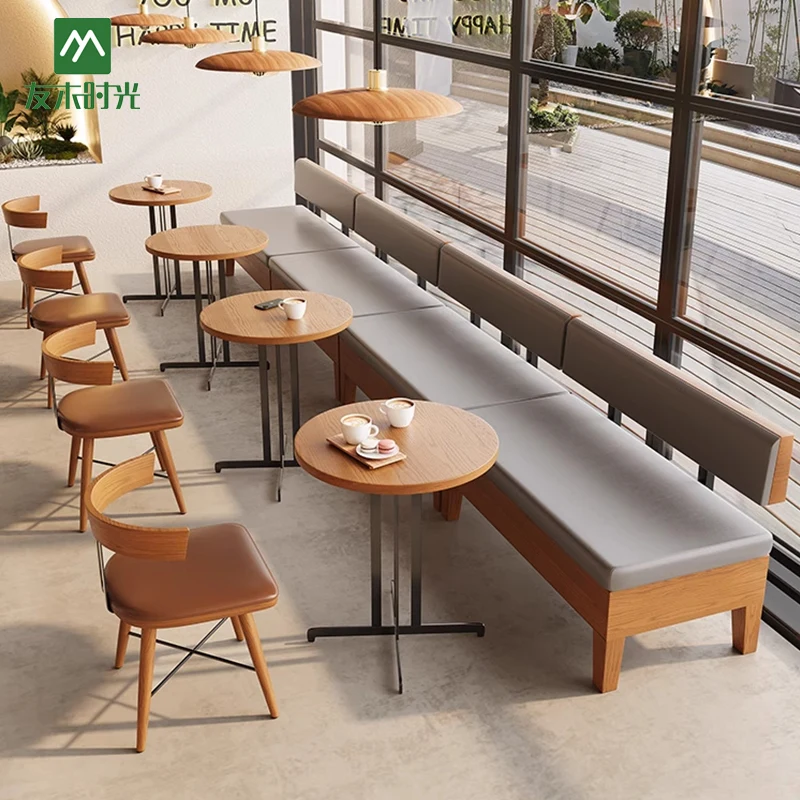
- Modular styling: Choose families with compatible pieces (chairs, stools, banquettes, tables) that scale across outlet sizes.
- Local identity: Ensure material and finish choices support your brand story while meeting commercial demands.
Contract clauses that mandate sample sign-off and a maximum color delta (ΔE) on repeat production are common for rollouts.
Maintainability & Life-Cycle Practicality
Easily serviced furniture reduces downtime and expense.
- Replaceable parts: Removable cushion covers, swappable glides, and standardized bolts let store maintenance teams repair rather than replace.
- Cleaning resistance: Materials must tolerate commercial cleaning agents and repeated laundering for covers.
- Service documentation: A clear maintenance manual with cleaning schedules and spare parts lists should accompany bulk deliveries.
Require a spare-parts kit and documented lead times as part of supplier commitments.
Commercial-Grade Safety Requirements
Safety reduces liability and protects guests.
- Anti-tip geometry: Chairs and tables should have stable footprints and tested anti-tip characteristics.
- Rounded edges and corner protection: Minimize injury risk in busy service paths.
- Fire and chemical compliance: Ensure upholstery meets local fire retardancy requirements where applicable.
Include a safety checklist tied to shipment release and site acceptance.
Supplier Reliability & Professional Capabilities
Product quality is only as good as supplier execution.
- Factory capability: Verify production capacity, quality-control routines, and prior B2B projects (hotel or café case studies).
- Testing and traceability: Suppliers who perform in-house pre-checks and can supply batch test certificates are preferable.
- MOQ, lead times, and support: Check the supplier’s sample policy, minimum order quantities, and spare-parts response SLAs.
Prefer manufacturers over brokers for complex commercial projects — they own quality control and can adjust production.
Total Cost of Ownership: Beyond Unit Price
Unit price is just the start.
- TCO model: Include purchase price, maintenance, replacement frequency, and downtime cost. A slightly higher upfront spend often lowers TCO over 3–5 years.
- Warranty and service: Strong warranty terms and accessible spares materially reduce lifecycle cost.
- Operational impact: Consider how furniture choice affects turnover, cleaning time, and customer experience.
Ask vendors to provide a simple 3–5 year TCO projection with quotes.
Quick Evaluation Checklist for Commercial Cafe Furniture
- Material list with gauges/grades
- Weld/connection detail photos or drawings
- Third-party test reports (Martindale, BIFMA/EN, ASTM)
- Sample sign-off for comfort and color match
- Replaceable parts list and spare parts lead times
- Warranty length and SLA for repairs
- TCO projection (3–5 years) included in quote
Conclusion
Knowing whether cafe furniture is fit for commercial use means moving beyond looks. A defensible procurement decision combines specified material quality, proven structural engineering, verified test performance, measured comfort, maintainability, clear safety evidence, reliable suppliers, and a realistic TCO assessment.
About Youmu Shiguang Furniture
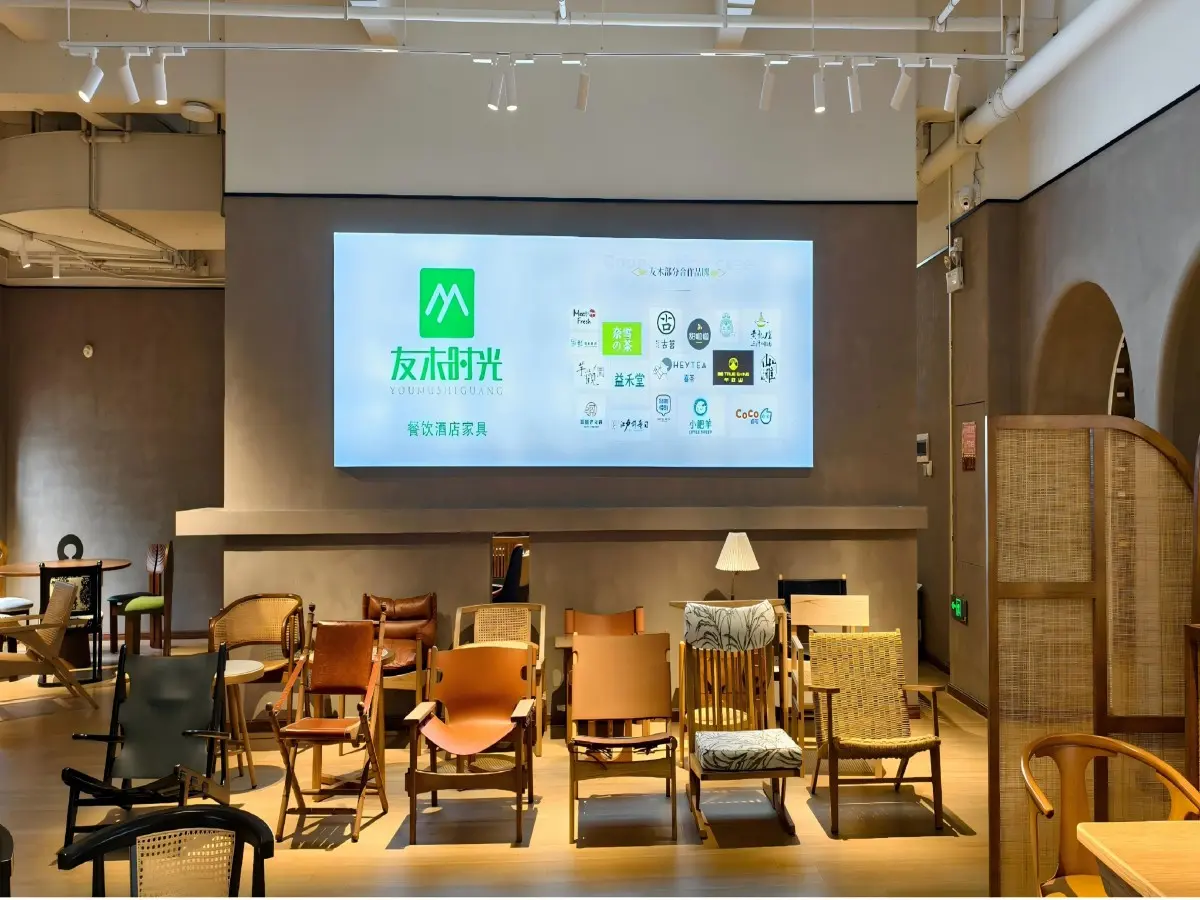
Youmu Shiguang Furniture is a leading commercial furniture manufacturer known for durable craftsmanship and modern, business-ready designs. We offer wholesale cafe furniture supply and develop custom commercial furniture solution packages to match the needs of cafés, restaurants, hotels, and public spaces.
Our factory operates under internationally recognized production standards, ensuring stable quality and reliable delivery. Backed by years of manufacturing experience, we create furniture that aligns with market trends and performs well in high-traffic environments—earning us consistent praise from customers worldwide.
As your trusted supplier, Youmu Shiguang Furniture is committed to quality, flexibility, and long-term partnership.