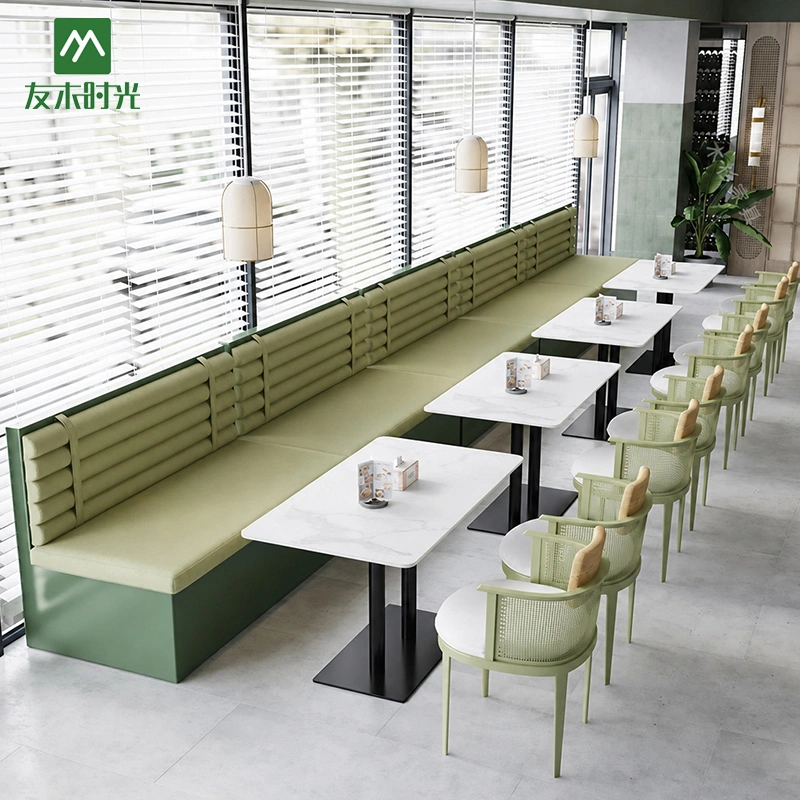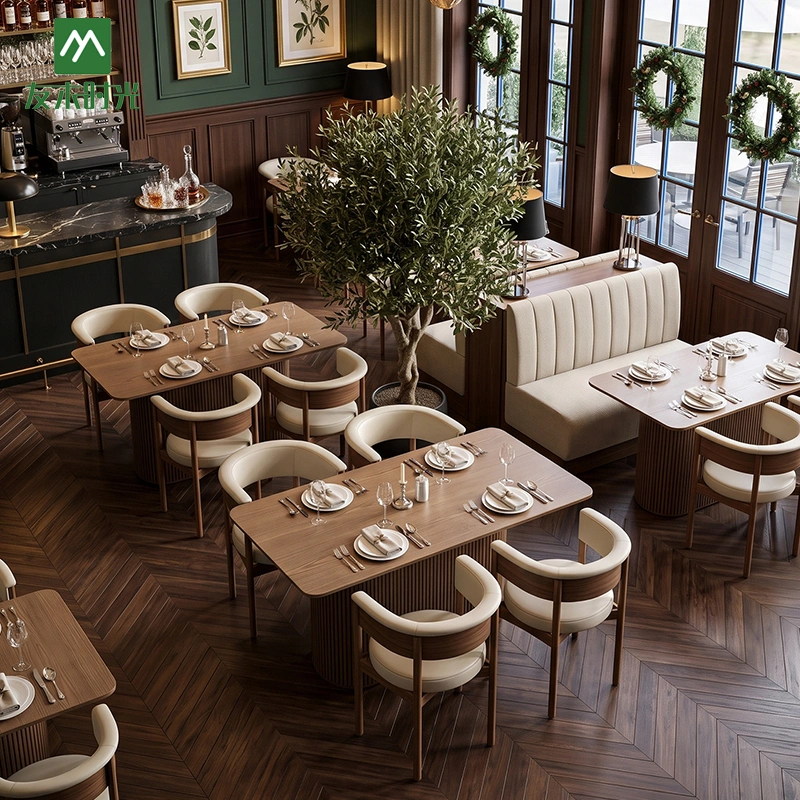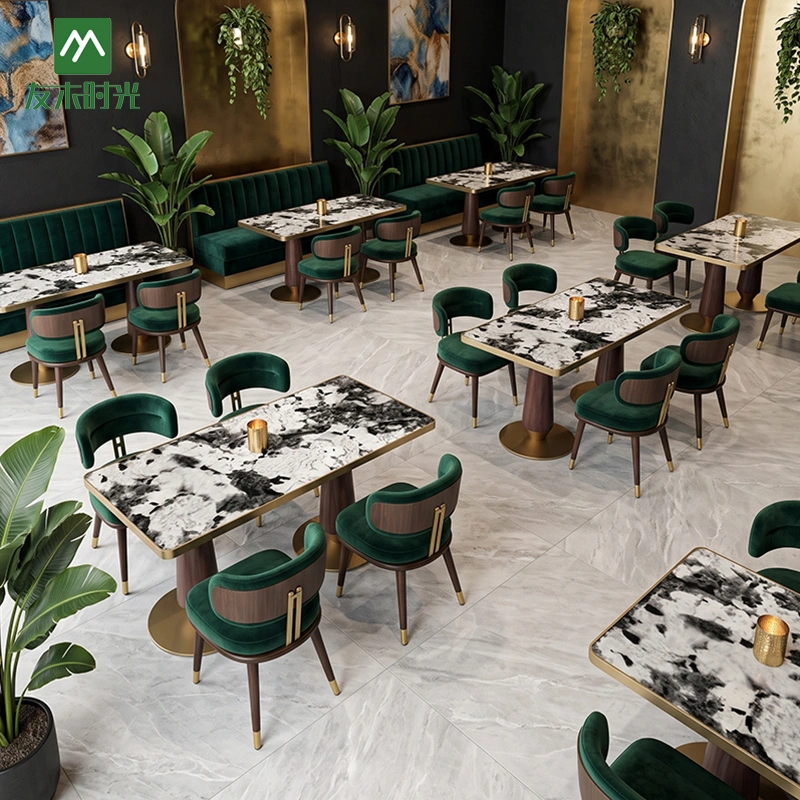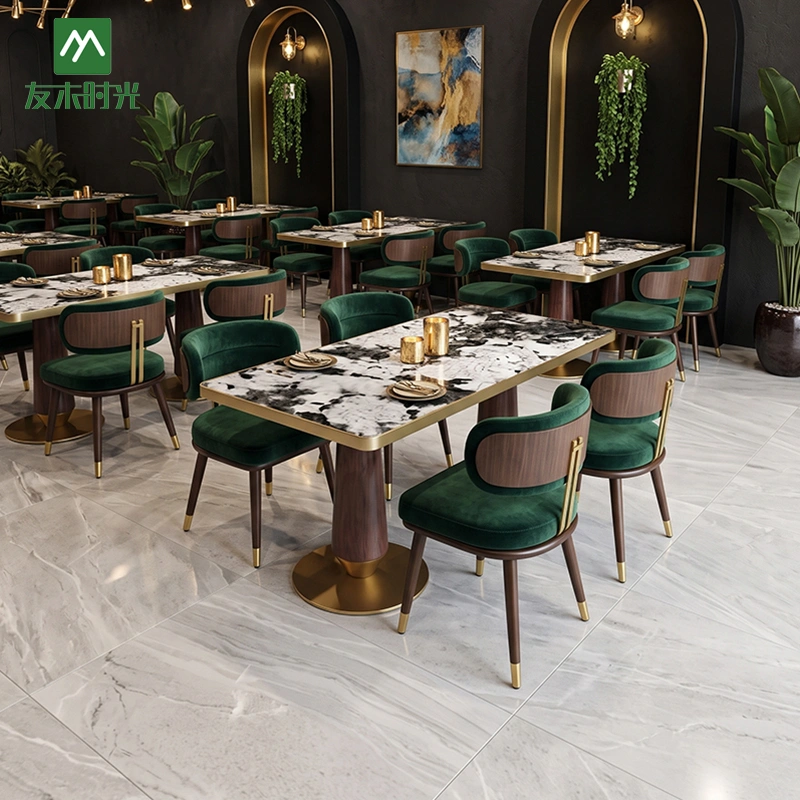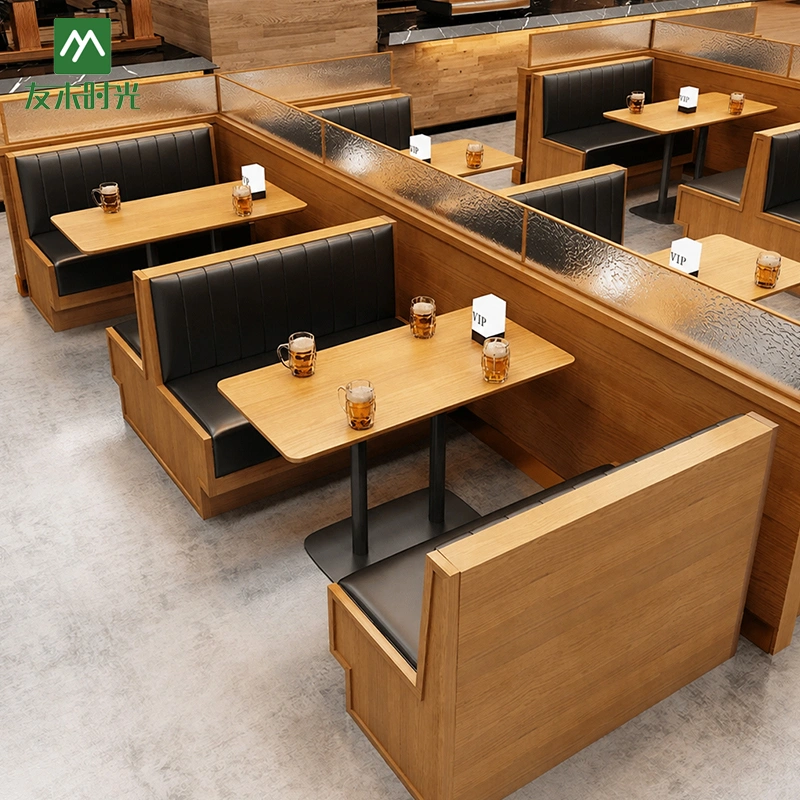
When restaurant owners prepare for opening, faced with a long budget list, furniture procurement often becomes the area where they repeatedly try to cut costs.
As a leading restaurant furniture manufacturer, Youmu Shiguang understands this mindset, but today, we want to present a counterintuitive perspective to help owners make their calculations for commercial furniture, especially restaurant furniture.
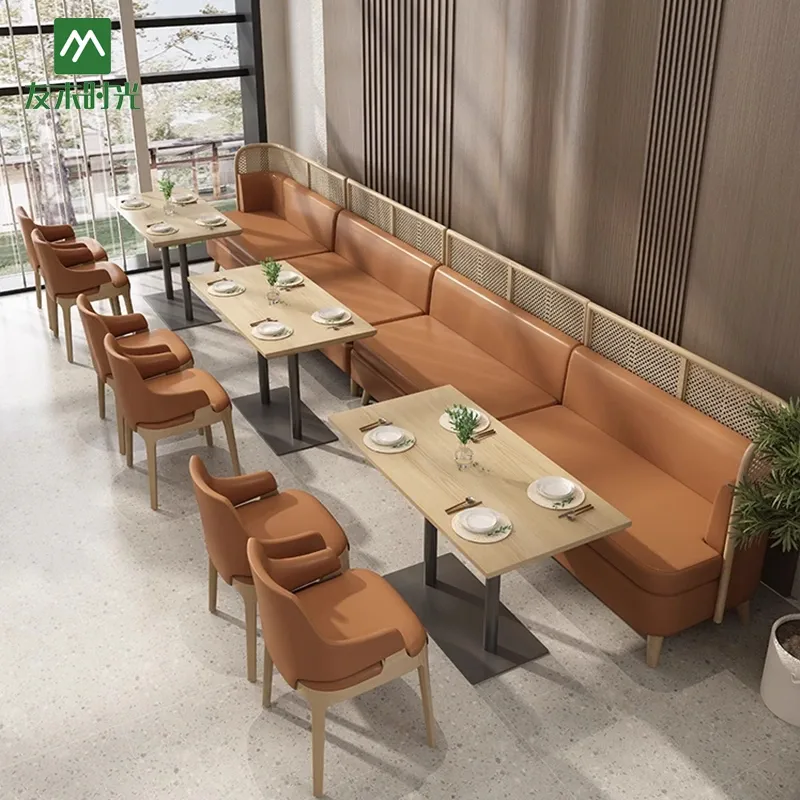
The Short-Term Cost Mindset in Restaurant Furniture Procurement
Purely pursuing “low prices” in restaurant furniture is perhaps the most typical “scarcity mindset” in business, which always mentions that there are not enough resources for business usage. And the long-term losses it causes are far more expensive than the initial investment saved.
This is not an exaggeration, but an economic calculation that most people get wrong.
The First Calculation: Explicit Costs – Repair, Replacement, and Business Interruption Losses
What’s the difference between a cheap restaurant dining chair costing 200 yuan and a professional commercial chair costing 600 yuan?
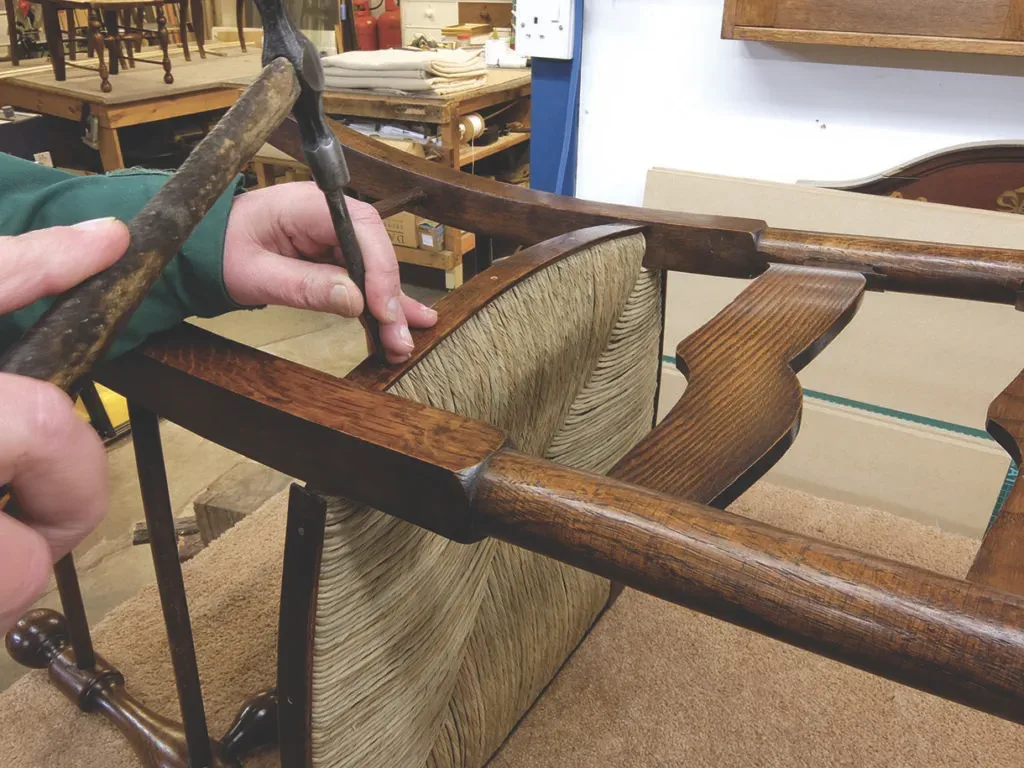
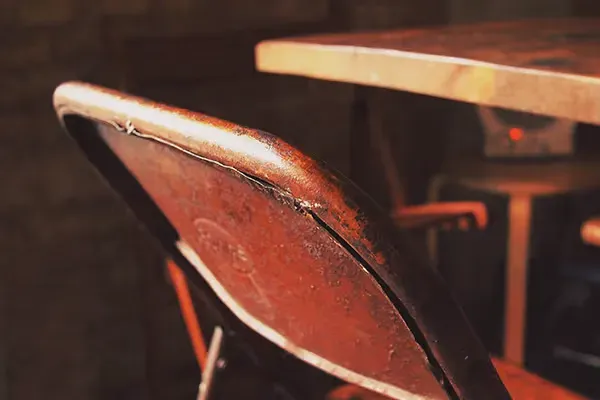
Cheap restaurant chairs often compromise significantly on structure (such as flimsy frames, simple screw connections), materials (such as low-density foam, inferior fabric), and craftsmanship. Everything may seem fine in the initial stages of operation, but after just 3-6 months of high-frequency use, dragging, and cleaning, problems begin to surface: chairs start to wobble and make noise, the foam collapses significantly, and the fabric pills or tears.
This leads to continuous repair costs, premature replacement costs, and, most importantly, reduced seating capacity, customer complaints, and even temporary closures due to repairs or waiting for new furniture. This constantly recurring “subsequent bill” will quickly swallow the money you initially saved and bring endless hassles.
The Second Calculation: Implicit Costs – Damaged Experience, Lost Efficiency, and Brand Damage
This is more fatal than explicit costs, yet it’s the easiest to overlook.
The invisible ceiling on customer experience and average spending:
Flimsy, wobbly chairs and sagging booths convey a subconscious signal of “discomfort, unprofessionalism, and cheapness.” Customers will unconsciously reduce their stay time and find it harder to accept your brand’s high-value positioning, directly limiting the potential for increasing average spending per customer.
As the founder of Flos, a top Italian lighting brand, said, “True design is valuable because it stands the test of time and becomes a part of life.” The same is true for restaurant furniture; it should be an integral part of the brand’s value, not a consumable item.
Continuous leakage of operational efficiency:
Heavy and difficult-to-move tables and chairs double the time required for table turnover and cleaning; unreasonable dimensions and layouts waste valuable operating space; and easily damaged furniture leads to frequent repairs. These all silently increase labor costs and reduce efficiency per square meter and per employee.
A chronic poison to brand equity:
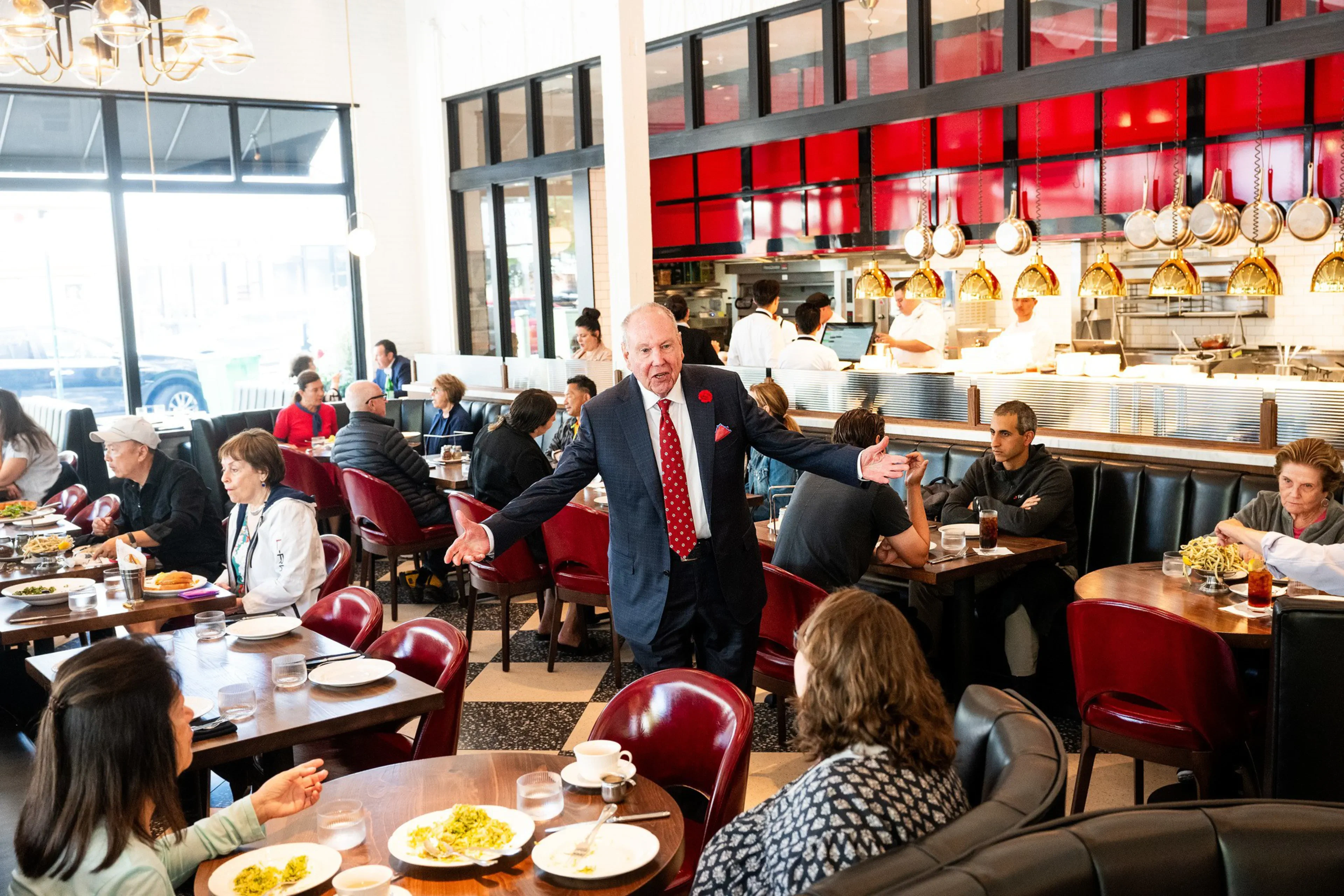
In the social media era, the restaurant environment is a core expression of the brand, and it is mainly conveyed by the restaurant furniture. Outdated, damaged, and low-quality furniture will ruin all marketing efforts, making “Instagrammable” moments impossible. It silently signals your fatigue and weakness to the market, damaging your hard-earned brand reputation—a long-term and difficult-to-reverse damage.
True “Abundance Mindset”: Calculating the Total Cost of Ownership
Business owners with a long-term perspective calculate a different kind of cost: “total cost of ownership.”
They pay a higher unit price for a set of professional commercial furniture, but what they are actually buying is:
- Longer service life: 5-8 years or even longer of stable service.
- Lower annual cost: Spreading the total price over years and days, the actual cost is far lower than frequently replacing cheap items.
- Zero-risk stable experience: Eliminating customer complaints and operational disruptions caused by furniture problems.
- Continuous asset appreciation: High-quality furniture, as a spatial asset, continuously adds value to the brand image and customer experience, and can even become an iconic memory point for the brand.
This is consistent with a core insight in business: “Price is what you pay, value is what you get.” In the case of restaurant furniture, the price you pay buys the “value of continuously and stably providing comfort, safety, and aesthetics during business hours.”
Conclusion
Choosing commercial furniture is not a question of spending more, but of spending wisely. When restaurant owners move beyond short-term cost-cutting and evaluate restaurant furniture through total cost of ownership, the real economics become clear. Durable, well-designed furniture protects customer experience, operational efficiency, and brand value over the years of use. In the long run, investing in professional-grade furniture is not an expense—it is a strategic asset that supports sustainable growth.
The Role of Youmu Shiguang Furniture

As a professional restaurant furniture manufacturer, we understand that every investment you make must generate a return. Therefore, we strongly discourage unnecessary extravagance and are committed to providing custom commercial furniture solutions that are “optimized based on total lifecycle costs”:
- ✅Commercial-grade design and materials: All products are specifically designed for the high-frequency, heavy-duty, and easily soiled environment of the catering industry. From structural mechanics to surface coatings, everything undergoes rigorous testing.
- ✅Modularity and maintainability: Supports partial replacement and repair, significantly reducing long-term maintenance costs. Like high-end customization, “true customization begins with understanding the unique needs of every detail.”
- ✅Value-driven design: Making furniture an engine for improving efficiency and shaping brand image, rather than just a container.