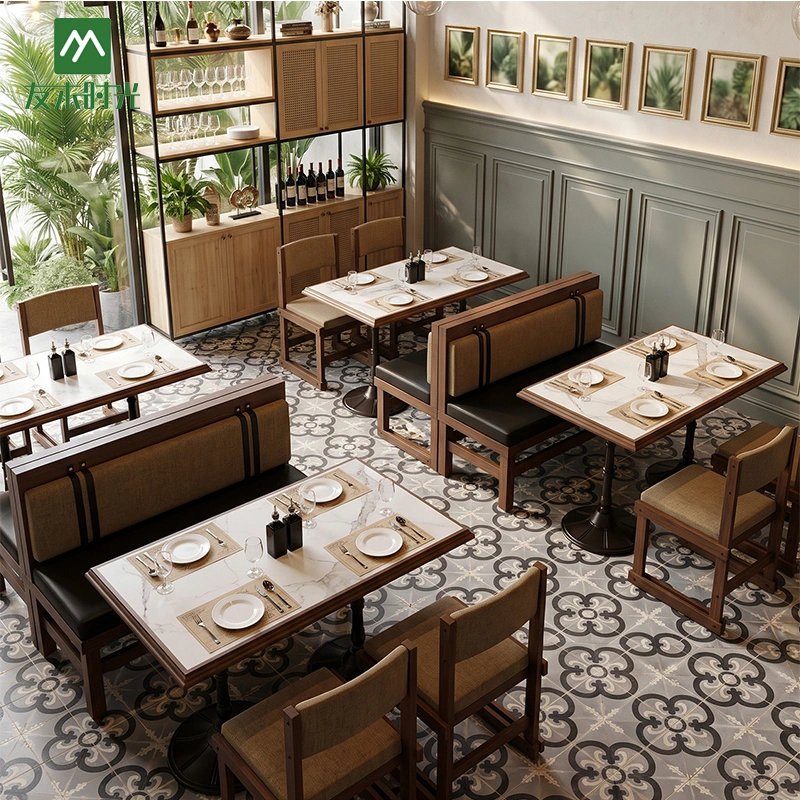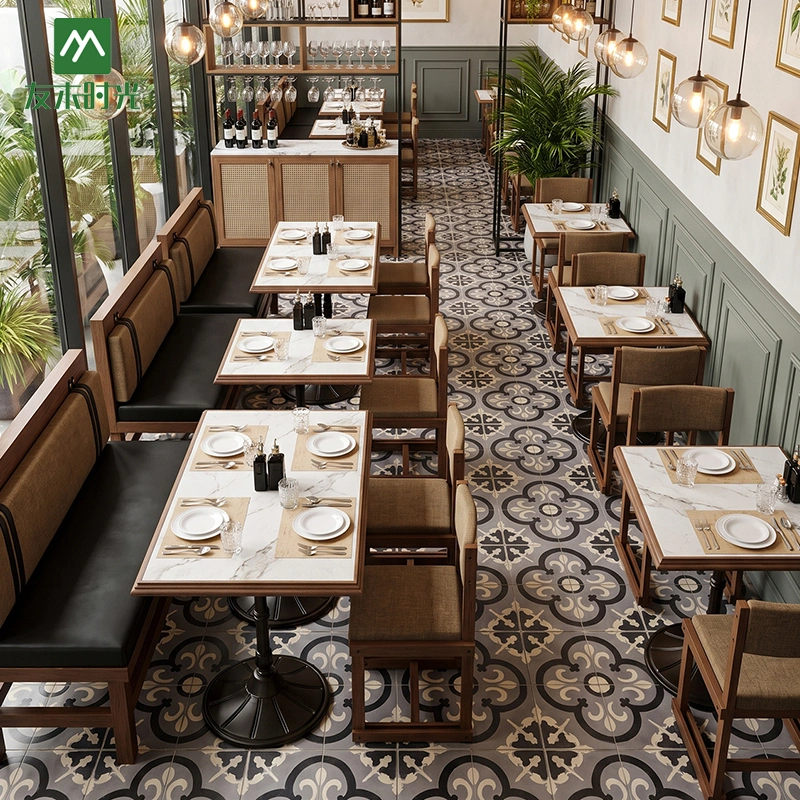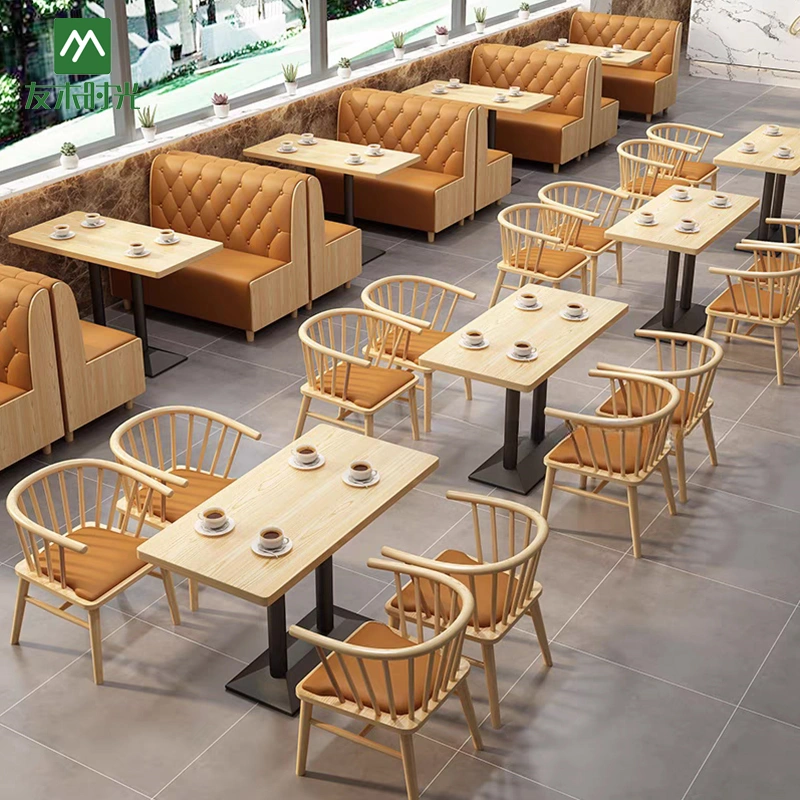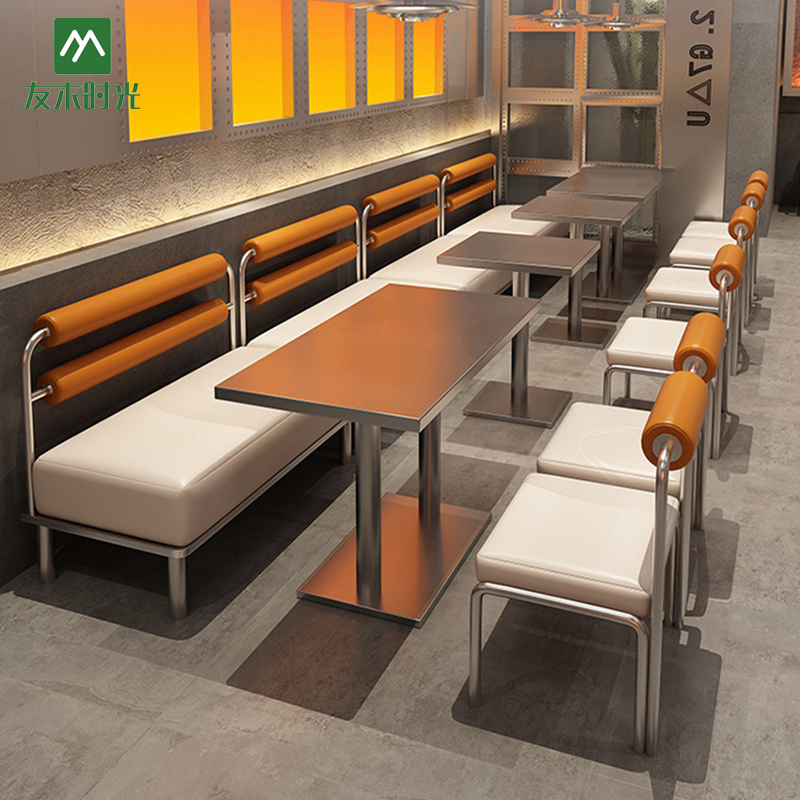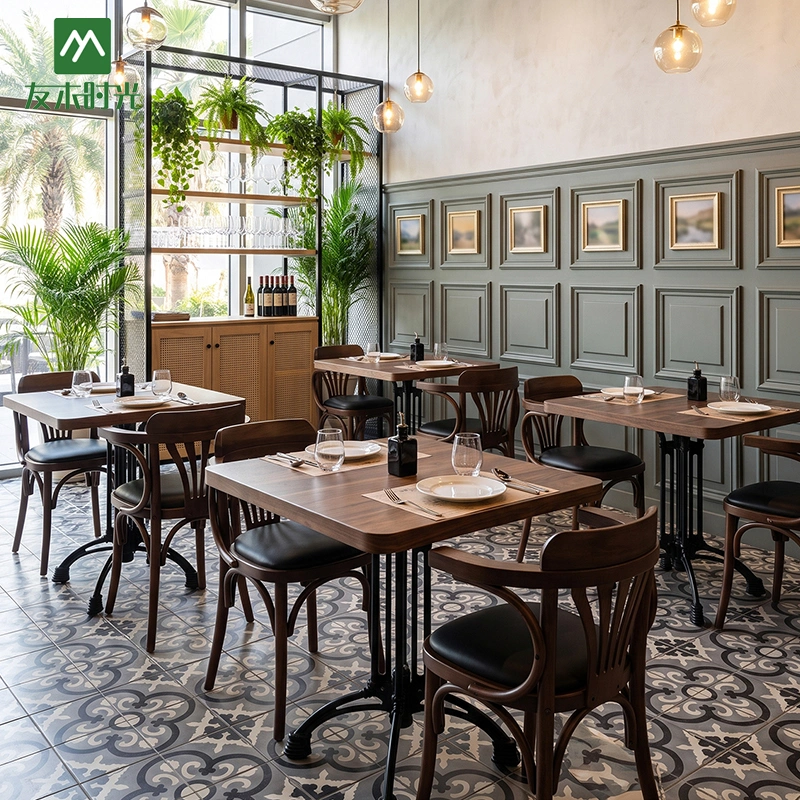
Table turnover rate, that cold, hard number directly linked to your restaurant revenue, often hides its secrets in the most obvious yet easily overlooked place – the bones and muscles of the space: the restaurant furniture layout. Scientific furniture layout isn’t just about simple arrangement; it’s a precise system based on ergonomics, consumer psychology, and dynamic flow lines.
As a leading restaurant furniture manufacturer, Youmu Shiguang Furniture will break down how to use the science of layout to make your space “drive” customers through the consumption cycle efficiently and comfortably.
Core Principle of Store Furniture Layout: The Balance Formula of Efficiency and Experience
Increasing table turnover rate is not about simply creating a crowded space. The core formula is: maximizing operational efficiency + minimizing customer discomfort. The key lies in understanding three core variables:
- Flow Lines: The movement paths of customers and service staff. The ideal state is parallel lines, avoiding intersections, and minimizing distances.
- Density: The number of effective seats per unit area. A golden balance point needs to be found between “maximizing revenue” and “the minimum acceptable level of comfort.”
- Psychological Boundaries: Using furniture, lighting, or low partitions to invisibly divide areas in an open space, ensuring a degree of privacy without excessively obstructing sightlines and service.
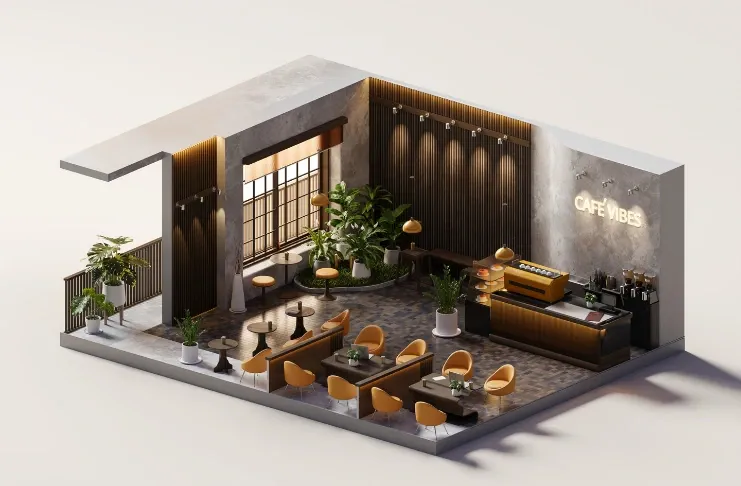
Four Furniture Layout Elements
Flow Line Design
- Customer Flow Lines: Should be clear, simple, and without blind spots. The path from entry to seating, from seating to the restroom, and from seating to departure should be natural and smooth. Use a single-loop or radial layout to prevent customers from wandering aimlessly in the restaurant.
- Service Flow Lines: The lifeline connecting the preparation area, dining tables, and cashier. Must be significantly separated from or parallel to customer flow lines to reduce collisions between staff and customers. The service distance from the preparation area to any table should be as uniform as possible, avoiding service blind spots.
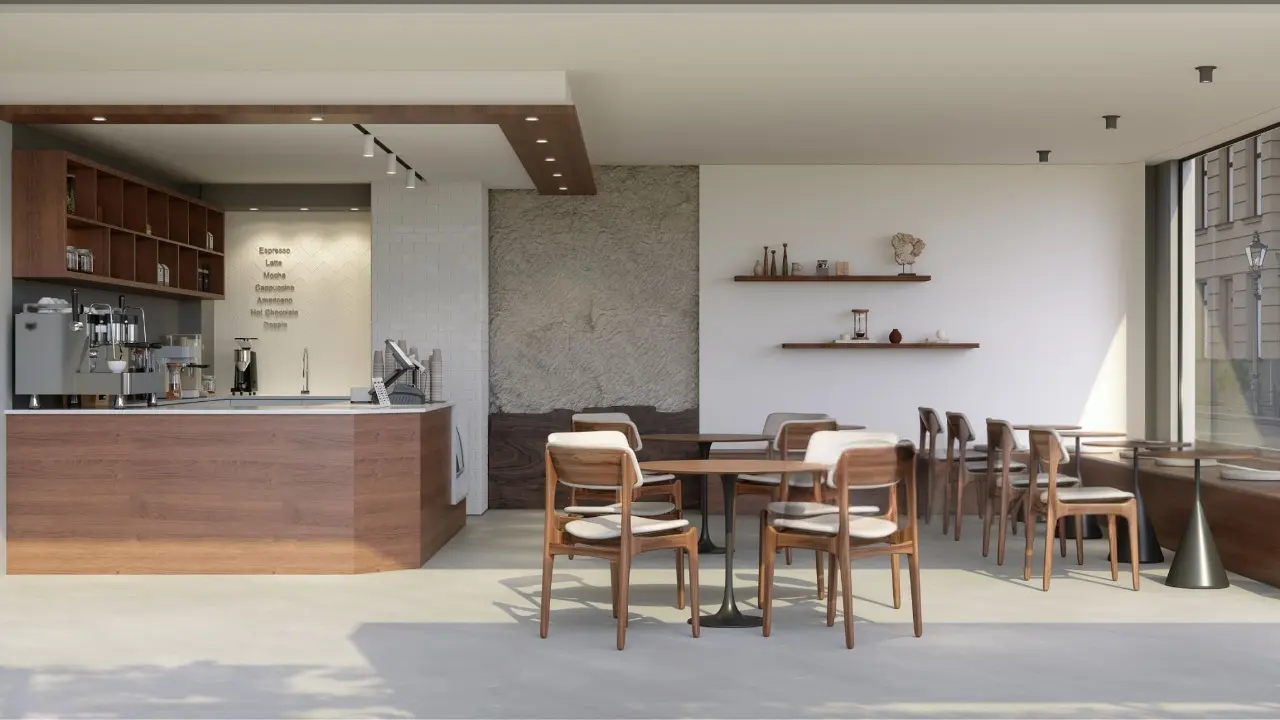
Table and Chair Configuration
Table and Chair Ratio and Shape:
- 2-4 person tables are the golden standard (70%-80% of the total), allowing for flexible combinations. Setting up a large number of tables for 8 or more people will significantly reduce space utilization efficiency.
- Use standard modular dimensions: For example, all table sizes are based on multiples of a base unit (such as 80cm), making it easy to combine tables seamlessly and improving layout flexibility.
Seating selection:
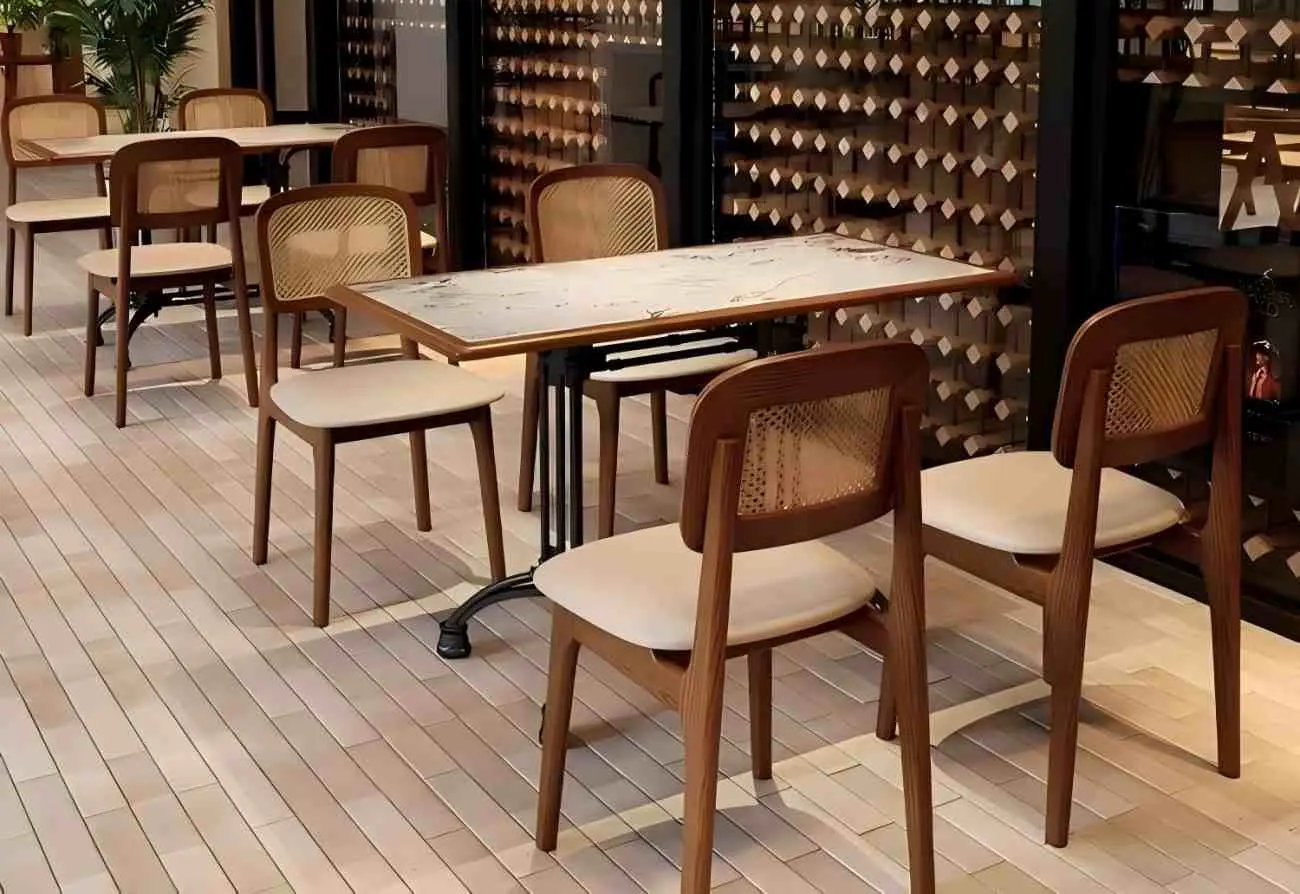
- Fast food restaurant furniture can use slightly firmer armless chairs to naturally encourage quick eating and leaving; formal restaurant or hotel restaurant furniture needs to provide moderately comfortable support, but avoid using sofas that are too deep and difficult to get up from.
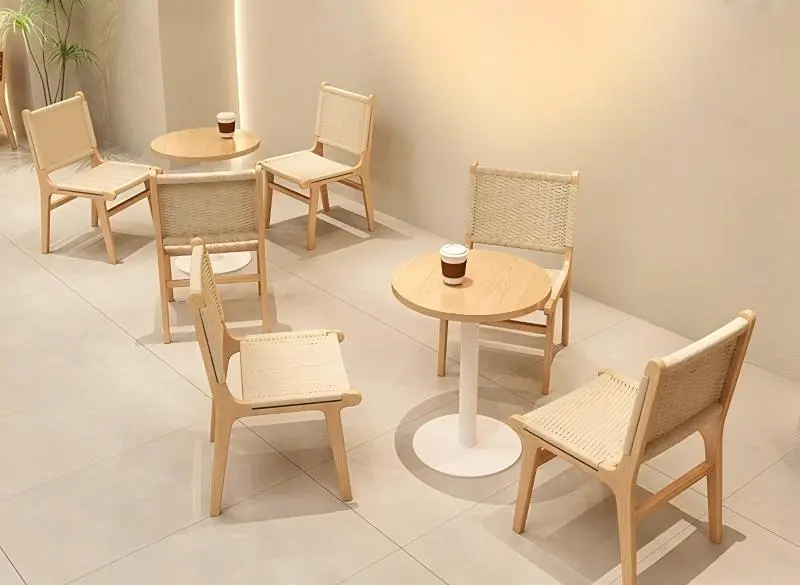
- Visual transparency: Prioritize chairs with thin legs and open backs to reduce visual obstruction, making the space appear more spacious and improving the waiter’s visibility.
Functional Zoning: Controlling the Pace
- Entrance buffer zone: Set up a waiting area to prevent queuing customers from disturbing seated customers, while also creating a lively atmosphere.
- Core dining area: Arrange seating radiating around the service core (preparation counter) to ensure maximum service efficiency.
- Flexible edge area: Booths or long tables can be set up along windows or walls, suitable for single diners or small groups, providing stability and not interfering with the main traffic flow.
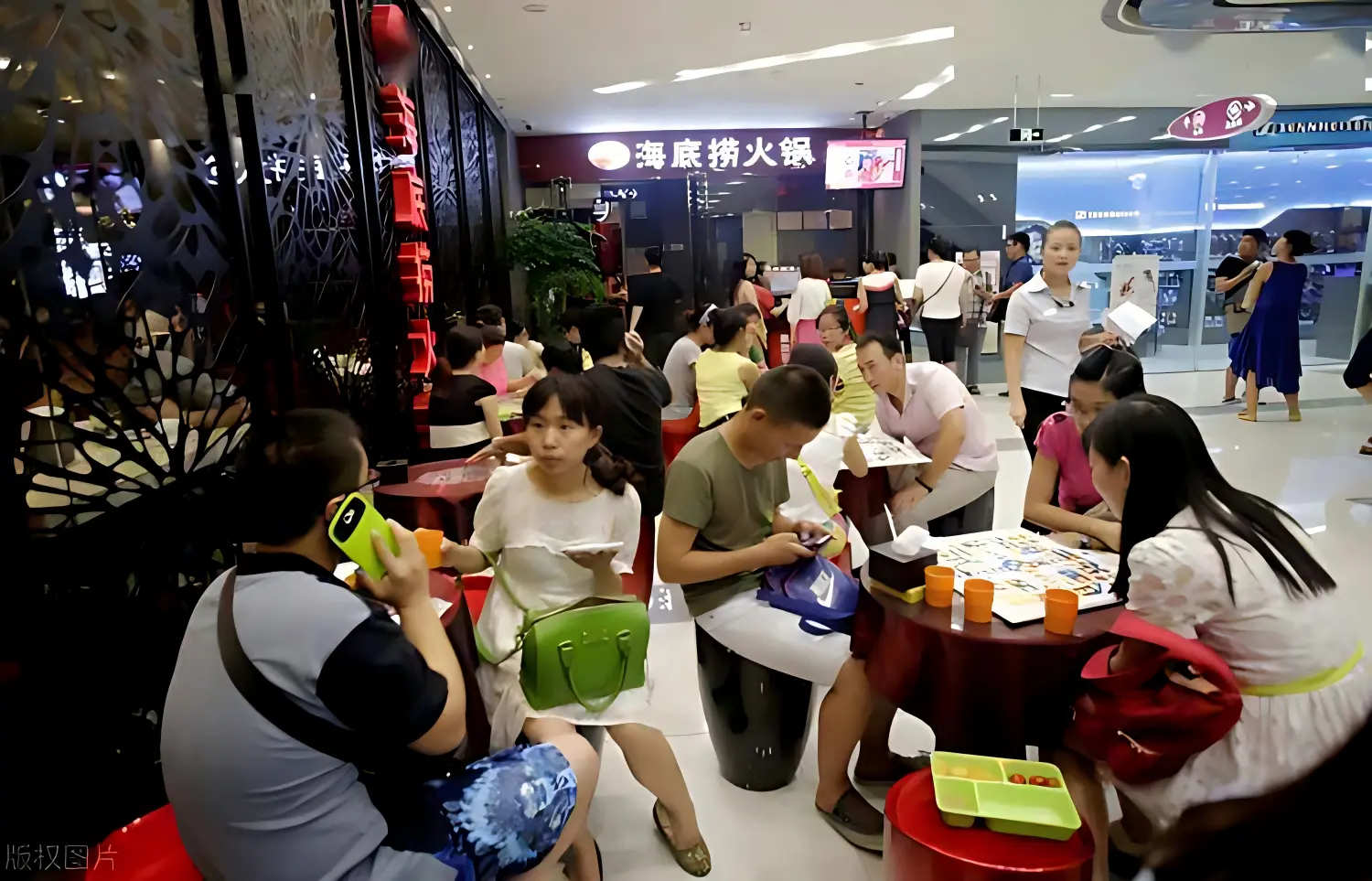
Psychological Cues: Invisible Guidance
- Focused lighting: Make the dining area bright and the aisles relatively dimmer, naturally focusing customers’ attention on the act of dining itself.
- Color and music: Fast-paced, bright colors and background music can subconsciously speed up the dining pace.
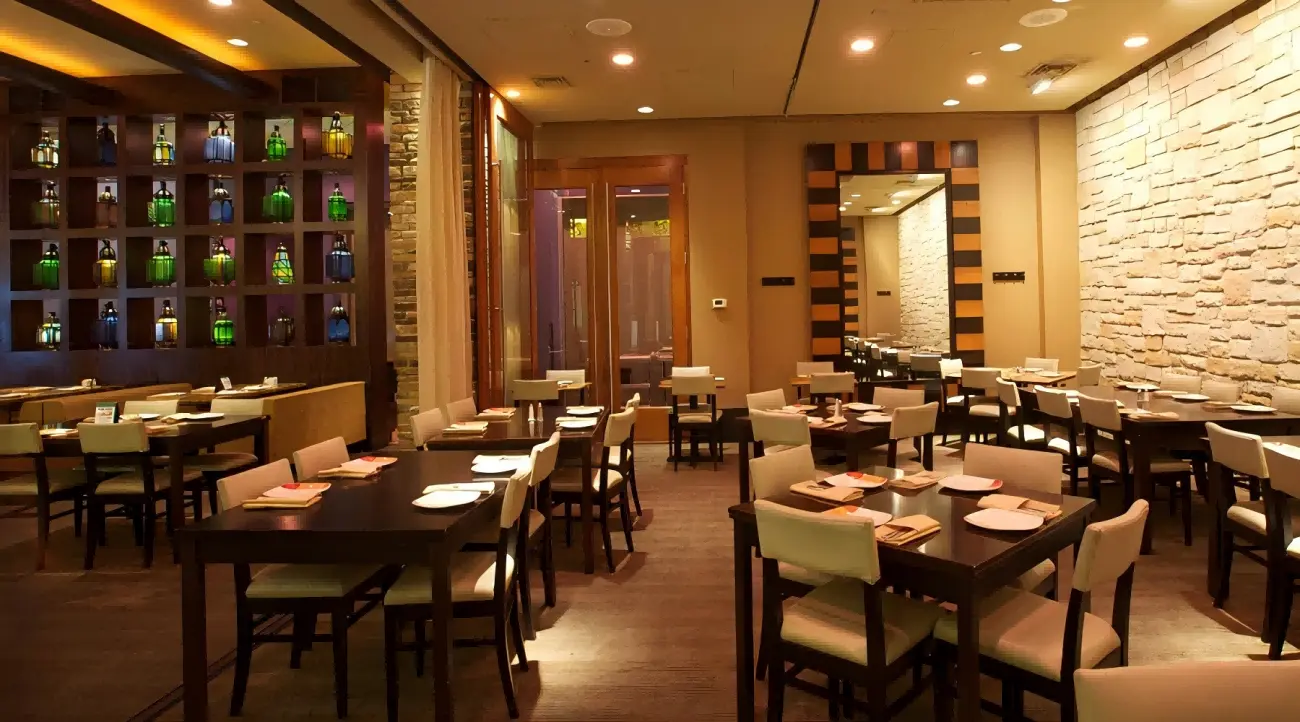
Practical Solutions: Furniture Layout Strategies for Three Main Business Types
Fast Food/Casual Dining Restaurants Furniture Layout: Efficiency First
- Layout: Fast-food restaurant furniture should use a dense, regular grid or a diagonal layout to maximize seating capacity. Aisle width should be precisely enough for one person to pass sideways (approximately 75cm).
- Furniture: Use a large number of movable, stackable tables and chairs to make cleaning easy.
- Goal: Shorten the overall stay time for each customer.
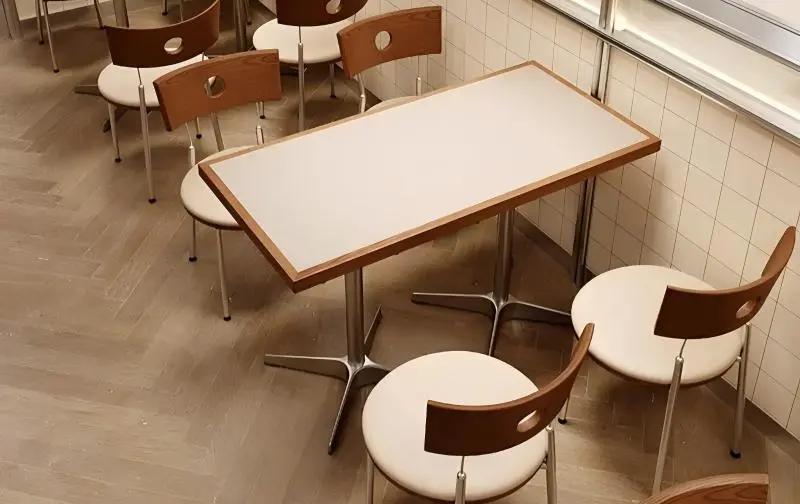
Formal Dining/Specialty Restaurants Furniture Layout: Balancing Experience and Efficiency
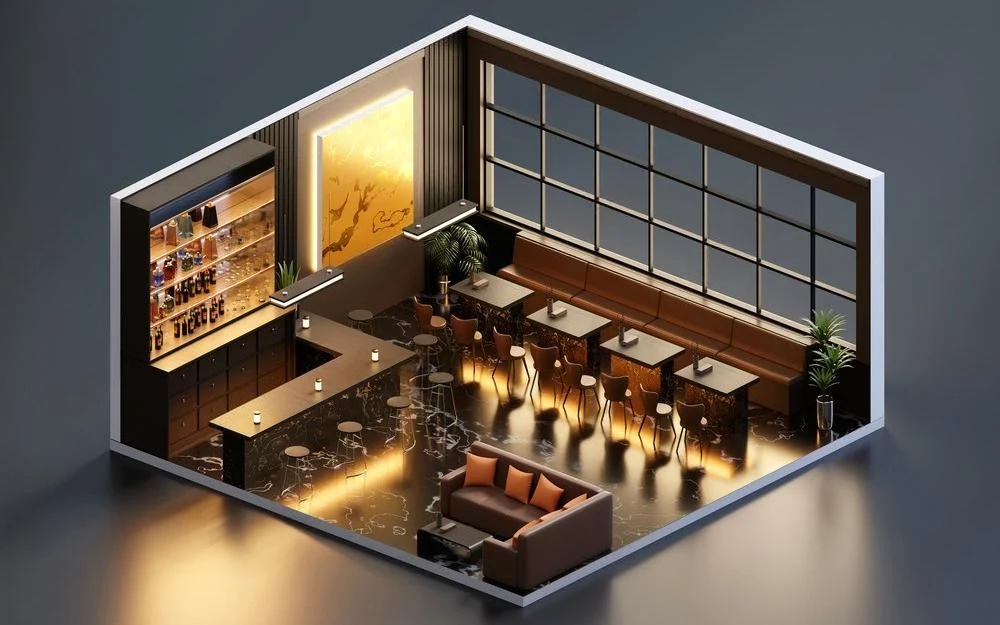
- Layout: Formal restaurant or hotel restaurant furniture should use a clustered or partitioned layout. Using soft partitions such as sofas, low cabinets, and greenery, naturally divide the space into “small areas” accommodating 2-6 tables, creating a semi-private feel.
- Furniture: Diversify table and chair combinations. Place easily movable 2-4 person tables in the central area to increase table turnover; set up comfortable booths or round tables by the windows and walls to serve customers who prioritize experience and have a higher average spending.
- Goal: Achieve layered management of different customer groups, focusing on table turnover in the core area and experience and average spending in the peripheral areas.
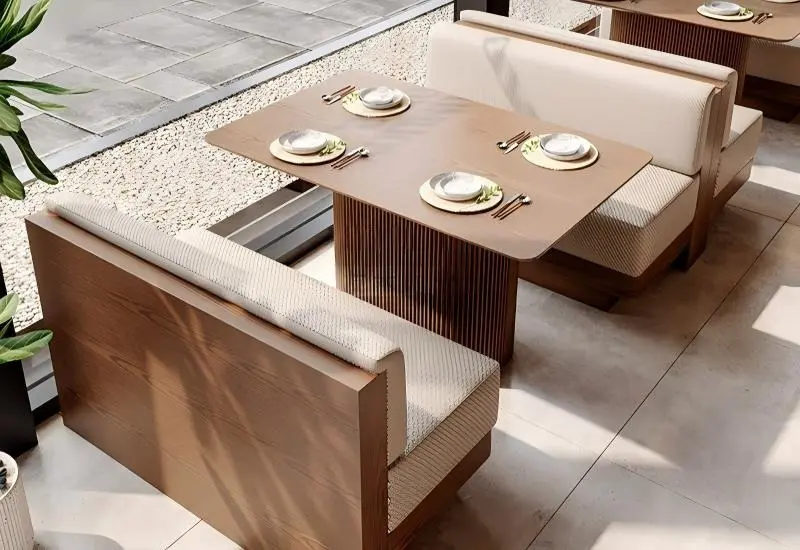
Coffee Shop/Casual Restaurant Furniture Layout: Converting Time into Value
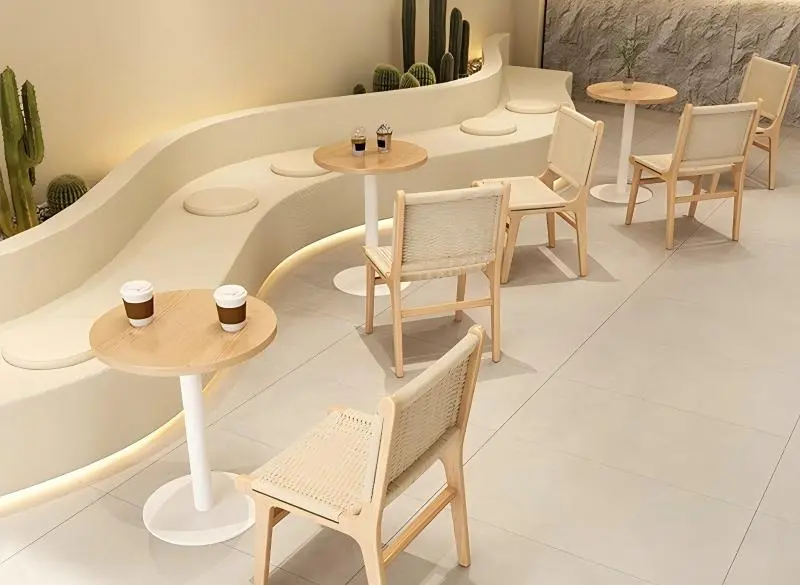
- Layout: Clearly divide the space into a “fast-paced area” (bar counter, high tables, single seats by the window) and a “slow-paced area” (soft seating area, sofa area).
- Furniture: Use hard chairs and small tables in the “fast area”; provide power outlets and comfortable sofas in the “slow area” to encourage longer stays, increasing average spending through additional beverage and dessert consumption to compensate for lower table turnover.
- Goal: Optimize the layout of cafe furniture to effectively monetize customer dwell time.
Planning Steps For Your Own Restaurant Furniture Layout
- Surveying: Accurately measure the store dimensions, marking all immovable elements (columns, doors, windows, electrical boxes, fire safety equipment).
- Positioning the Core: Determine the best location for the preparation counter/bar (usually near the kitchen exit and ideally in the geometric center of the restaurant).
- Planning Traffic Flow: First, use a pencil to draw the main service routes (width no less than 1 meter), then plan customer paths.
- Arranging Furniture: Like playing chess, start by placing the largest, fixed furniture (such as booths), then fill in with movable tables and chairs. Always leave the minimum width for aisles (main aisle ≥ 1.2 meters, secondary aisle ≥ 0.9 meters).
- Simulation and Verification: Use a scaled model or design software to simulate the entire process of waiters carrying trays and customers entering and leaving their seats.
Conclusion
A high-performing restaurant is not built only on food and service—it is built on furniture layout. When flow lines are clean, table configurations are flexible, zoning is intentional, and psychological boundaries are well designed, customers move naturally, staff work faster, and seating capacity increases without sacrificing comfort. Whether you run fast food, formal dining, or a café, optimizing your furniture layout is one of the fastest ways to improve table turnover rate and unlock hidden revenue.
About Youmu Shiguang Furniture
Youmu Shiguang Furniture is a restaurant furniture manufacturer specializing in layout-driven solutions for B2B clients worldwide. Backed by our stable factory output and mature supply coordination, we deliver consistent lead times for chain stores, contractors, and distributors.
Beyond standard tables and chairs, we provide custom restaurant furniture design based on traffic flow, seating density, and ergonomic dining experience—helping brands improve table turnover and operational efficiency.
Our custom restaurant furniture services include tailored sizes, materials, finishes, seating combinations, and space-matching concepts for hot pot, fast casual, cafés, and full-service dining projects.