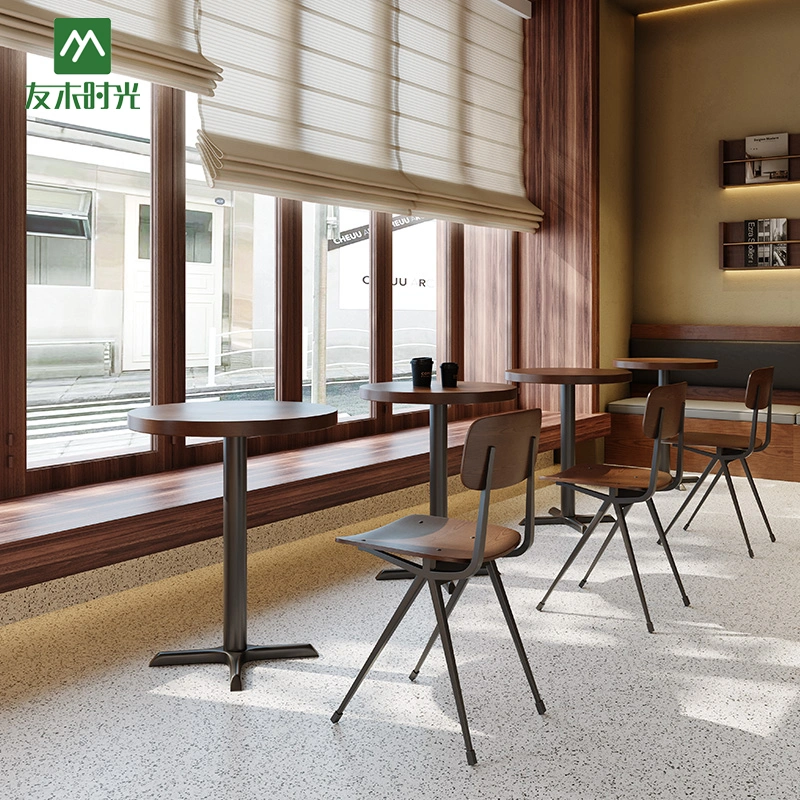
Choosing the right materials for restaurant chairs and tables isn’t just about style, and it’s a smart business decision.
In commercial settings, furniture is used constantly and must withstand daily wear, spills, frequent cleaning, and heavy use. By selecting materials that match your restaurant’s needs, you can reduce maintenance costs, improve durability, and maintain a strong, professional brand image.
Como profesional fabricante de muebles para restaurantes, I will introduce you to common commercial furniture materials, their costs, and lifespans. I will also recommend suitable materials based on different types of restaurants.
Why Material Choice Matters in a Commercial Restaurant
In a hospitality environment, furniture issues tend to appear quickly under constant use. Chairs may become unstable, tabletops can delaminate, veneers may crack, and upholstery is prone to staining. These problems do not just affect appearance, they lead to higher repair and replacement costs, disrupt daily operations, and create a poor impression for guests, ultimately impacting revenue.
For procurement teams and designers working for a commercial restaurant, the objective should be measurable: choose materials that meet projected traffic, cleaning regimes, and desired lifespan.
Material selection will directly affect:
- structural durability and safety
- daily maintenance effort and chemical compatibility
- guest comfort and perceived quality
- repairability and spare-parts strategy
- lifecycle cost (TCO)
Common Commercial Restaurant Furniture Materials and How They Perform
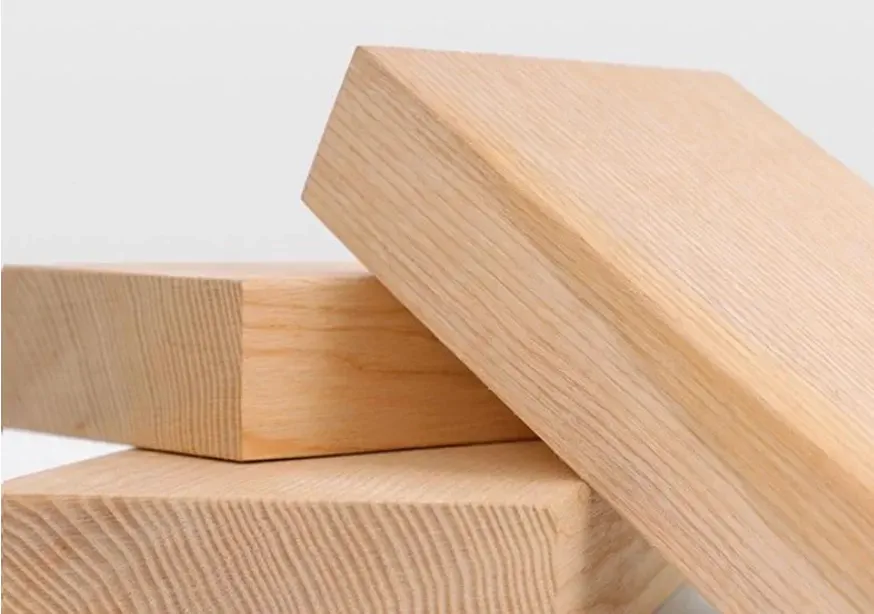
Solid wood
Use: premium chairs, table tops, decorative bases.
Ventajas: strong, refinishable, warm appearance that supports higher average spend.
Contras: moisture sensitivity if not properly sealed; higher cost and weight.
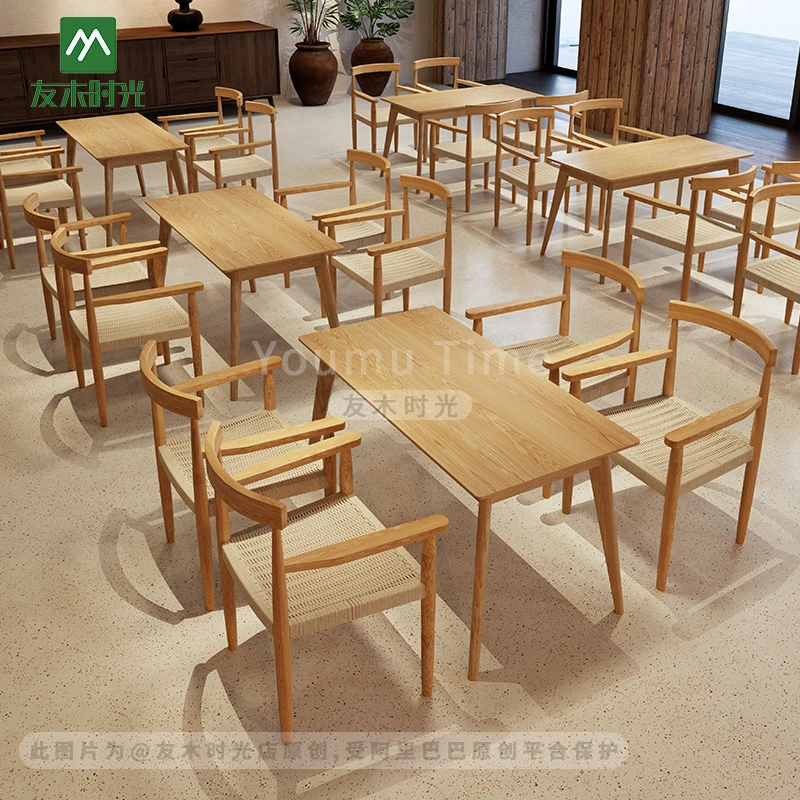
It is well suited for upscale full-service restaurants, where durability and the appearance to refinish can offset the higher initial cost.
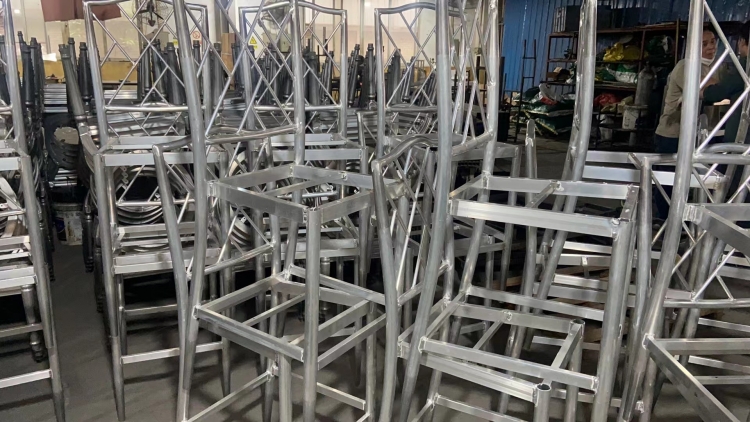
Metal (steel, stainless steel, aluminum)
Use: frames, table bases, industrial seating.
Ventajas: excellent load capacity, long structural life, and slim sections are possible. Stainless steel (304/316) adds corrosion resistance for coastal or damp environments.
Contras: requires quality surface finish (powder coat, passivation) to avoid corrosion.
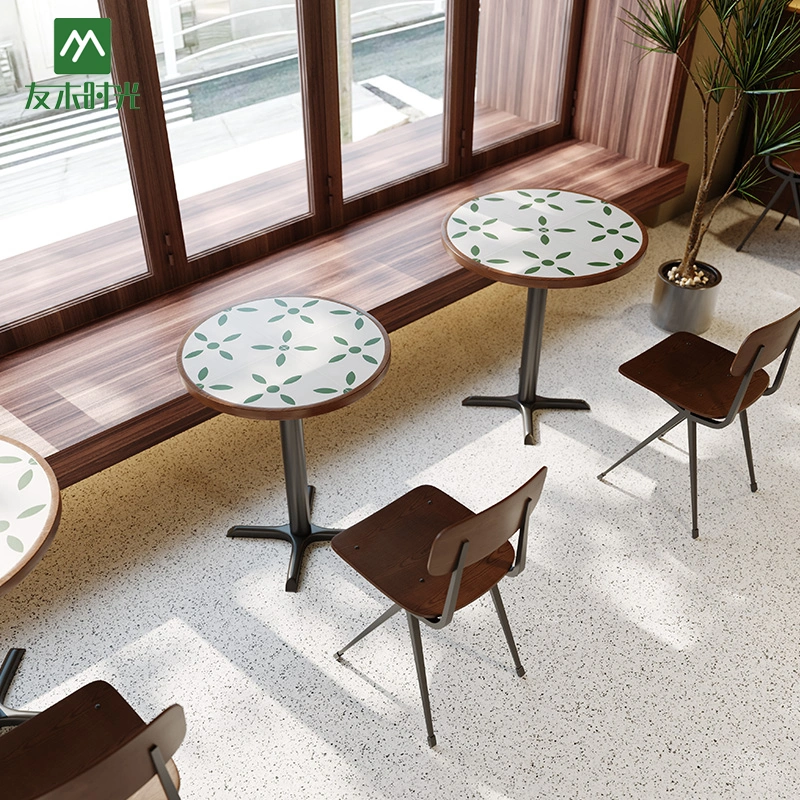
In high-turnover environments or outdoor/semi-outdoor seating situations, metal materials are better suited to form a special atmosphere for customers.
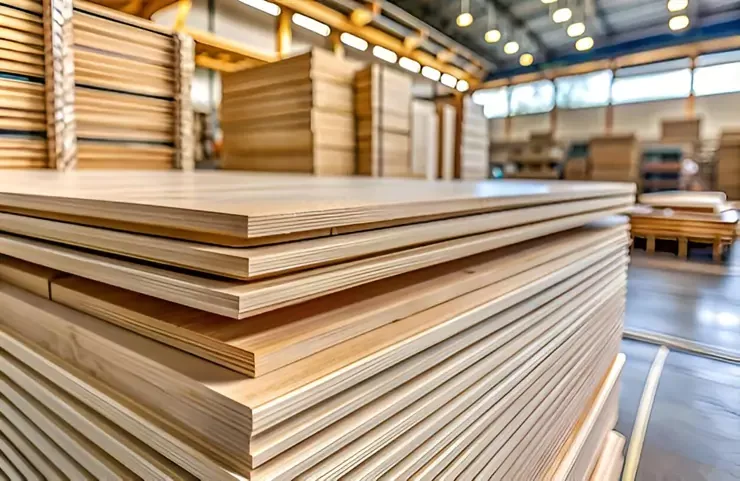
Engineered wood (plywood, MDF with veneer)
Use: table tops, seat shells, mid-market chairs.
Ventajas: cost-efficient, dimensionally stable when produced correctly, consistent supply.
Contras: edges are vulnerable to moisture and impact unless sealed; lower long-term scratch resistance than solid wood.
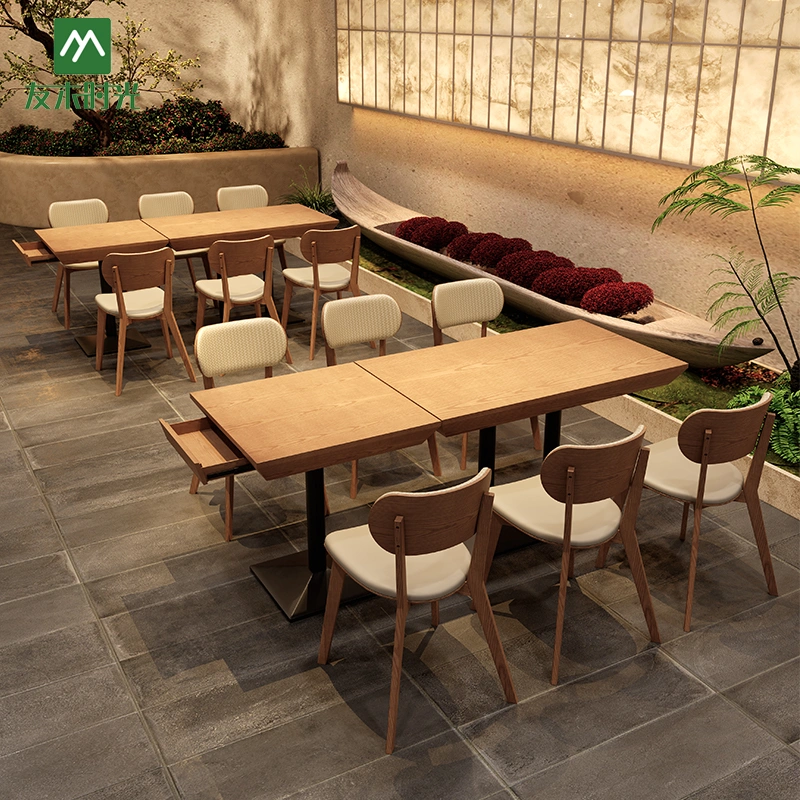
Places like cost-sensitive cafés and casual dining where veneer appearance is desired, plywood could be the best cost-saver.
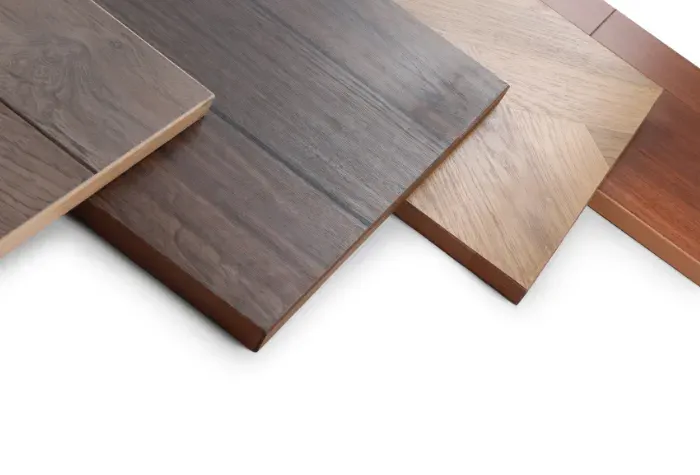
Laminate & compact laminate (HPL, SGL)
Use: high-traffic tabletops.
Ventajas: excellent scratch, heat, and chemical resistance; easy cleaning; long service life.
Contras: cannot be sanded back or refinished in place.
In fast-service and high-spill zones, where minimizing upkeep is vital, specifying these materials ensures a clean appearance with minimal maintenance effort.
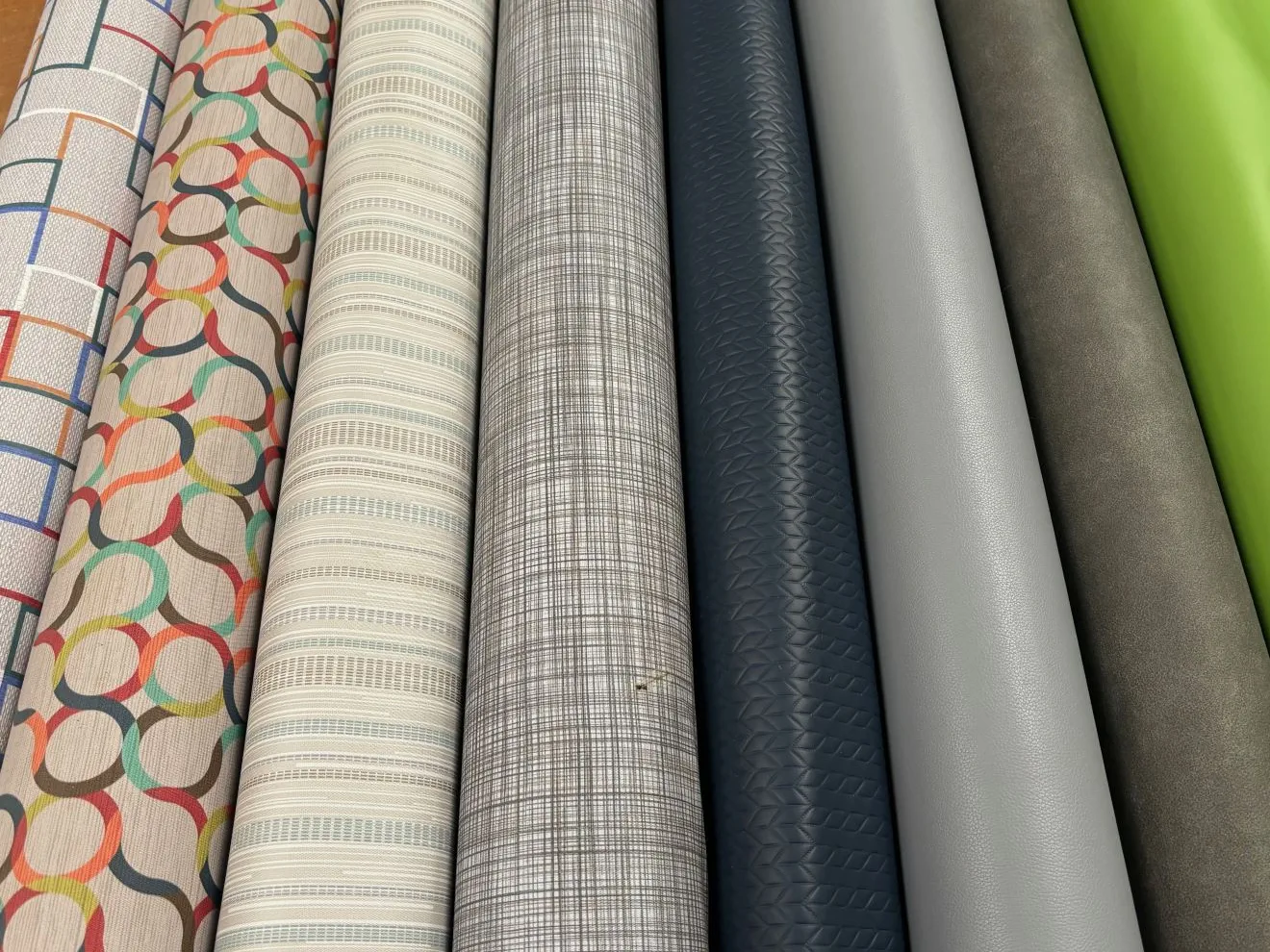
Upholstery (PU/vinyl, coated performance fabrics, solution-dyed acrylic)
Use: booths, padded chairs, barstools.
Ventajas: wipeable surfaces, color options, comfort. High-grade coated fabrics resist bleach and commercial cleaners. Solution-dyed acrylics (e.g., Sunbrella) offer UV and mildew resistance for semi-outdoor use.
Contras: low-quality PU can crack; natural fabrics stain easily.
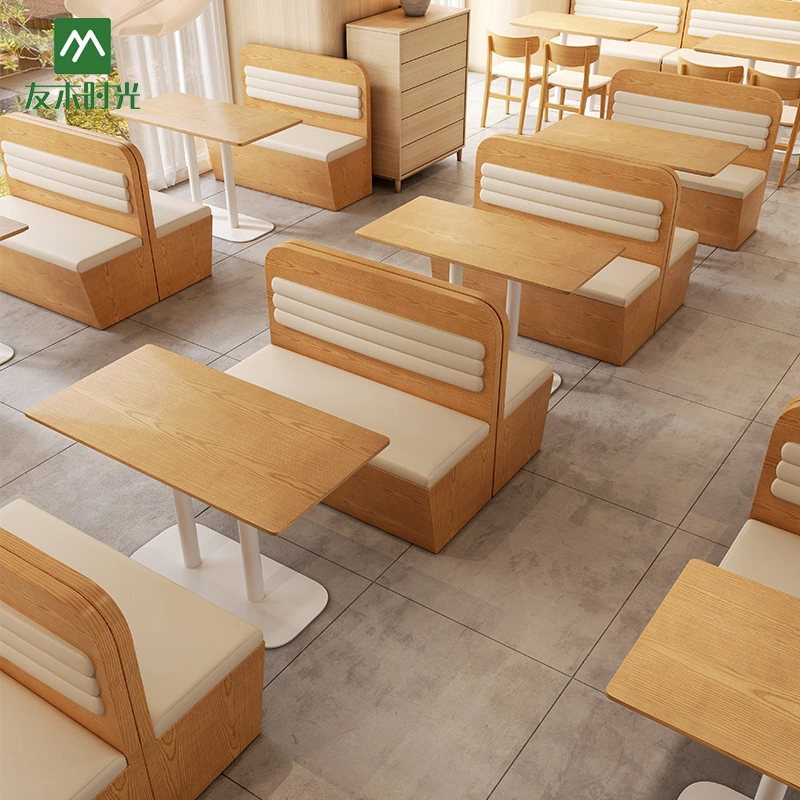
It is best to apply this material to booths and soft seating where comfort and cleanability must be balanced.
Commercial Restaurant Furniture Material Cost vs. Lifespan (Quick Reference Table)
| Material | Typical Relative Cost | Expected Lifespan (Commercial Use) | Maintenance Notes |
|---|---|---|---|
| Madera maciza | High | 7–15 years (with refinish) | Refinishable; requires sealing |
| Stainless Steel Frame | Medium–High | 10+ years | Low maintenance; passivation recommended |
| Powder-coated Steel Frame | Medium | 6–10 years | Recoat if scratched in corrosive environments |
| Engineered Wood (Plywood + Veneer) | Low–Medium | 4–8 years | Edge sealing critical |
| HPL / Compact Laminate Top | Medium | 6–12 years | Very low maintenance |
| PU / Vinyl Upholstery | Low–Medium | 3–6 years | Choose high-grade for longer life |
| Solution-dyed Acrylic Fabric | Medium–High | 6–10 years | Excellent fade and mildew resistance |
Format-specific material recommendations
Fast food / Quick service — durability and speed
Operational profile: extreme turnover, heavy cleaning, frequent seating movement.
Recommended: Recommended materials include powder-coated steel or aluminum frames and compact laminate tabletops with sturdy, reinforced bases. Choose non-porous surfaces and designs with replaceable components for easier maintenance and longer service life.
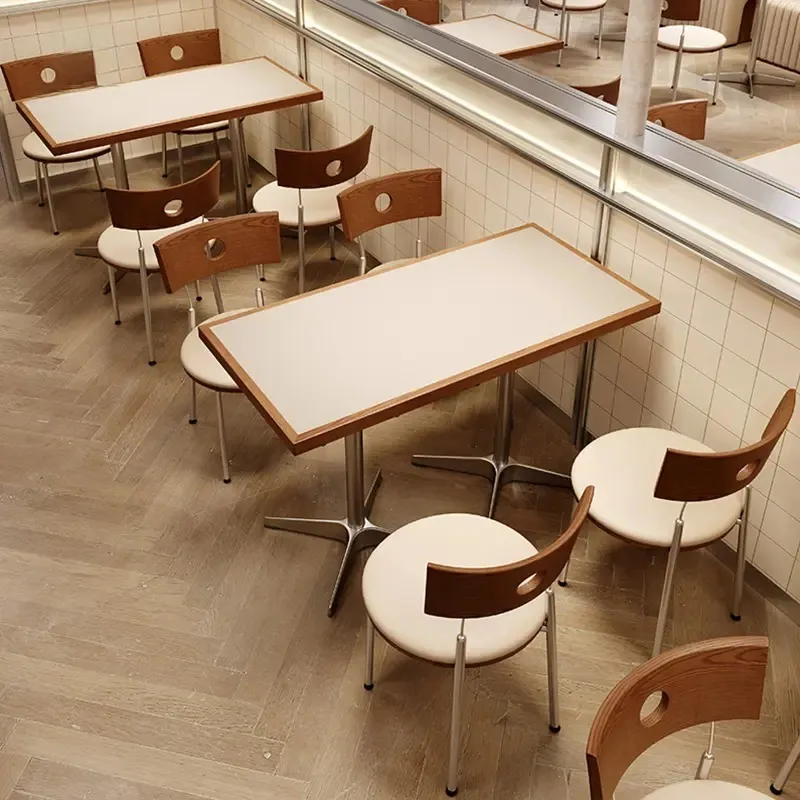
Milk-tea and beverage shops — lightweight, visual identity
Operational profile: small footprint, brand appearance important, short stays.
Recommended: For milk-tea and beverage shops, it is best to use powder-coated steel or aluminum frames paired with durable tabletops like compact laminate or sintered stone, as these materials handle spills and frequent cleaning well.
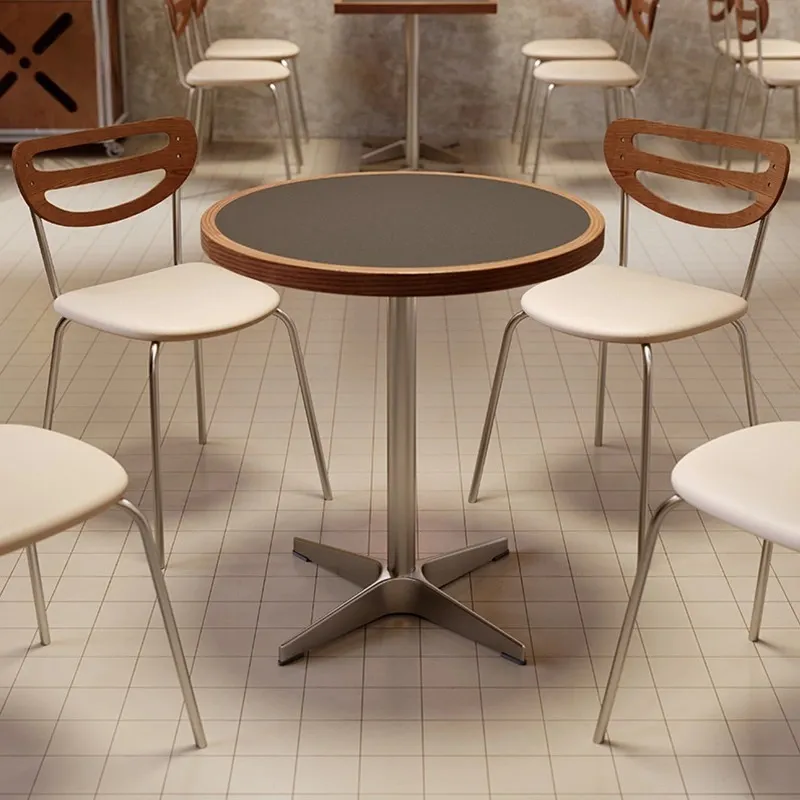
Coffee shops — comfort balanced with durability
Operational profile: medium turnover, longer dwell times, atmosphere matters.
Recommended: For coffee shops, choose materials that balance comfort and durability, such as solid wood or powder-coated metal frames paired with laminate, veneer, or solid wood tabletops. Add upholstered seating with stain-resistant fabric or leather for a warm, inviting feel, while ensuring surfaces are easy to clean and built to handle daily use.
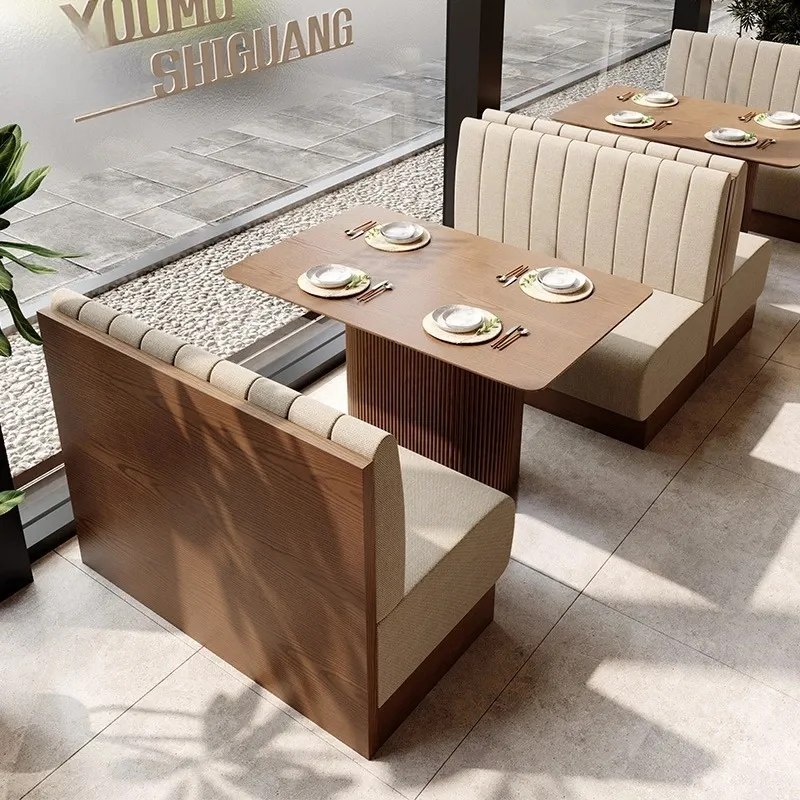
Full-service restaurants — premium look, refinishable longevity
Operational profile: longer dining durations, higher expectations for finish.
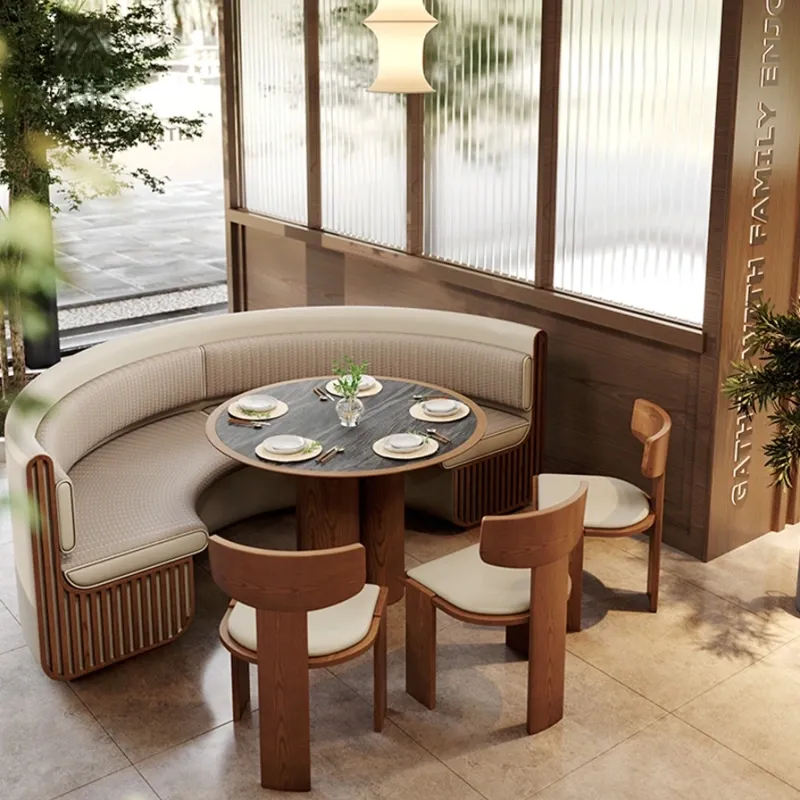
Recommended: solid wood tops or engineered cores with high-quality veneers; solid wood or stainless frames for chairs; high-density foam with durable upholstery. Specify refinishability and repair protocols.
Conclusión
No hay un único material “mejor” para todos los casos. commercial restaurant—the correct choice emerges from matching operational profile, expected lifespan, maintenance regime, and brand positioning.
Acerca de Youmu Shiguang Furniture
Youmu Shiguang Furniture es una fabricante de mobiliario comercial para restaurantes specializing in restaurant chairs and tables solutions for global B2B clients. With in-house production covering material selection, frame fabrication, finishing, and assembly, we maintain strict quality control to ensure stable performance and consistent batch quality across large projects.
Youmu Shiguang Furniture focuses on durable materials and practical designs suited for high-traffic hospitality environments. For restaurant chains, distributors, and project contractors, we, as an experienced manufacturer, provide flexible OEM and ODM restaurant furniture services, including customized chair structures, table materials, finishes, and branding solutions tailored to different dining formats.