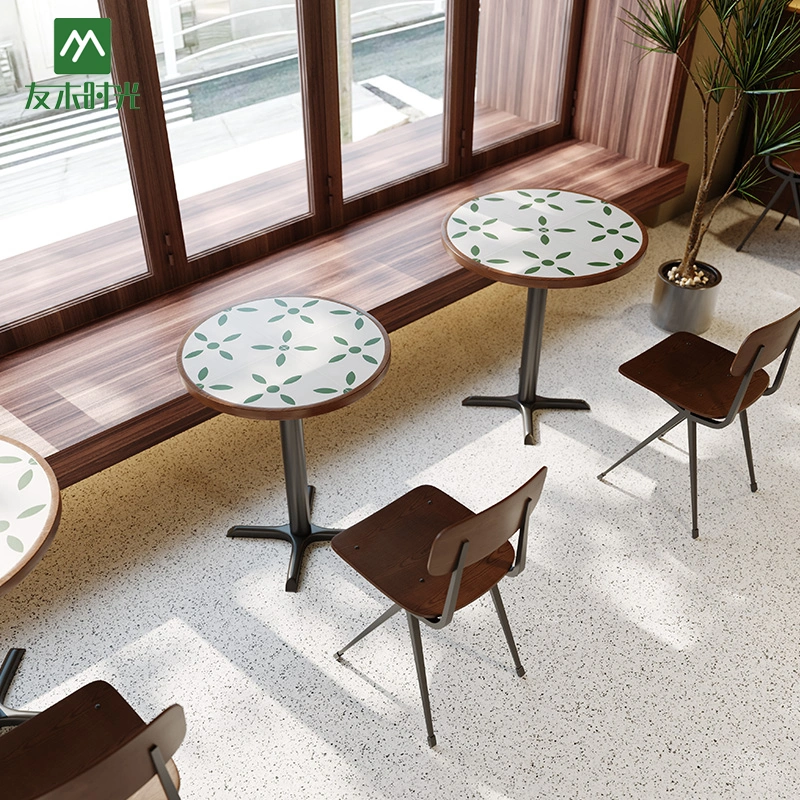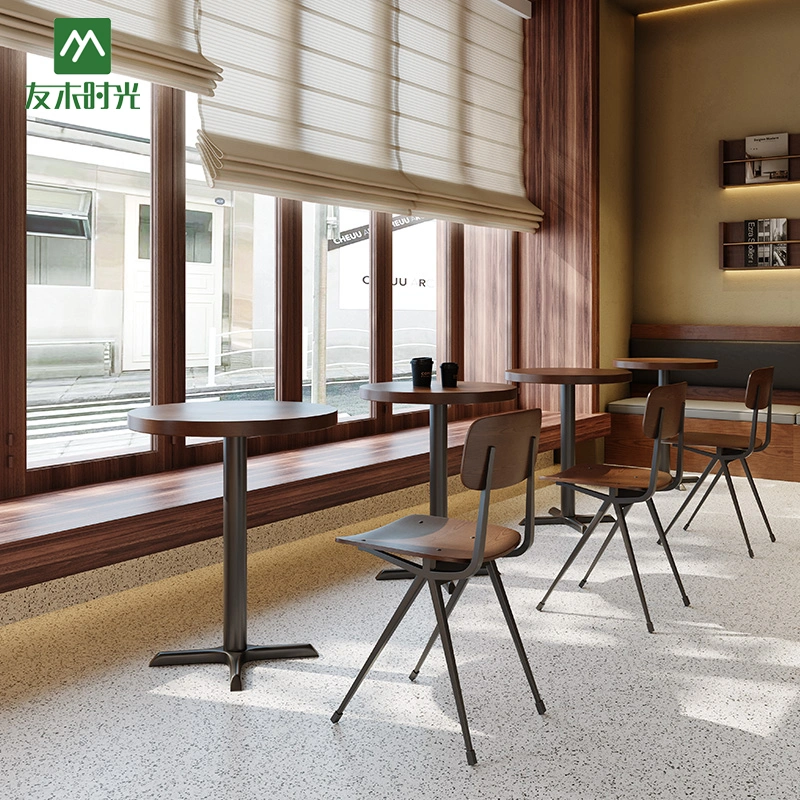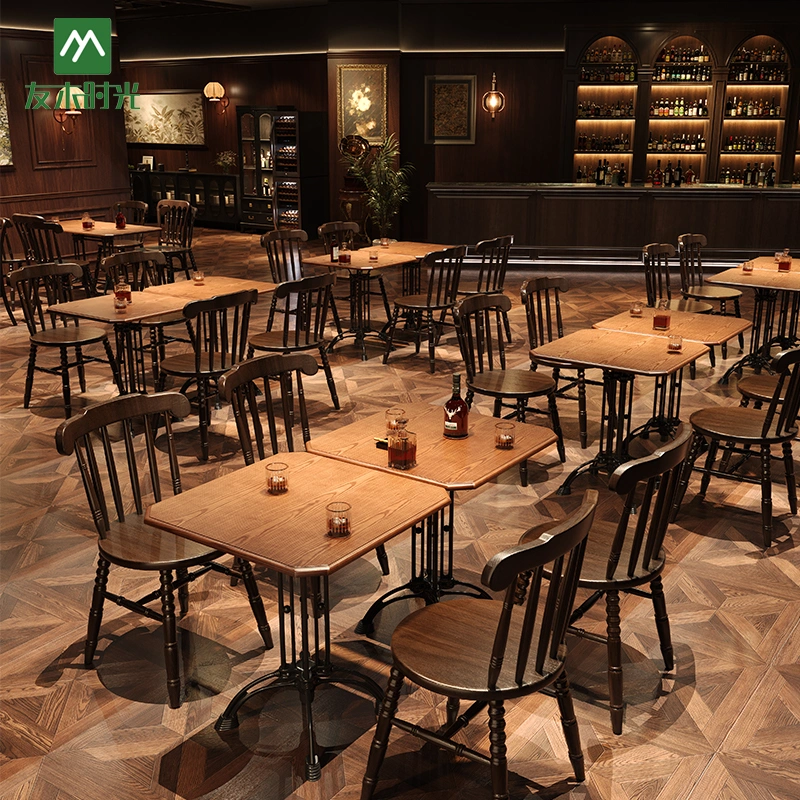
Cafes are high-frequency spaces: short customer turns, spilled drinks, chairs dragged across floors, and constant cleaning. Selecting the right mobiliário de café is therefore a procurement decision with direct operational impact — not an interior decoration exercise.
In this guide, Youmu Shiguang Furniture, a leading cafe furniture manufacturer, gives procurement managers, café owners, and fit-out teams a practical, spec-driven approach to choosing pieces that survive daily traffic while supporting comfort, brand, and total cost of ownership.
Start With Use Cases and Traffic Patterns
Before you evaluate the cafe furniture, map how the space will be used:
- Quick-turnover areas (counter seating, grab-and-go zones) require compact, hard-wearing seating.
- Social tables and lounge corners need more comfortable, long-dwell seating.
- Outdoor terraces demand weatherproof materials and anchoring.
Define the mix of seating types — how many two-tops versus four-tops, number of bar seats, and any lounge zones. That mix determines how many cafe table, cafe chair, cafe sofa, and cafe booth items you actually need, and where to prioritize durability vs. comfort.
Frame Materials: The Backbone of Durability
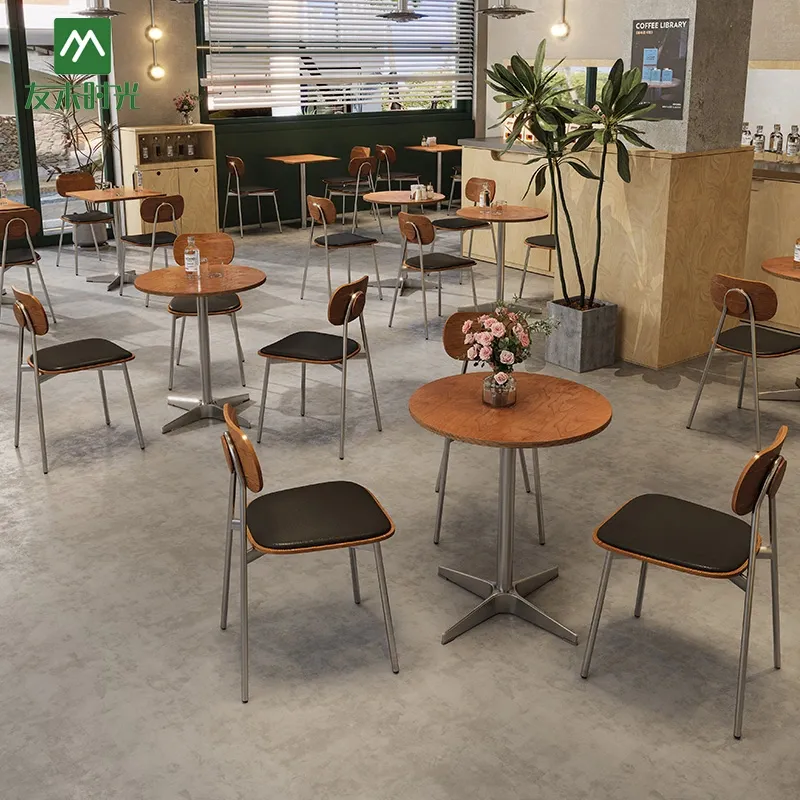
Frame failure is the most common reason commercial cafe furniture ends up in the scrap pile. Specify robust structural materials:
- Steel frames: require tube wall thickness ≥1.2 mm and good welds; powder coating thickness 60–80 µm for indoor use.
- Aluminum: choose structural grades with adequate wall thickness (useful for lightweight, movable cafe chairs and outdoor sets).
- Stainless steel (304/316): specify 316 for coastal locations to resist corrosion.
- Reinforced wood: Use multi-ply hardwood cores (≥18 mm) rather than particleboard in load-bearing parts.
Require suppliers to provide weld/connection photos or CAD details for critical items such as cafe table bases and cafe booth frames.
Tabletops: Choose Surfaces That Clean Fast and Last Long
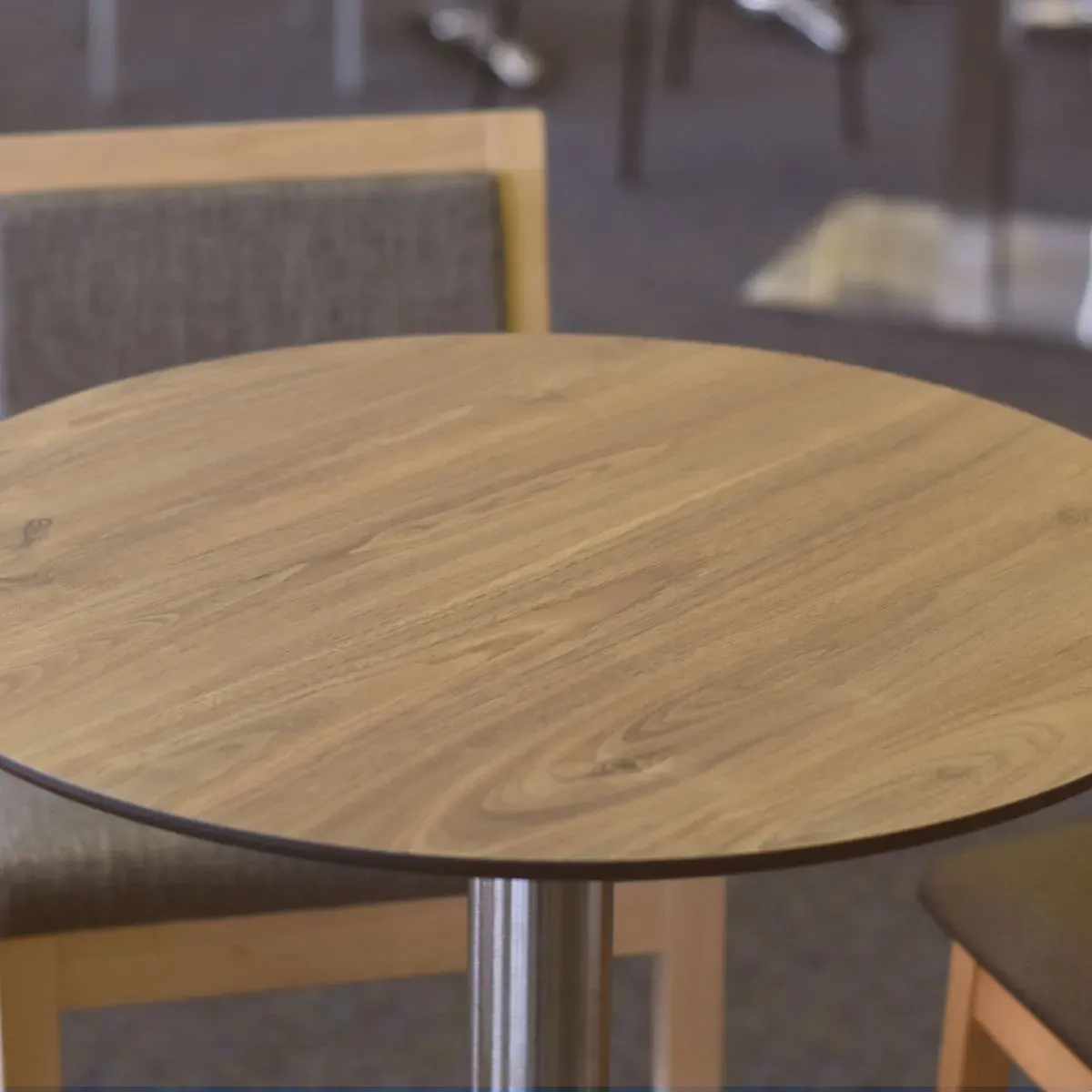
Tabletops of cafe furniture take the most abuse. Select materials with quick cleanability and high abrasion resistance:
- HPL (High Pressure Laminate) — low maintenance and economical for heavy traffic.
- Compact laminate — thicker, waterproof, and better for spill-prone cafés.
- Sintered or engineered stone — high scratch & heat resistance for premium counters and bar tables.
- Sealed solid wood — beautiful and refinishable, but budget for scheduled maintenance.
Specify edge treatments (ABS banding, rounded radii) to prevent chipping and reduce replacements. For cafe table procurement, include tabletop thickness and finish codes in the RFP.
Seating: Balance Comfort With Turnover Goals
Seating choices influence dwell time and revenue. Mix seating typologies to match your concept:
- Compact cafe chair (wood/metal): best for high turnover; choose seat depth 40–45 cm and seat height 43–48 cm.
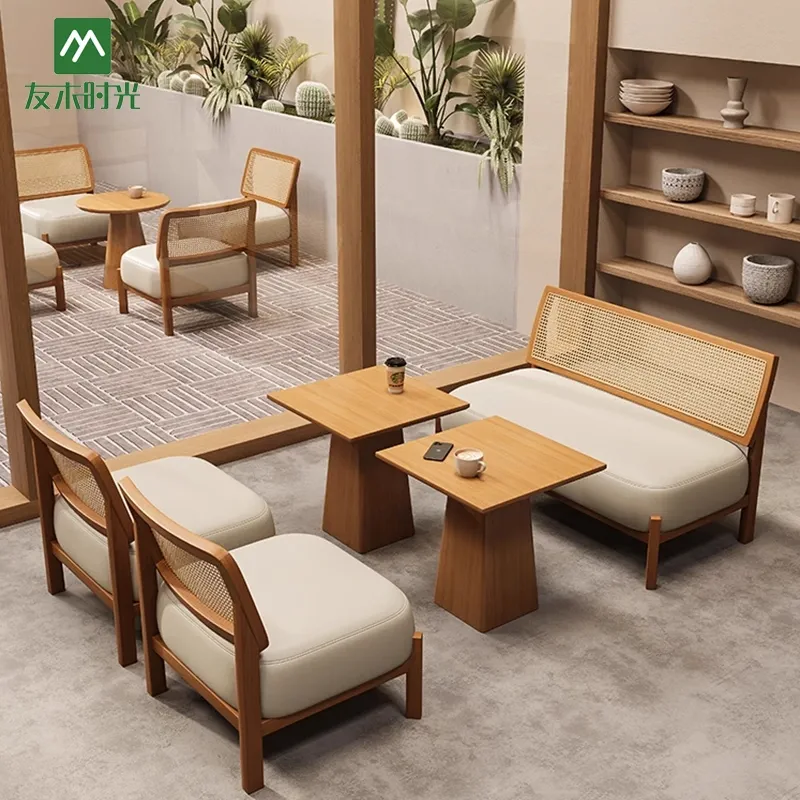
- Padded cafe chair and cafe sofa options: use high-resilience foam (HR foam ≥30–35 kg/m³) and fabrics with Martindale abrasion ratings ≥30,000–40,000 for heavy use.
- Bar stools: select foot rings and reinforced frames; backless for fastest turnover, low-back stools for a bit more comfort.
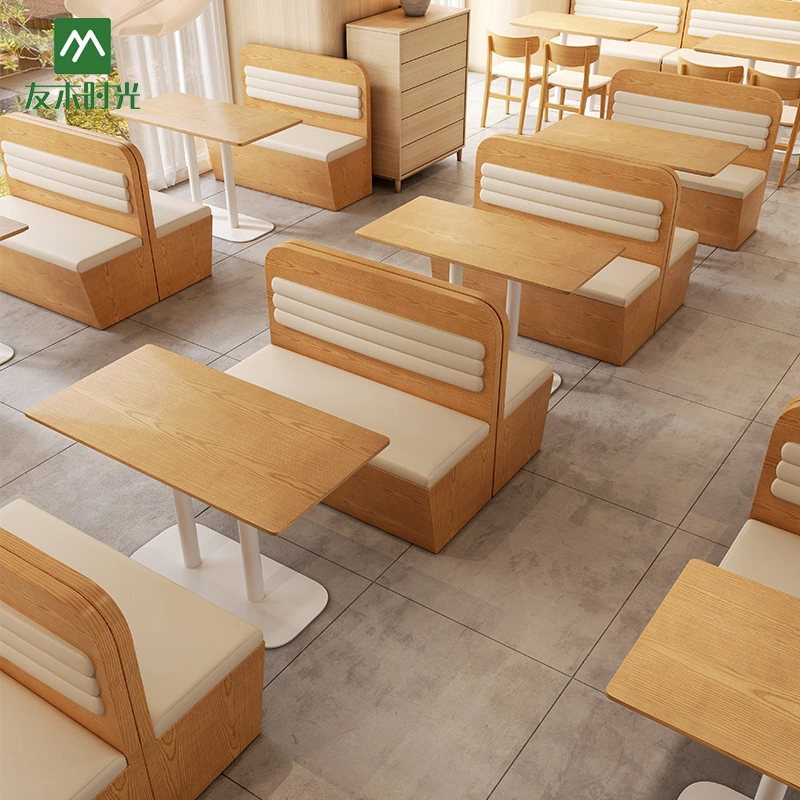
- Cafe booth: Banquettes increase seating capacity and create cozy corners, but specify replaceable upholstery panels and firm backing for long life.
Insist on sample sign-off for comfort and durability before mass production — photos don’t tell you whether a cafe sofa will flatten, a cafe chair will squeak, or the whole cafe furniture will crack down after weeks.
Upholstery and Fabrics: Choose Performance Textiles
Fabrics make or break perceived quality. For commercial cafés:
- Use solution-dyed acrylics (Sunbrella-type) or high-performance olefin for stain resistance and UV stability.
- For wipeable options, high-quality PU or performance-coated fabrics are practical.
- Demand abrasion tests (Martindale/Wyzenbeek values) and chemical resistance to common cleaning agents.
Removable covers and modular cushion cores speed repairs and reduce downtime.
Engineering Details That Prevent Early Failures
Small engineering choices have large operational consequences:
- Use gussets or internal steel plates at leg-to-seat joins.
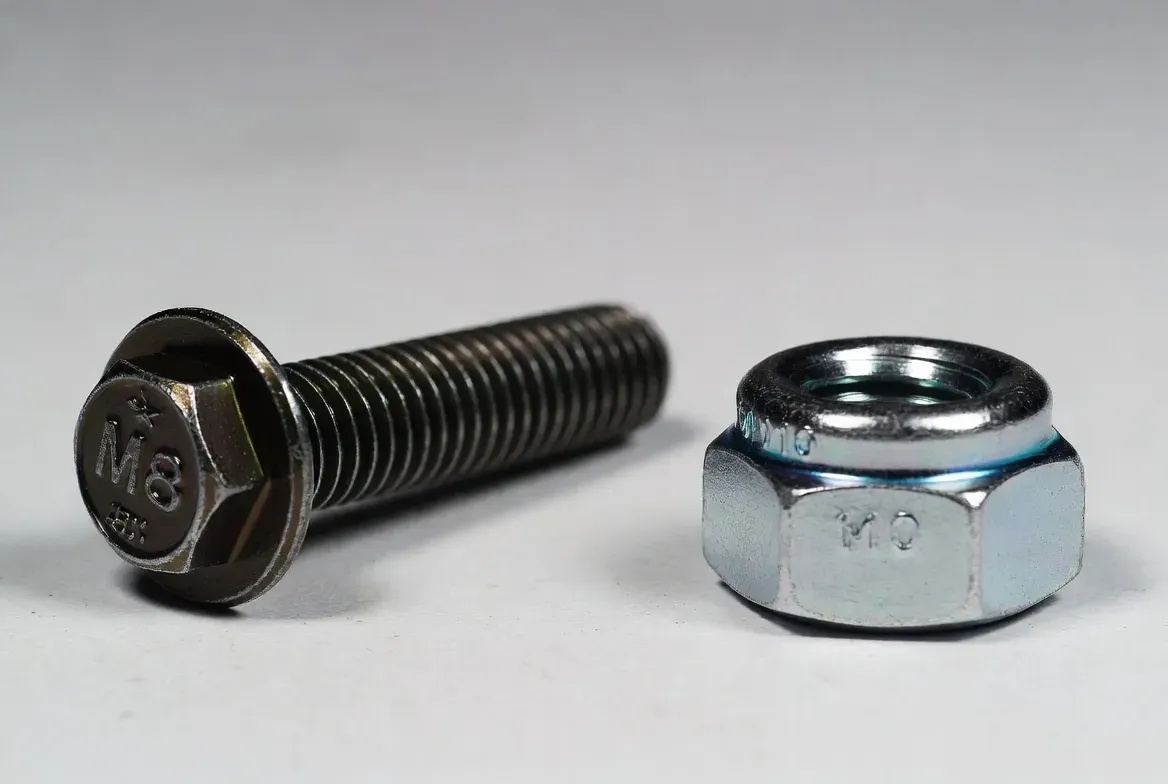
- Standardize fasteners (M8/M10) so onsite teams can swap parts quickly.
- For a pedestal cafe table, specify anti-tip base diameter and ballast if used outdoors.
- For stackable chairs, confirm safe stack height and protective surfaces to avoid finish damage.
Include a requirement for construction photos and a list of replaceable SKUs in your procurement pack.
Test Standards and Proof: Require Objective Evidence
Ask suppliers for documented test evidence when considering buying commercial cafe furniture:
- Seating: EN, ANSI/BIFMA seating and fatigue test reports.
- Fabrics: Martindale or Wyzenbeek abrasion certificates.
- Finishes: adhesion and scratch resistance tests.
- Outdoor elements: salt-spray (ASTM B117) and UV aging (Xenon) results.
Third-party lab reports or factory QA documentation should be submitted with bids so you can compare apples to apples.
Maintainability: Design for Repair, Not Replace
Design choices that lower maintenance costs:
- Modular parts (replaceable tops, seat pads) cut long-term spend.
- Standardized spare-parts kits (glides, bolts, cushion cores) reduce lead time for repairs.
- Provide maintenance guides and recommended cleaning chemistries to avoid finish damage.
A cafe booth should allow seat access to replace foam; a cafe table top should be replaceable without changing the entire base.
Total Cost of Ownership: Look Beyond Unit Price
Evaluate TCO: purchase price + maintenance + cleaning labor + replacement frequency + downtime. A higher initial spend on better mobiliário de café typically yields lower TCO over 3–5 years. Ask vendors for a simple 3- to 5-year TCO projection based on expected usage patterns.

Supplier Selection: Buy From Entities with Strict QC
Prefer manufacturers with café project references, QC processes, and clear MOQ/lead-time commitments. Confirm they can provide:
- Sample production timelines
- Batch color/finish repeatability (ΔE tolerances)
- Spare parts supply and warranty SLAs
For rollouts, require staggered delivery options and pilot orders before full production.
Conclusion: Make Your Procurement Spec-Driven
Durable mobiliário de café is the result of clear requirements and disciplined supplier selection. Specify materials, frame construction, tabletop finishes, upholstery performance, test evidence, and spare-parts commitments in your RFP. Mix cafe table, cafe chair, cafe sofa, and cafe booth types to balance turnover, comfort, and brand expression — and your café will both look great and perform day after day.
Sobre a Youmu Shiguang Furniture

A Youmu Shiguang Furniture, fundada em 2017, é atualmente considerada uma fabricante líder de mobiliário comercial pelos nossos clientes globais. O nosso design de mobiliário tem a sua própria patente de design, e é por isso que continuamos a crescer no mercado competitivo.
Estamos a fornecer wholesale commercial cafe furniture supply globally. If you need special products, we can offer a solução personalizada de mobiliário comercial para o ajudar.
Na Youmu Shiguang Furniture, nós entregamos:
Fornecimento rápido e a granel de mobiliário comercial com a nossa fábrica própria
Os materiais de mobiliário certificados garantem excelentes experiências para o utilizador
Controlo de qualidade rigoroso
Dicas de especialistas
Entrega rápida