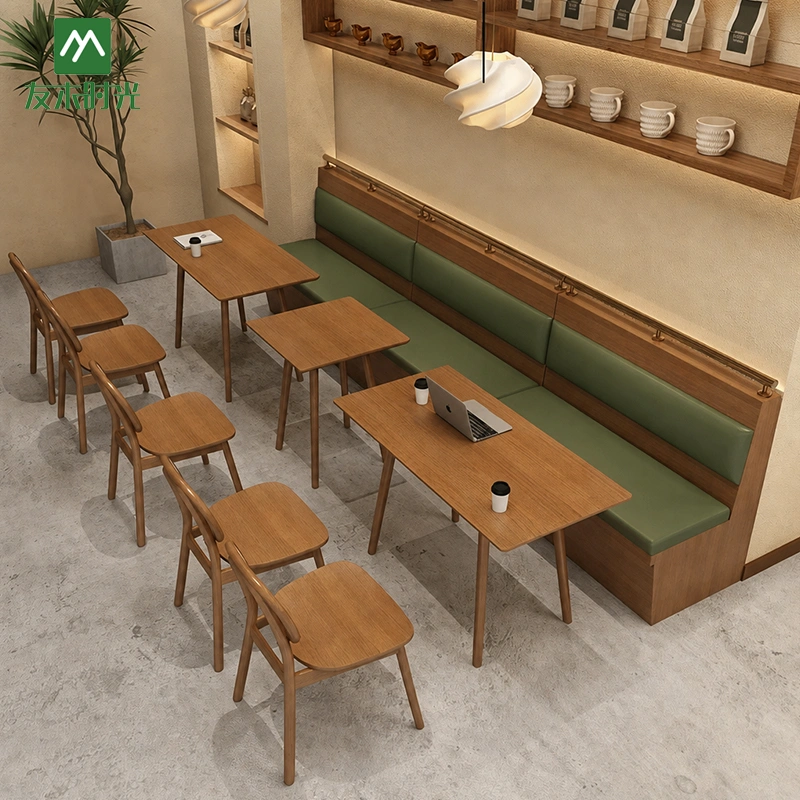
In the restaurant industry, when revenue growth hits a plateau, many operators’ first reaction is often to invest heavily in a complete renovation or aggressive marketing. However, a community restaurant called “Warm Light Kitchen” chose a more precise and cost-effective approach—a targeted upgrade of only its core seating area and lighting system.
The results were beyond everyone’s expectations: in the first month after the renovation, its weekend table turnover rate increased by a staggering 1.5 times, and the average customer spending increased moderately by 15%.
This wasn’t magic, but a “surgical” precision upgrade based on a deep understanding of customer behavior. Below, we fully review this classic case and reveal how small changes can trigger big rewards.
Before the Renovation: The Invisible “Comfort Trap”
“Warm Light Kitchen” is a home-style restaurant that has been operating for five years, accumulating a stable customer base from the surrounding area with its delicious food and friendly atmosphere. However, the owner, Manager Li, found that the restaurant was facing a typical growth dilemma:
- Weekday occupancy was good, but the restaurant was always crowded during weekend evenings, and customers complained about long waiting times.
- Although it seemed full of people, revenue growth was slow.
After a week of detailed observation and data recording, the underlying problems surfaced.
The Booth Area Became a “Time Black Hole”
The booth area against the wall, due to overly large and soft seats and deep tabletops, caused customers to unconsciously fall into a “lazy” state after sitting down.
- The average dining time reached 95 minutes
- Customers tended to continue chatting long after finishing their meals, unwilling to leave
The Lighting Created the “Wrong Atmosphere”
The entire restaurant used uniform warm yellow, low-illumination pendant lights. While the overall atmosphere felt cozy, it was also:
- Too dim
- Lacking rhythm or variation
- Slightly hypnotic
This environment further slowed down the dining pace.
Core Diagnosis
The restaurant’s furniture and lighting unintentionally created an “overly comfortable” environment. While customer satisfaction remained high, operational efficiency—especially table turnover during peak hours—was significantly sacrificed, becoming a fatal bottleneck to growth.
Precise Renovation Plan: From “Stagnation Zone” to “High-Efficiency Zone”
Instead of starting from scratch, Manager Li and his professional team adopted a “minimally invasive” renovation strategy, focusing only on booth seating and lighting.
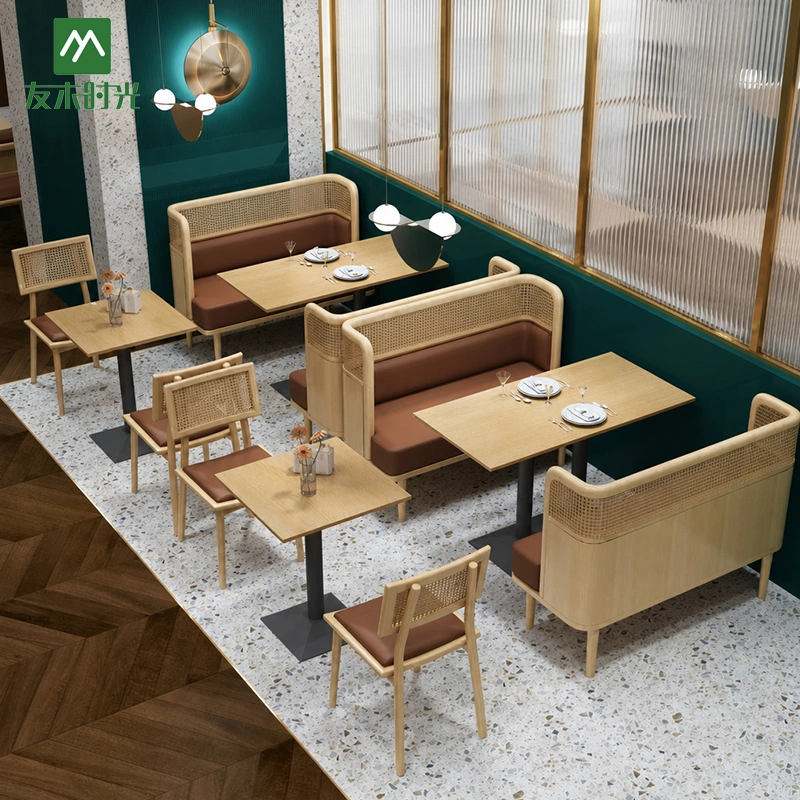
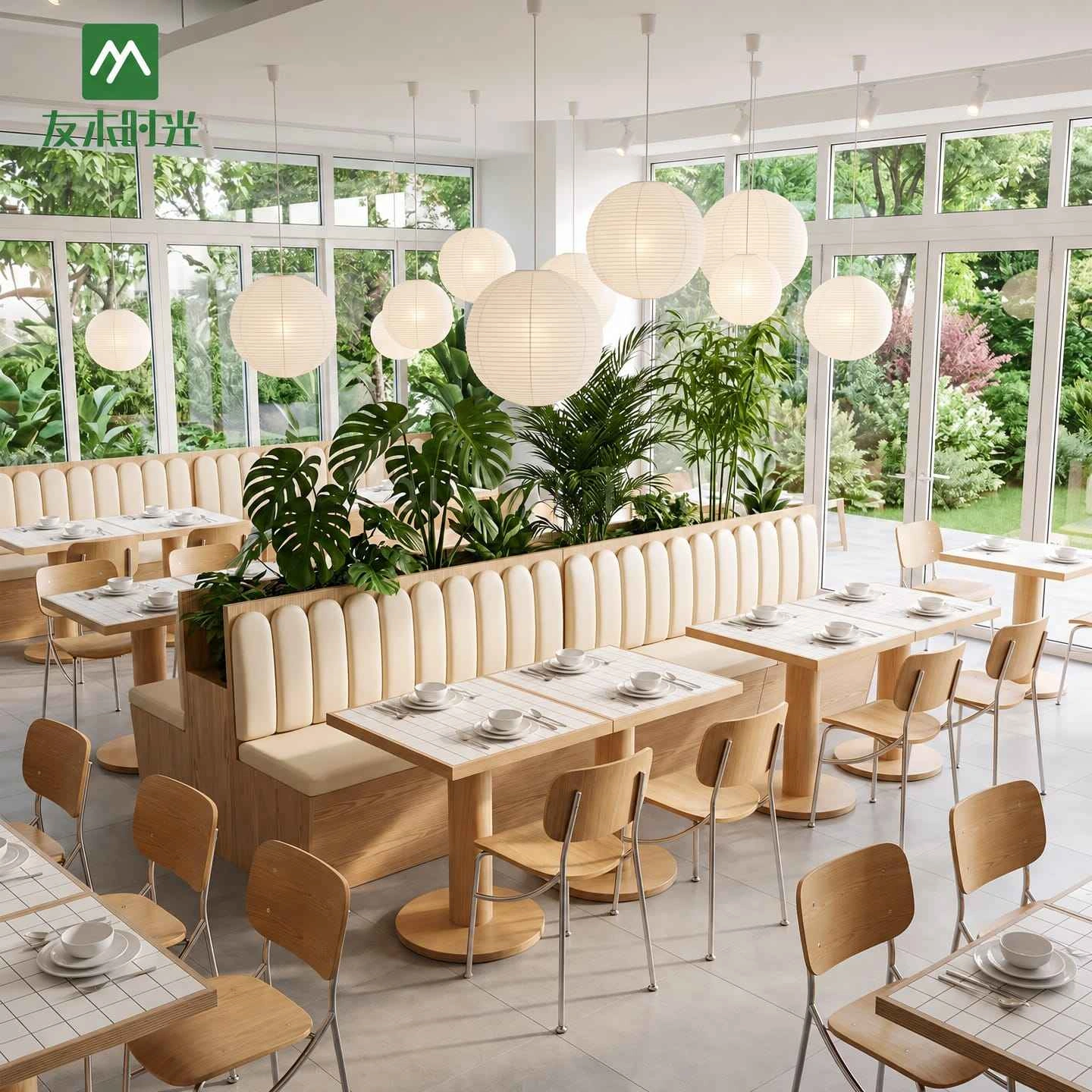
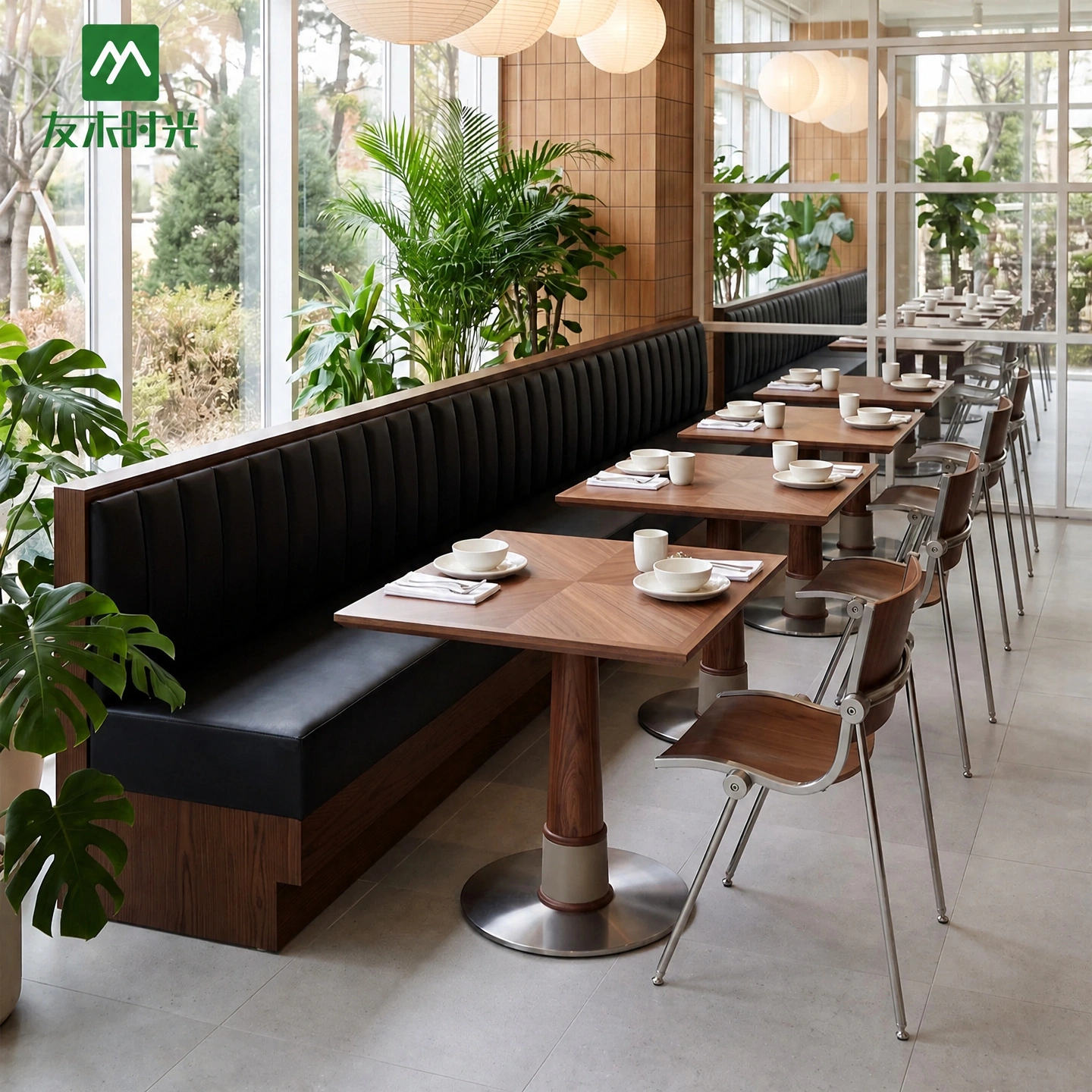
Booth Seating Renovation: Scientific Design, Guiding Behavior
Scale Reconstruction
- Booth cushions were replaced with medium-firm, high-density foam, maintaining comfort while reducing the “sinking” feeling
- Seat depth was reduced from 65 cm to 55 cm, encouraging a more upright and natural dining posture
功能升级
- The bottom of each booth was redesigned into large-capacity flip-top storage cabinets
- This solved customer complaints about having nowhere to place bags and reduced pressure on waitstaff
Layout Optimization
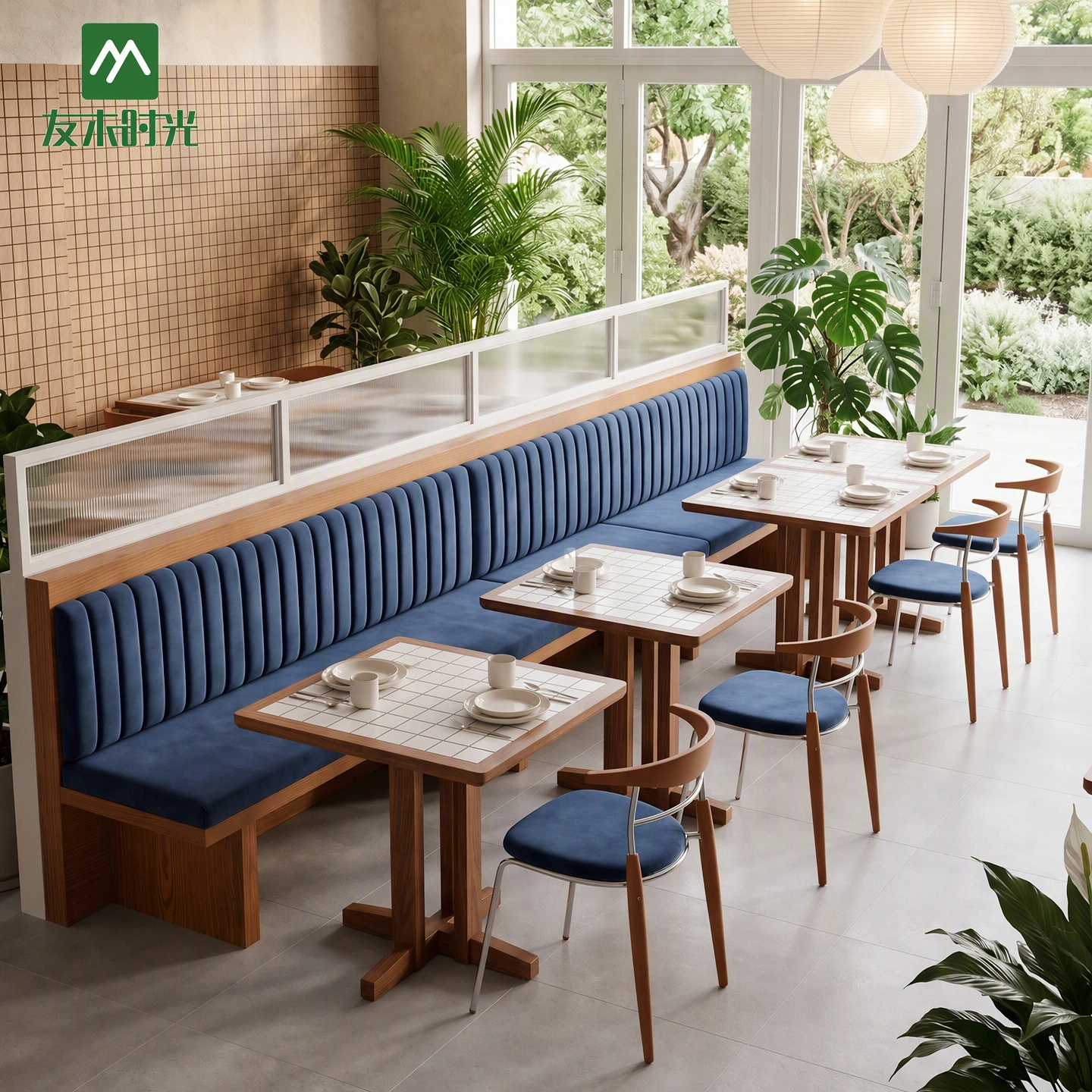
- Original “U”-shaped booths along two walls were converted into single-sided “I”-shaped booths along one wall
- Two movable single chairs were placed opposite the booths
- This allowed compact setups for two diners and quick table combinations for four, greatly improving layout flexibility
Lighting Renovation: Zoned Control, Creating Rhythm
Introduction of “Focus Lighting”
- Adjustable recessed spotlights (3000K color temperature, CRI >90) were installed above each booth table
- Light beams focus precisely on the food, enhancing visual appeal and subtly guiding attention toward eating
Division of “Light and Dark Zones”
- Public areas and the bar received brighter base lighting for openness and safety
- Booth areas were slightly dimmed to create a sense of privacy
- The contrast naturally lowered conversation volume and improved order during busy periods
Embedding “Rhythm Cues”
During off-peak hours, lighting remains warm and relaxed
During peak hours:
- Ambient lighting in public areas is increased
- Focus lighting in booths where customers have finished dining is subtly dimmed
This gentle environmental shift politely signals customers to speed up their pace—without verbal reminders or pressure.
Transformation Results: Surprising Results Backed by Data
The renovation was completed before the weekend, and the effects were immediate:
Table Turnover Rate Soared
In the first weekend after the renovation, the average dining time in the booth area decreased from 95 minutes to 65 minutes. During peak hours, the table turnover rate increased from 2 rounds to 5 rounds, achieving a 1.5-fold increase.
Increased Average Customer Spending
Thanks to the improved lighting that better highlighted the dishes, the order rate for signature dishes and beverages rose by 20%, driving a 15% increase in average customer spending.
Positive Customer Feedback
Customer comments included:
“It’s so much more convenient to put my bag by the table,”
“The food looks especially good in photos,”
“I don’t know why, but I feel like I’m eating more efficiently.”
Notably, there were zero negative reviews related to the renovation.
Improved Employee Efficiency
The added storage space and optimized seating layout streamlined food service and cleaning workflows, significantly improving staff efficiency during peak hours.
Case Study Insights: Why Can Micro-Renovations Create Big Returns?
The success of “Warm Light Kitchen” provides a highly replicable model for restaurants seeking efficiency improvements without large investments.
Precisely Address Pain Points
Rather than undertaking a costly, large-scale renovation, the team relied on data and observation to identify the real efficiency bottlenecks—namely, overly comfortable booth seating 和 sleep-inducing lighting.
High Return on Investment
Compared with the high cost, long closure periods, and uncertainty of full renovations, this targeted micro-renovation required only a few days, minimal disruption, and delivered fast, measurable returns, resulting in an exceptionally high ROI.
Action Checklist for Restaurant Owners
If your restaurant faces the challenge of strong customer traffic but low table turnover, consider starting with the following steps:
- Grab a Stopwatch
During peak hours, measure average dining times across different seating zones to identify where customers linger the longest. - Observe Customer Behavior
Are customers staying longer because seats are too comfortable?
Is the lighting too dim?
Are tables cluttered due to lack of storage for personal belongings? - Consider Low-Cost Solutions
Could targeted changes—such as replacing select seating, adding focused lighting, or improving storage functionality—break the stagnation without major investment?
结论
A restaurant’s profitability is hidden in countless operational details. A thoughtfully executed micro-renovation, much like precise acupuncture, can unblock critical bottlenecks and unlock far greater business potential than expected.
关于友木世光餐厅家具制造商
Youmu Shiguang is a professional restaurant manufacturer dedicated to creating well-designed, durable, and efficient solutions for modern dining spaces. With a deep understanding of restaurant operations, we specialize in the development and production of restaurant furniture and interior solutions that balance aesthetics, functionality, and long-term performance.
From seating and tables to customized layout solutions, Youmu Shiguang supports restaurants, cafés, and commercial dining projects with reliable manufacturing, strict quality control, and flexible customization capabilities. Our team works closely with clients to translate design concepts into practical products that enhance customer experience and improve operational efficiency.