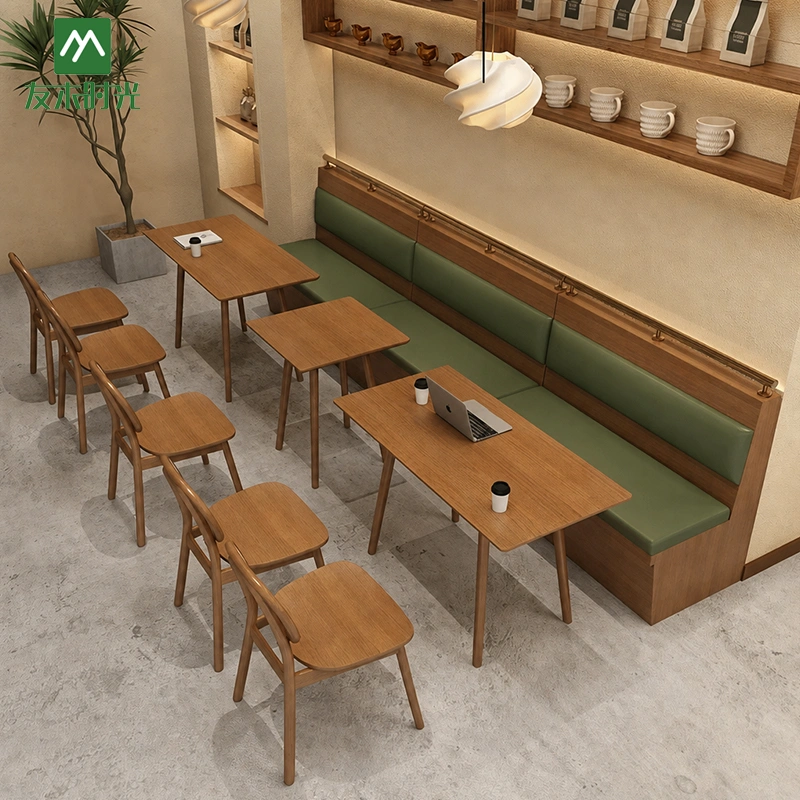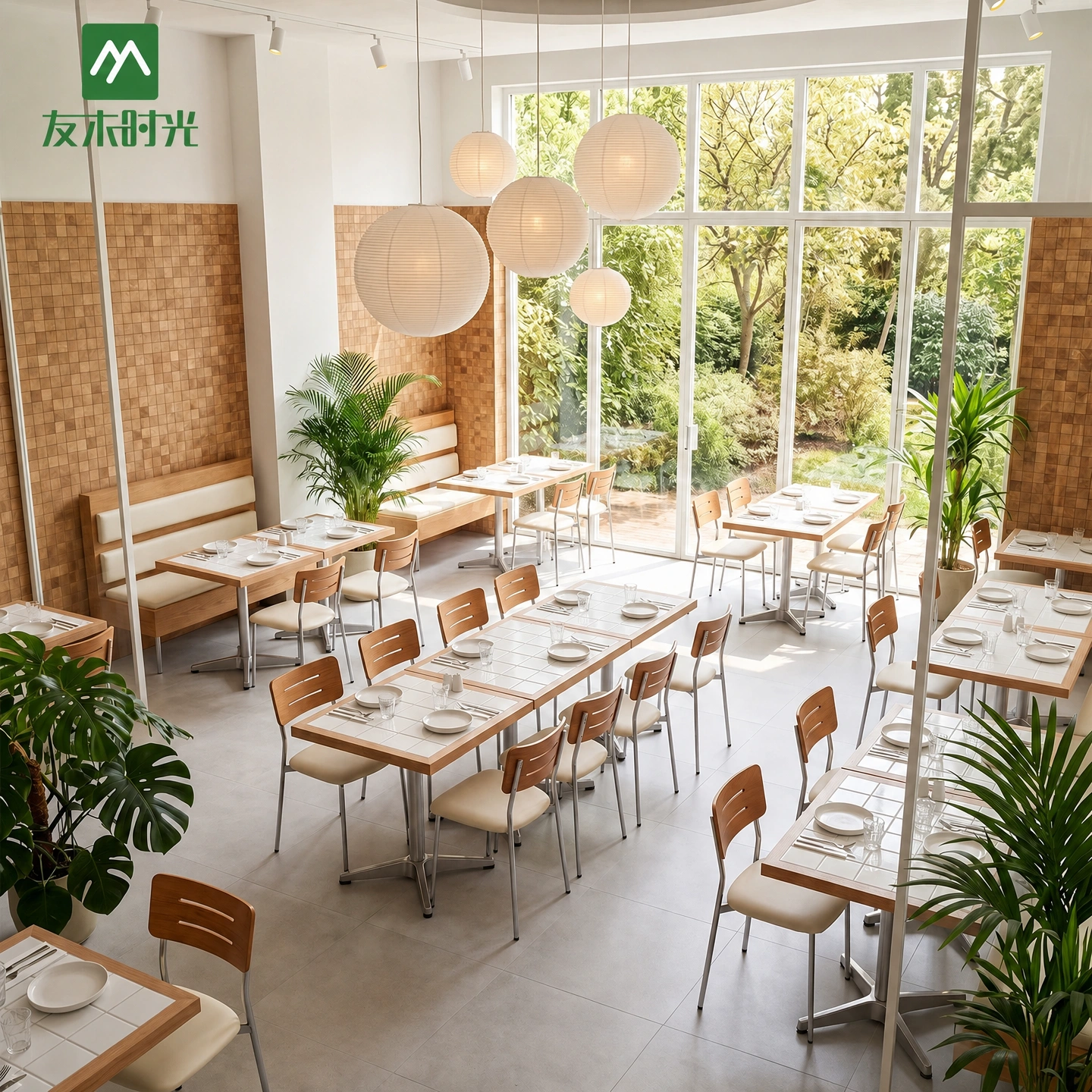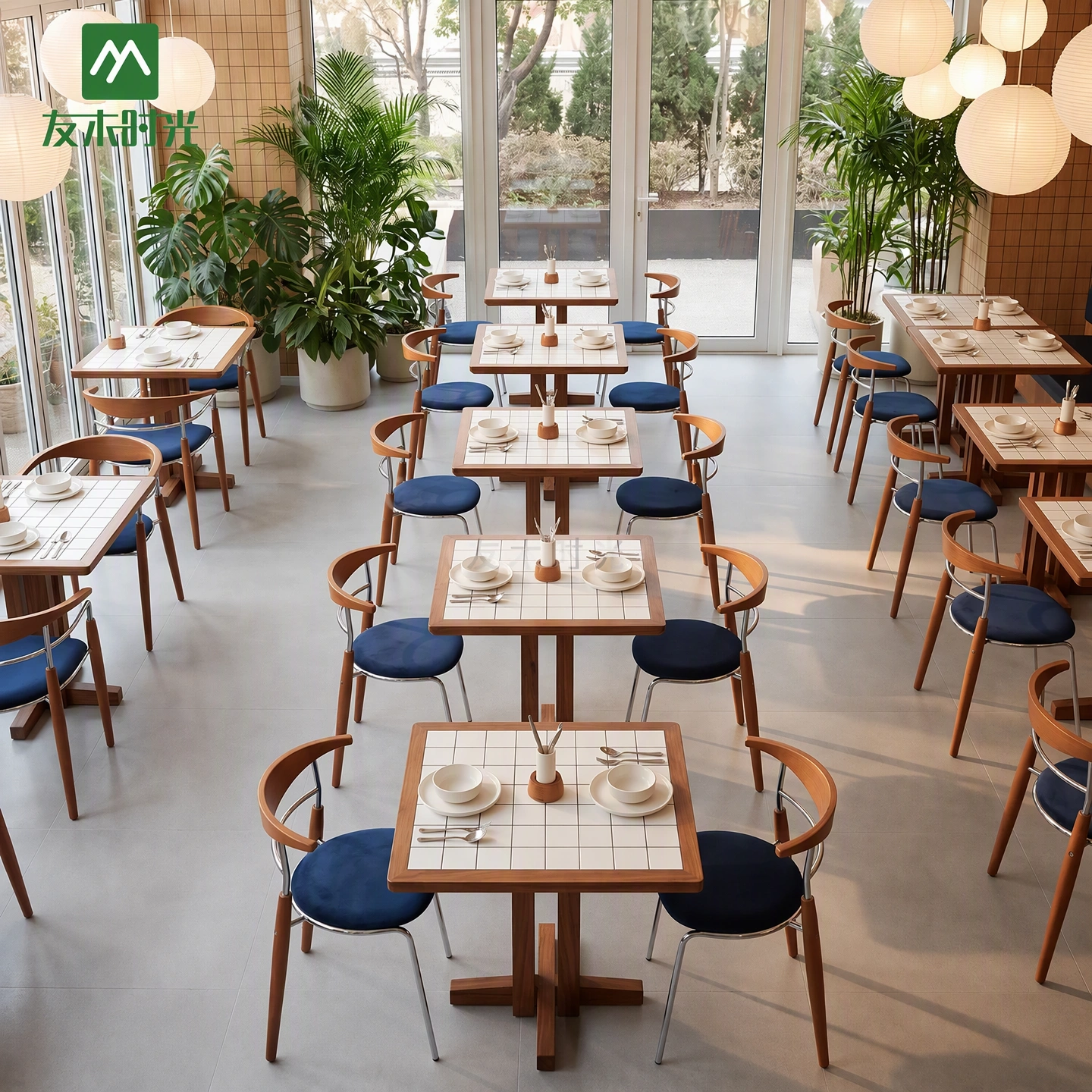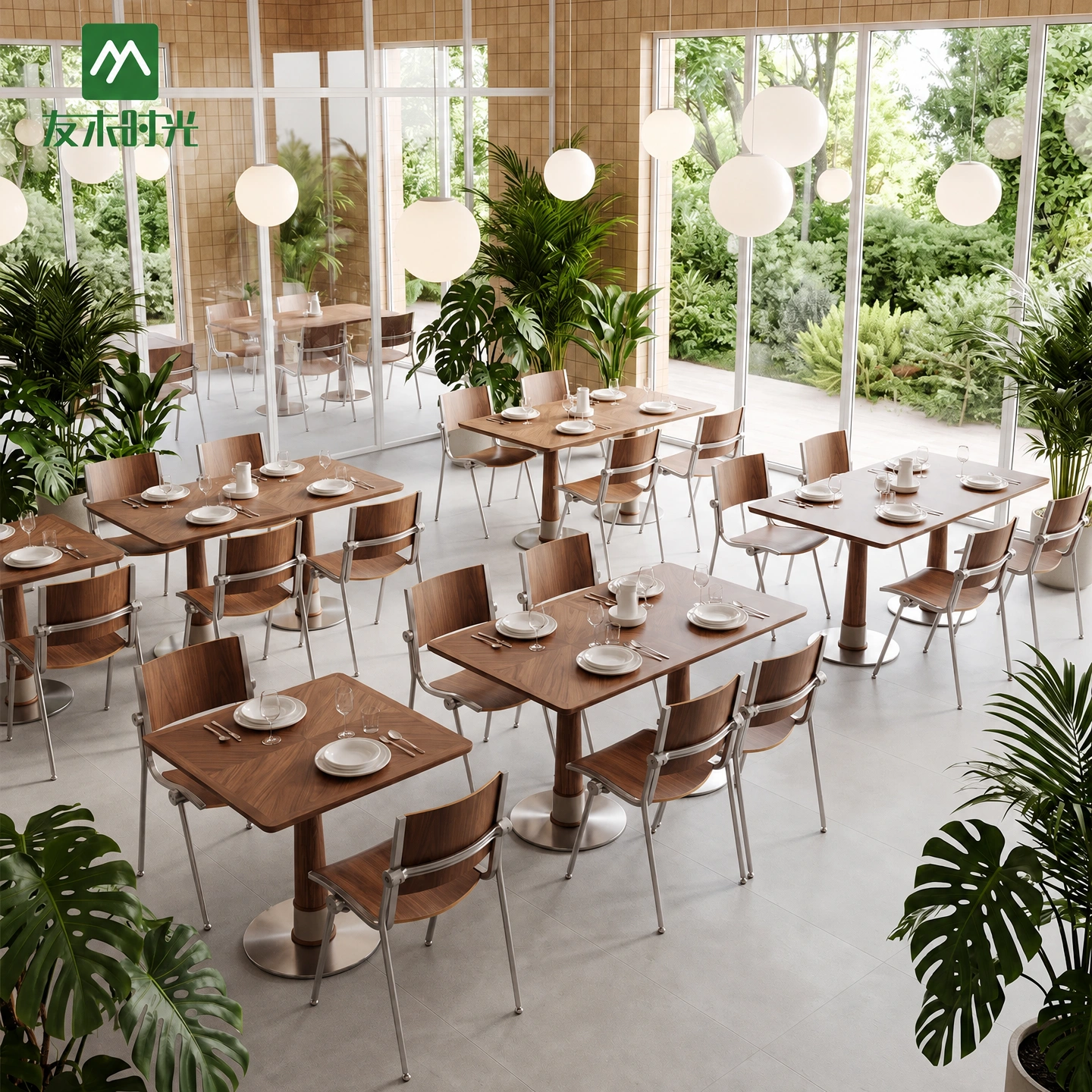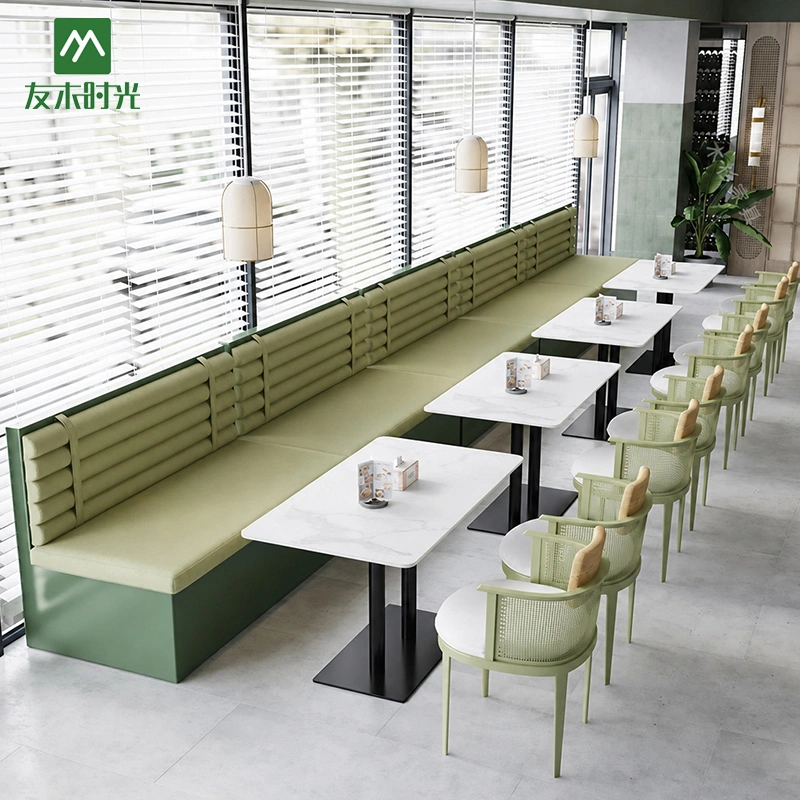
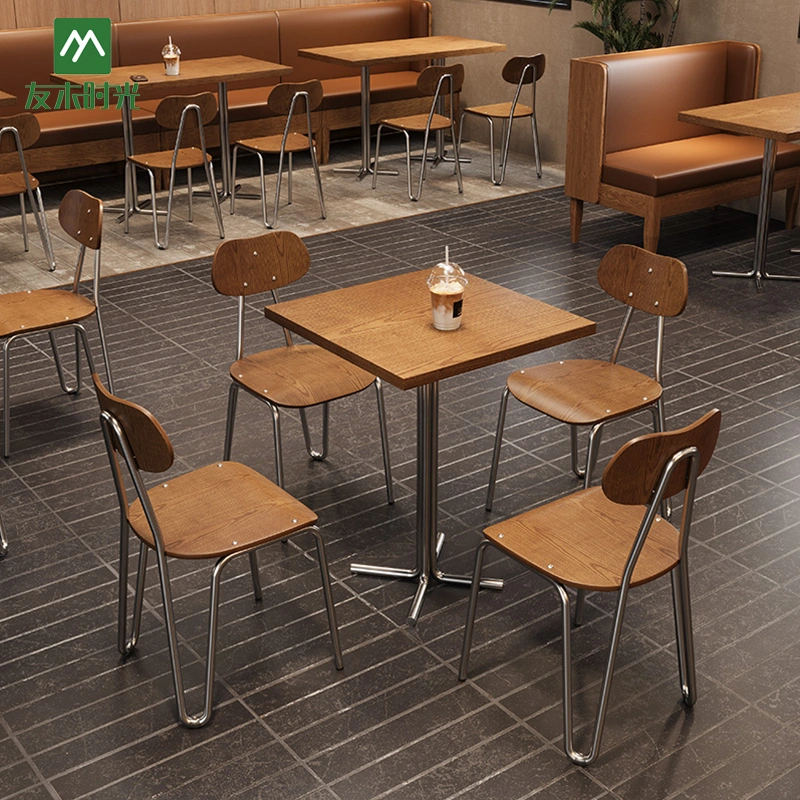
In modern restaurant furniture design, the “iron-wood combination” has become increasingly popular. Many restaurants, cafés, bistros, hotel dining areas, and commercial dining spaces are choosing tables and chairs made with metal frames and wooden seats or tabletops.
At first glance, this design is attractive because it combines the warmth of wood with the clean, industrial strength of metal. However, beyond appearance, the deeper reason lies in its structural stability, durability, and long-term commercial value.
For restaurant owners, furniture is not only a decoration. It must withstand daily customer traffic, frequent cleaning, moving, dragging, impact, and long hours of use. This is exactly where iron-wood restaurant furniture shows its advantage.
Pure Wood vs. Pure Iron: Why Single-Material Furniture Has Limitations
Before understanding the benefits of iron-wood furniture, it is important to look at the common limitations of single-material furniture.
Pure Wood Furniture
Solid wood furniture has a natural and warm appearance, making it suitable for many restaurant styles. However, wood is sensitive to changes in temperature and humidity. In commercial dining environments, air conditioning, kitchen heat, steam, spills, and seasonal climate changes may affect the wood structure.
Over time, pure wood table legs or chair frames may crack, warp, loosen, or become unstable. For restaurants with high customer turnover, this can lead to wobbling tables, unstable chairs, and higher maintenance costs.
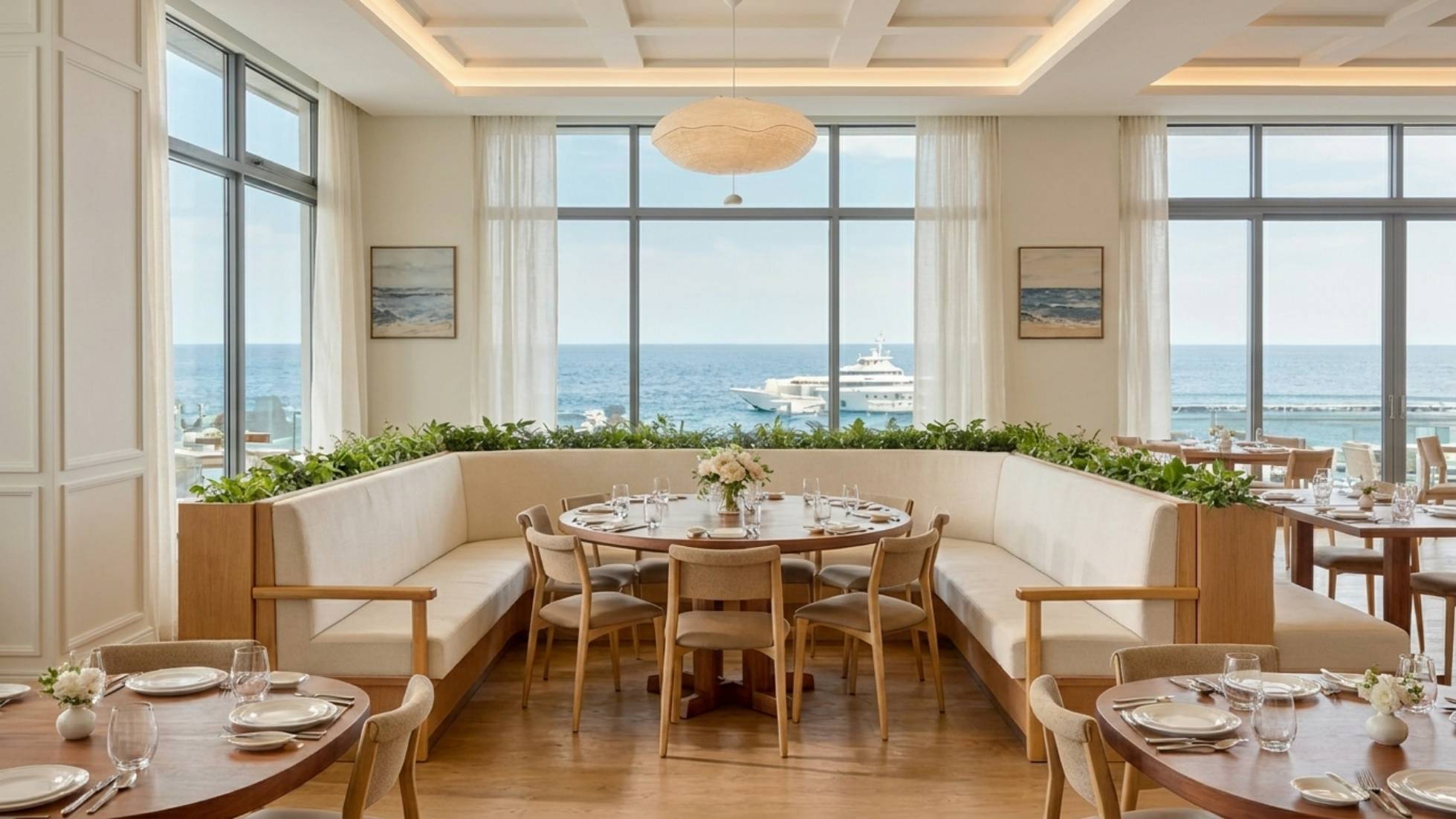
Pure Iron Furniture
Pure iron or full-metal furniture is usually strong and visually modern, but it also has some disadvantages. Under high-frequency use, welding points may experience pressure and slight deformation. Metal furniture may also feel cold to the touch, especially in dining environments where comfort is important.
In addition, pure metal chairs and tables can produce noticeable noise when moved, dragged, or bumped. For restaurants that care about atmosphere and customer experience, this may become a problem.

Why the Iron-Wood Combination Works Better
The iron-wood combination solves many of these problems by allowing each material to play its own role.
The metal frame provides strong structural support, while the wooden surface improves comfort and visual warmth. This makes the furniture both stable and welcoming. Compared with pure wood or pure iron furniture, iron-wood restaurant furniture offers a better balance between strength, usability, and design flexibility.
This is why it is widely used in:
Cafés and Brunch Restaurants: The wooden surface creates a warm and relaxed dining atmosphere, while the metal frame supports daily commercial use.
Fast Food and Casual Dining Restaurants: The strong structure is suitable for frequent customer turnover and high-use environments.
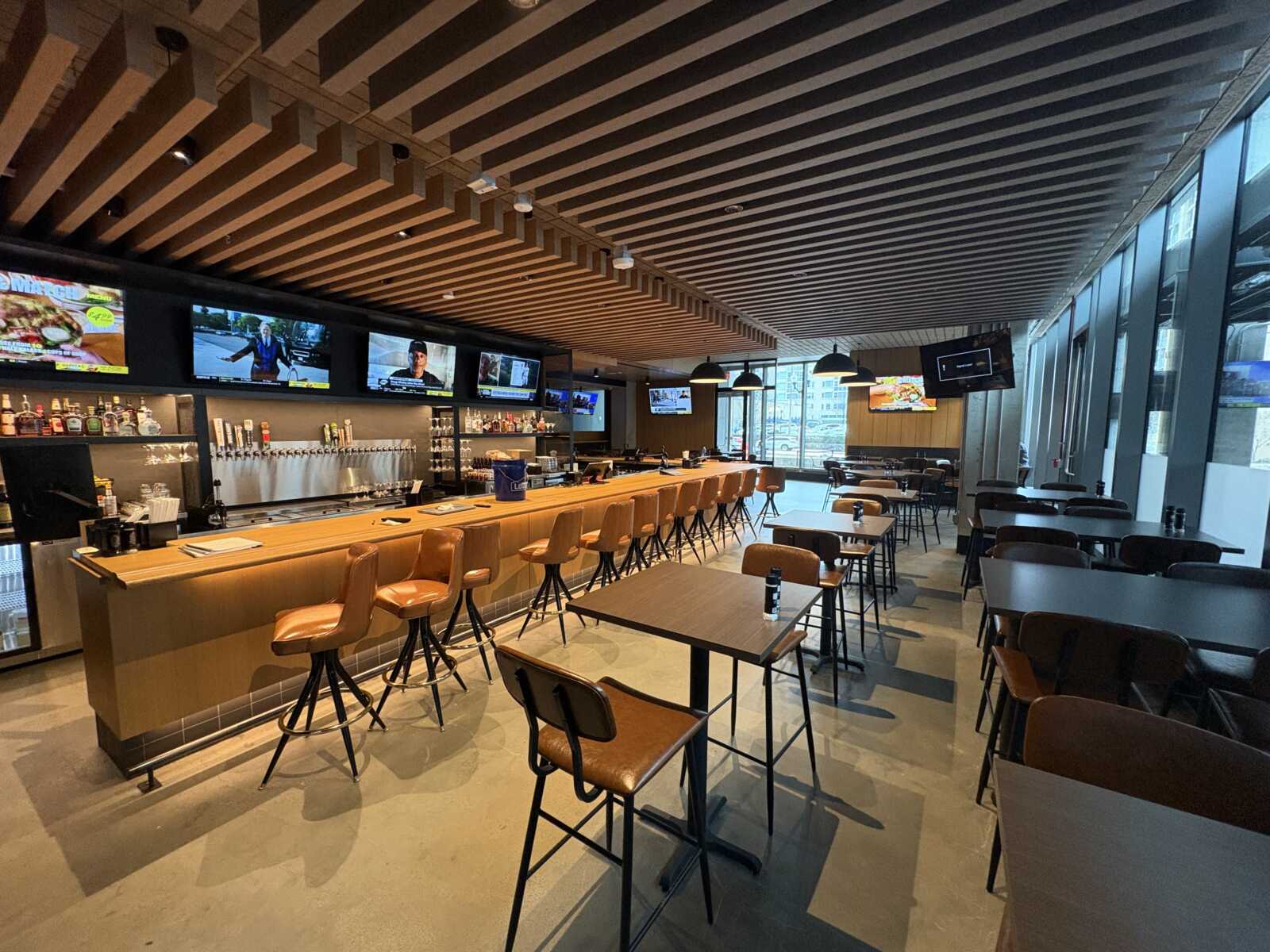
Hotel Restaurants and Business Dining Spaces: The combination offers both stability and a refined commercial appearance.
Industrial-Style Restaurants and Bars: Metal and wood naturally match industrial, vintage, urban, and modern interior styles.
Chain Restaurants: Durable structure, easy maintenance, and consistent design make iron-wood furniture suitable for standardized restaurant projects.
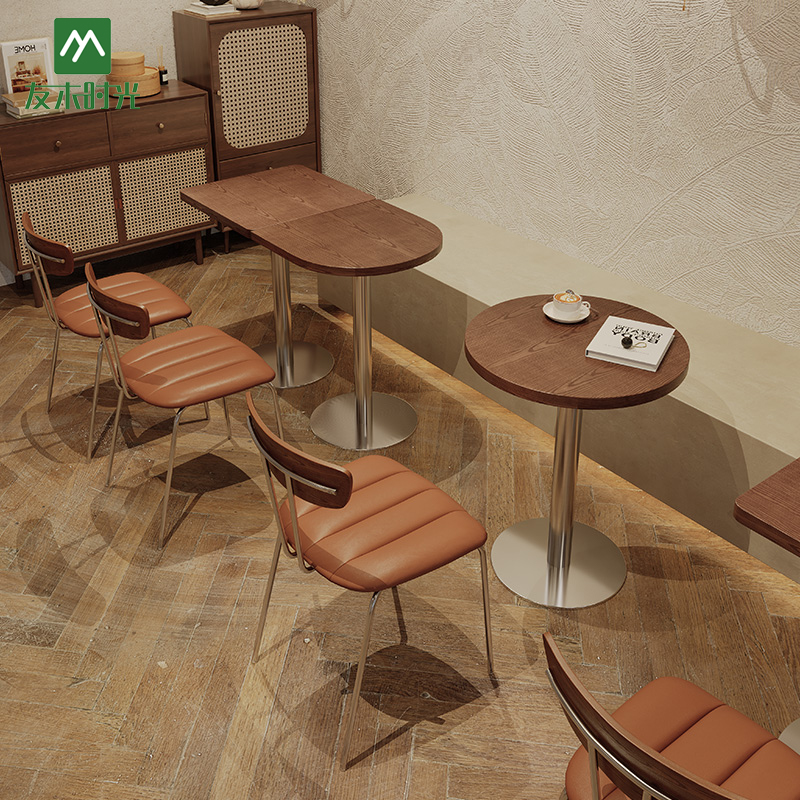
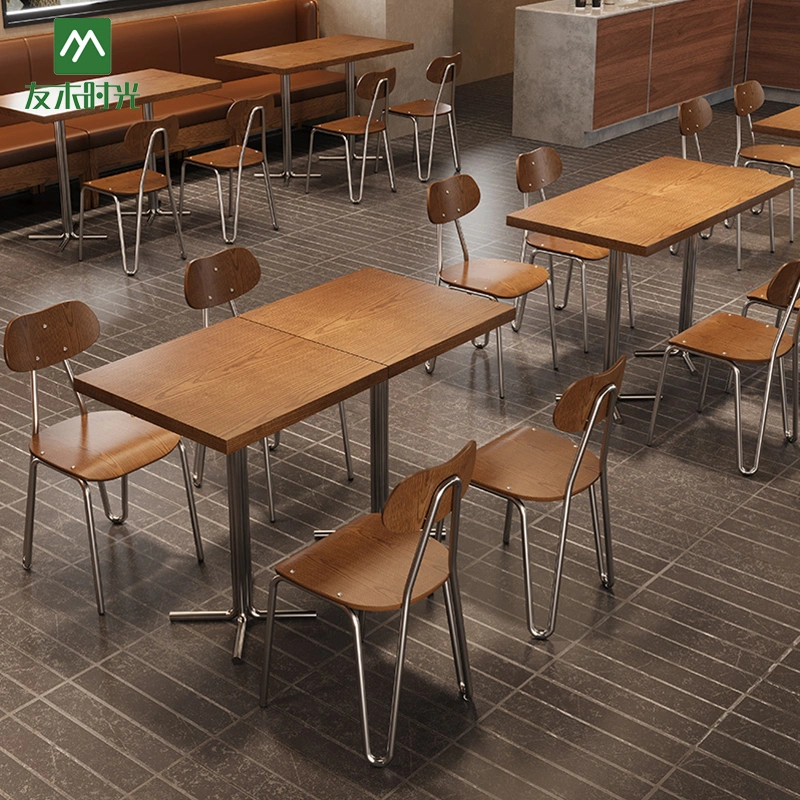
Three Key Reasons Behind Its Structural Stability
1. Complementary Mechanical Performance
The biggest advantage of iron-wood furniture is the complementary performance of the two materials.
The iron frame resists bending, shaking, and deformation. It provides a strong skeleton for the table or chair. The wooden seat or tabletop, on the other hand, helps absorb impact and provides a more comfortable surface for customers.
In daily restaurant use, tables and chairs are often moved, bumped, and loaded with different weights. A metal frame can maintain structural strength, while the wood helps reduce rigidity and improve user comfort. This makes the whole structure more reliable than furniture made from only one material.
2. More Reliable Connection Structure
For restaurant furniture, stability is not only about the material. The connection method is equally important.
High-quality iron-wood furniture usually uses pre-embedded nuts, high-strength bolts, and bottom cross braces. These components help the table or chair stay tight and stable after long-term use.
Compared with ordinary wood screws, metal bolts provide a stronger fastening force. Pre-embedded nuts make repeated assembly and disassembly more reliable. Bottom cross braces help prevent shaking from different directions, especially for restaurant tables that are frequently dragged or moved.
A well-designed connection structure can greatly reduce loose screws, swaying legs, and unstable tabletops.
3. Stronger Environmental Adaptability
Restaurant environments are more demanding than ordinary home environments. Furniture may face hot soup spills, oil stains, cleaning liquids, moisture, friction, and frequent impact.
Iron-wood furniture performs well in these conditions. The metal frame can be treated with anti-rust and moisture-resistant finishes, making it more suitable for long-term commercial use. The wooden surface can be finished with scratch-resistant, oil-resistant, and easy-clean coatings.
This means the furniture can better handle daily cleaning, spilled drinks, food stains, chair movement, and customer use. For restaurant owners, this helps extend service life and reduce replacement frequency.
What Should Restaurants Check Before Purchasing?
When buying iron-wood restaurant tables and chairs from a 餐厅家具制造商, buyers should not only look at the design. The internal structure and production details are more important for long-term use.
1. Check the Connectors
Ask whether the furniture uses metal bolts, pre-embedded nuts, or ordinary wood screws. Metal bolts and embedded nuts usually offer better stability, especially for commercial restaurant furniture that needs to withstand daily movement and repeated use.
2. Check the Cross Braces
For tables, check whether there is an iron cross brace or reinforcement structure underneath the tabletop. This detail helps prevent shaking and improves overall load-bearing performance.
For chairs, check whether the frame has reinforced welding points, stable leg angles, and proper support under the seat.
3. Check the Wood Thickness
For restaurant tables, the tabletop thickness should generally be at least 2.5 cm for better strength and durability. A thicker tabletop provides better support and reduces the risk of warping or deformation.
For wooden seats, buyers should also check the surface treatment, edge finishing, and comfort level.
4. Check the Surface Finish
The metal frame should have an anti-rust surface treatment, such as powder coating or other protective finishes. The wooden surface should be smooth, easy to clean, and resistant to common restaurant stains.
Good surface finishing not only improves appearance but also affects the furniture’s service life.
5. Check Customization Options
For restaurant projects, furniture often needs to match the overall interior design. Buyers can consider customized options such as wood color, metal frame color, tabletop size, chair height, seating layout, and logo or brand style.
Custom iron-wood furniture can better support different restaurant concepts, from warm cafés to modern commercial dining spaces.

Why Iron-Wood Furniture Is a Smart Choice for Restaurant Projects
For restaurants, furniture is a long-term investment. From the perspective of a 餐厅家具制造商, choosing stable and durable tables and chairs helps improve daily operation efficiency, reduce maintenance costs, and create a better customer experience.
Iron-wood combination furniture is popular because it offers:
Stronger Structural Stability: The metal frame provides firm support, while the wood improves comfort and impact resistance.
Longer Service Life: Reinforced connections, anti-rust metal frames, and treated wooden surfaces help the furniture withstand high-frequency use.
Better Dining Atmosphere: The combination of metal and wood balances strength with warmth, making the space feel both durable and inviting.
Flexible Design Possibilities: Different wood grains, colors, metal finishes, and structures can be customized for various restaurant styles.
Better Value for Commercial Use: Compared with furniture that needs frequent repair or replacement, stable iron-wood furniture can reduce long-term operating costs.
结论
The popularity of iron-wood combination restaurant furniture is not only about appearance. Its real value comes from the balance between metal strength and wood comfort.
Pure wood furniture may be affected by humidity, warping, and long-term loosening. Pure iron furniture may feel cold, noisy, or rigid. By combining the advantages of both materials, iron-wood tables and chairs provide better structural stability, stronger durability, and greater adaptability to commercial restaurant environments.
For restaurant owners, wholesalers, contractors, and project buyers, working with a one-stop commercial restaurant manufacturer will largely help with choosing high-quality iron-wood restaurant furniture that can support both daily operation and long-term brand image.
When purchasing, remember to check the connectors, reinforcement structure, wood thickness, and surface finish. These details determine whether the furniture is only good-looking or truly suitable for long-term restaurant use.