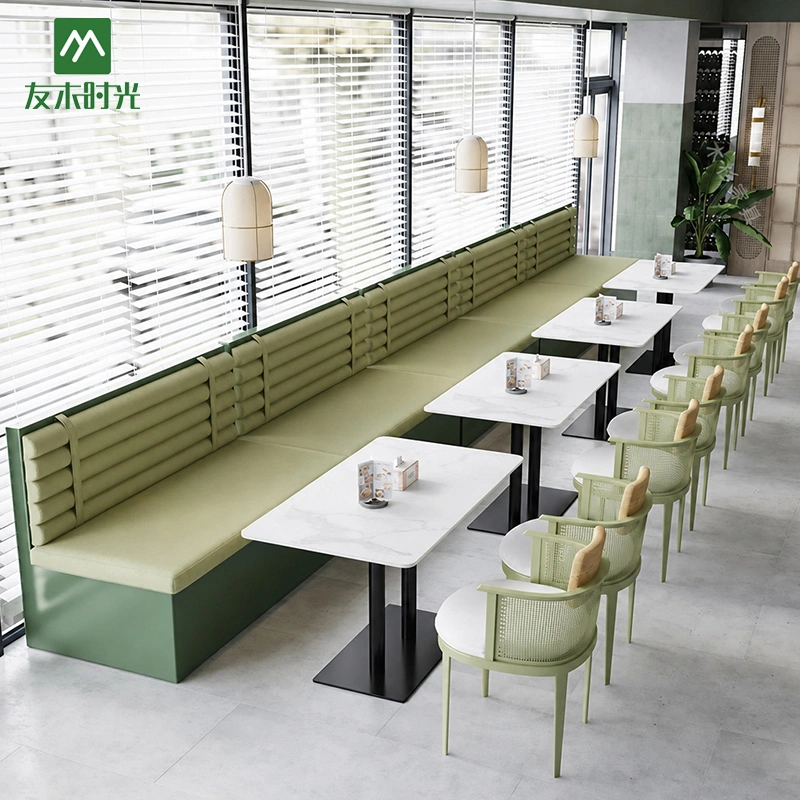
In the past, restaurant furniture was often seen as a basic functional element. Tables were used for dining, chairs were used for sitting, and booths were simply used to save space.
But today, restaurant furniture plays a much bigger role.
For modern restaurants, furniture is no longer just about “letting customers sit down and eat.” It has become part of the customer experience, brand atmosphere, operational efficiency, and even social media marketing.
From the moment customers enter the restaurant and wait for a table, to the time they sit down and enjoy the meal, and finally to the moment they take photos and share them online, furniture is involved in almost every step of the customer journey.
Great restaurant furniture not only supports the body but also guides emotions, controls rhythm, strengthens brand memory, and encourages customers to share their experience.
Como um fabricante de mobiliário para restaurantes que oferece tudo num só local, we go beyond simply customizing furniture for our clients; we also provide comprehensive layout solutions. Next, I will explain how this concept is put into practice.
Waiting Area: Creating an Emotional Buffer for First Impressions
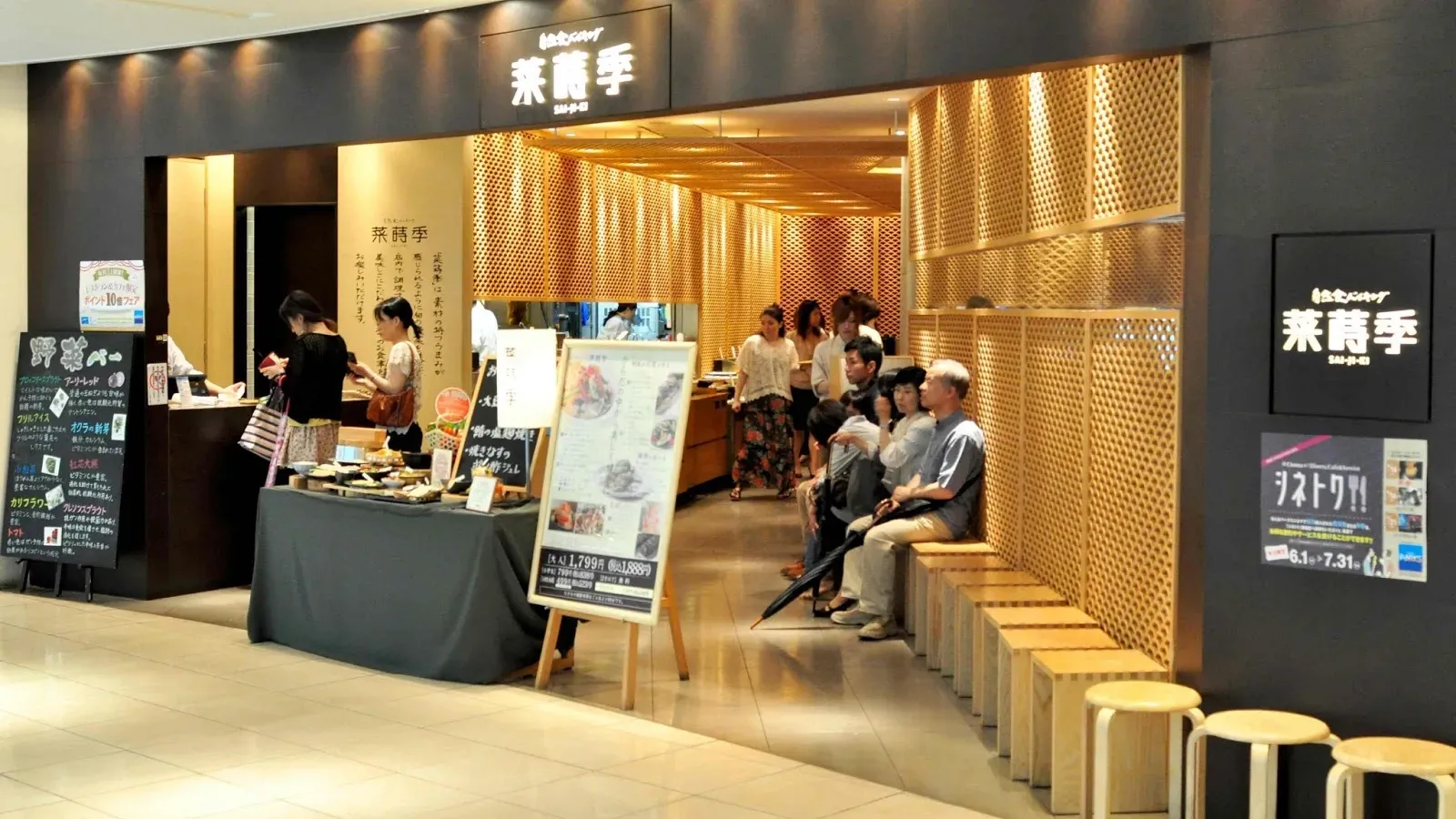
The waiting area is often the first physical contact between customers and the restaurant. It is also the stage where customers are most likely to lose patience and leave.
A well-designed waiting area can reduce anxiety, improve comfort, and make customers feel that waiting is still part of the dining experience.
Comfortable, but Not Too Relaxed
Waiting chairs should provide basic comfort. Backrests, soft cushions, and durable upholstery materials can make customers feel welcomed. For high-traffic restaurants, technical fabric, leather-like materials, or washable surfaces are practical choices because they are easier to clean and maintain.
However, waiting furniture should not be designed like lounge furniture. If the seat depth is too deep or the chair is too soft, customers may sit too comfortably and become unwilling to move when their table is ready.
The goal is to make customers feel comfortable enough to wait, but not so relaxed that the waiting area affects table turnover.
Turning Waiting into Anticipation
A smart waiting area does more than provide seating. It can also create anticipation.
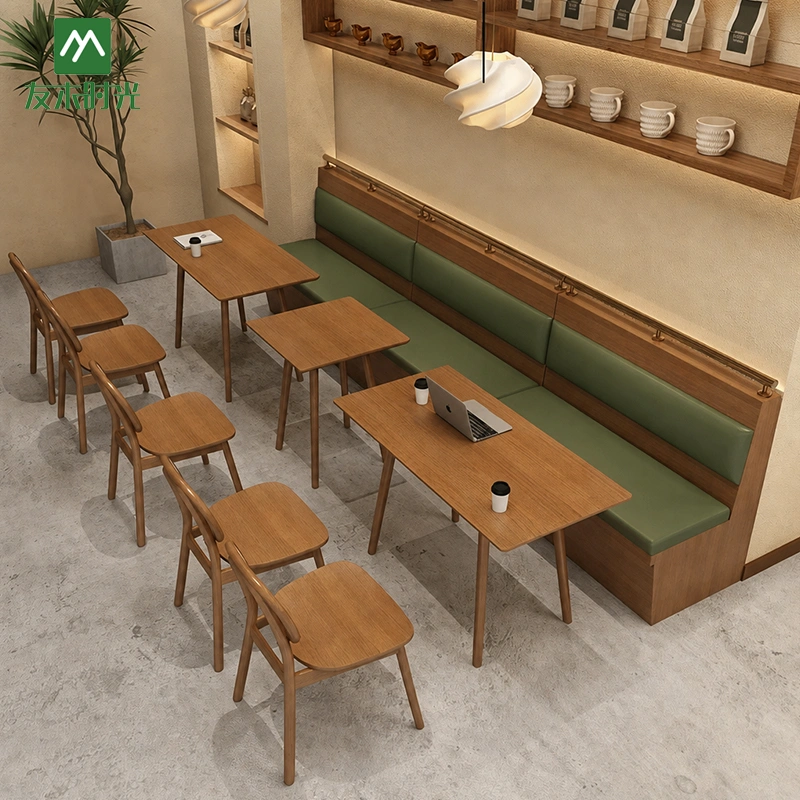
For example, long booths placed along the wall can be paired with small side tables for menus, tea, snacks, or promotional cards. This turns waiting into a “preview” of the dining experience. Customers can browse the menu, discuss what to order, and build expectations before they sit down.
This kind of design helps reduce the psychological burden of waiting. Instead of feeling delayed, customers feel that the dining experience has already started.
Strengthening Brand Memory
Waiting furniture can also carry brand information.
The restaurant logo, slogan, brand color, or unique decorative details can be added to the backrest, side panel, or nearby wall. When customers sit, wait, or walk past the restaurant, these visual elements become part of the brand impression.
For restaurants located in shopping malls, food streets, or commercial complexes, this is especially valuable. Passersby can notice the furniture style and brand details even before entering the restaurant.
In short, the waiting area should help restaurants keep customers from turning away. Good waiting furniture creates comfort, reduces impatience, and quietly builds brand recognition.
Dining Area: Balancing Dwell Time and Table Turnover
The dining area is the core of the restaurant experience. It directly affects how customers eat, how long they stay, how much they order, and whether they want to come back.
Different restaurant types need different furniture strategies. A fast food restaurant, a casual café, and a high-end dining restaurant should not use the same seating logic.
Ergonomic Table and Chair Proportions
Comfort starts with the right dimensions.
A common comfortable combination is a seat height of around 45 cm and a table height of around 75 cm. This height difference allows customers to eat naturally, talk comfortably, and maintain a relaxed posture during the meal.
If the table is too high, customers may feel tired while eating. If the chair is too low, the dining posture becomes uncomfortable. These details may seem small, but they strongly influence the overall dining experience.
For restaurants with long dining times, such as hot pot restaurants, Western restaurants, hotel restaurants, or business dining spaces, ergonomic proportions are especially important.
Choosing Materials According to Restaurant Rhythm
Mobiliário de restaurante materials also influence customer behavior.
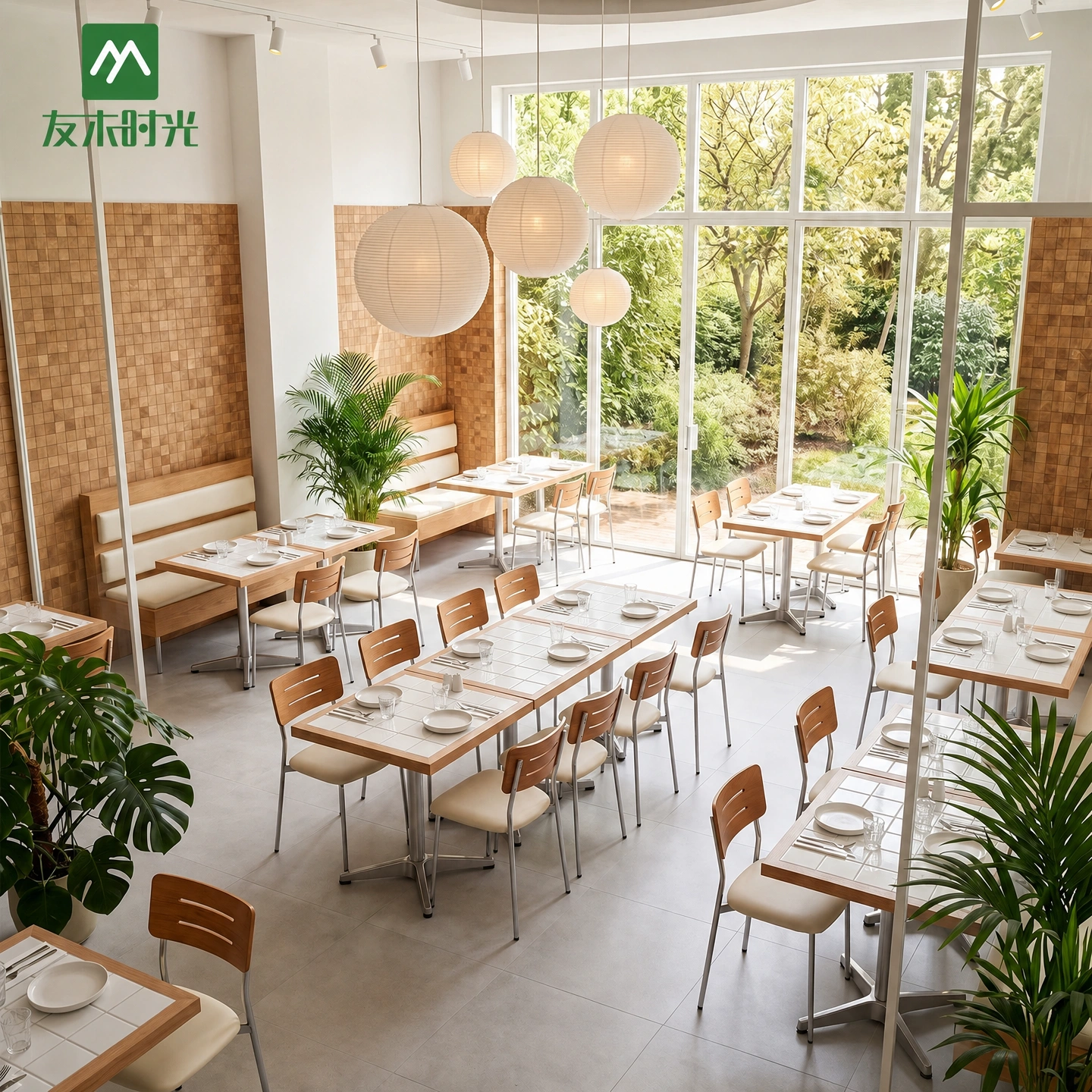
Fast food restaurants and high-turnover dining spaces often use solid wood seats, fire-resistant boards, or other relatively firm materials. These surfaces are durable, easy to clean, and suitable for quick dining. They help maintain a faster table turnover rhythm.
In contrast, formal dining restaurants, cafés, brunch restaurants, and boutique restaurants often use cushioned chairs or upholstered booths. Softer seating can encourage customers to stay longer, order more drinks or desserts, and enjoy a more relaxed dining atmosphere.
The key is not simply to make furniture “comfortable.” The key is to match comfort with the restaurant’s business model.
Stable Structure Improves Customer Trust
Few things damage the dining experience more than a wobbling table.
A table that shakes when customers cut food, place drinks, or lean forward can immediately create a poor impression. Even if the food is good, unstable furniture makes the restaurant feel poorly managed.
For commercial restaurant furniture, structural stability is essential. Cross braces, reinforced metal frames, pre-embedded nuts, high-strength bolts, and durable connectors can help reduce shaking and loosening after long-term use.
Restaurants are high-frequency environments. Furniture is moved, cleaned, bumped, and used repeatedly every day. A stable structure not only improves customer comfort but also reduces maintenance costs for restaurant owners.
In short, dining furniture should understand rhythm. It should help customers stay longer when the restaurant needs atmosphere and spending, and help tables turn faster when the restaurant needs efficiency.
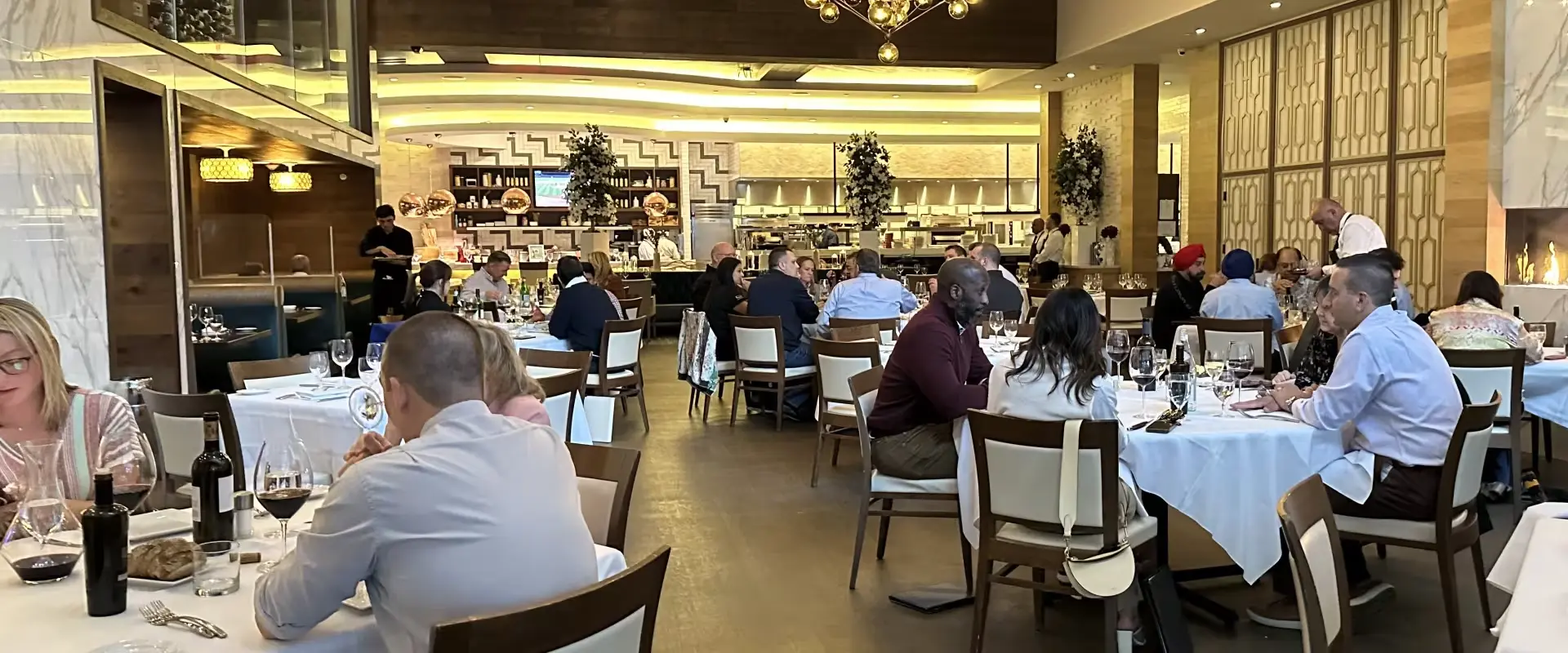
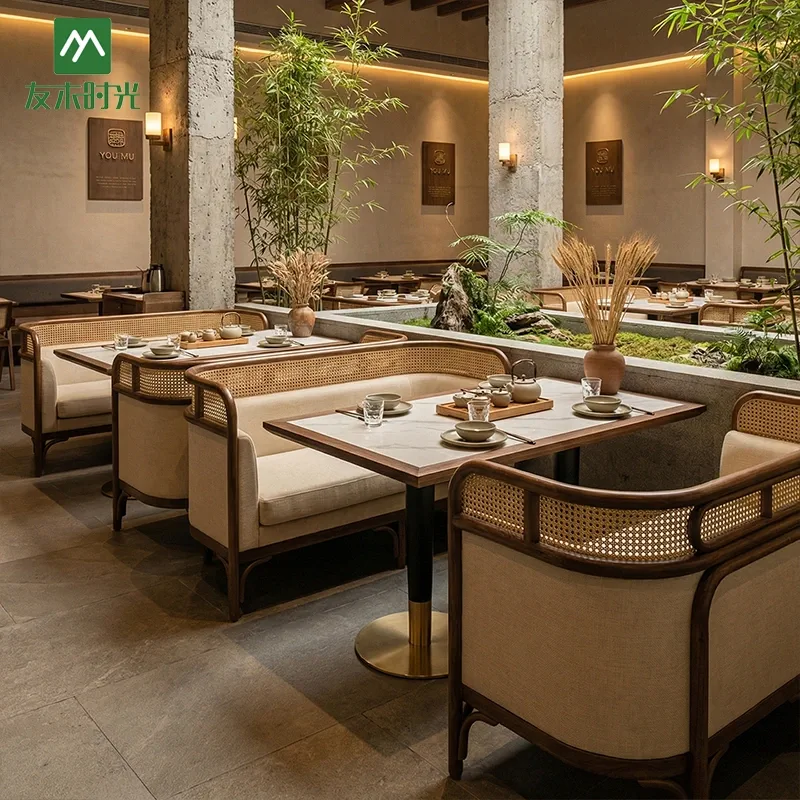
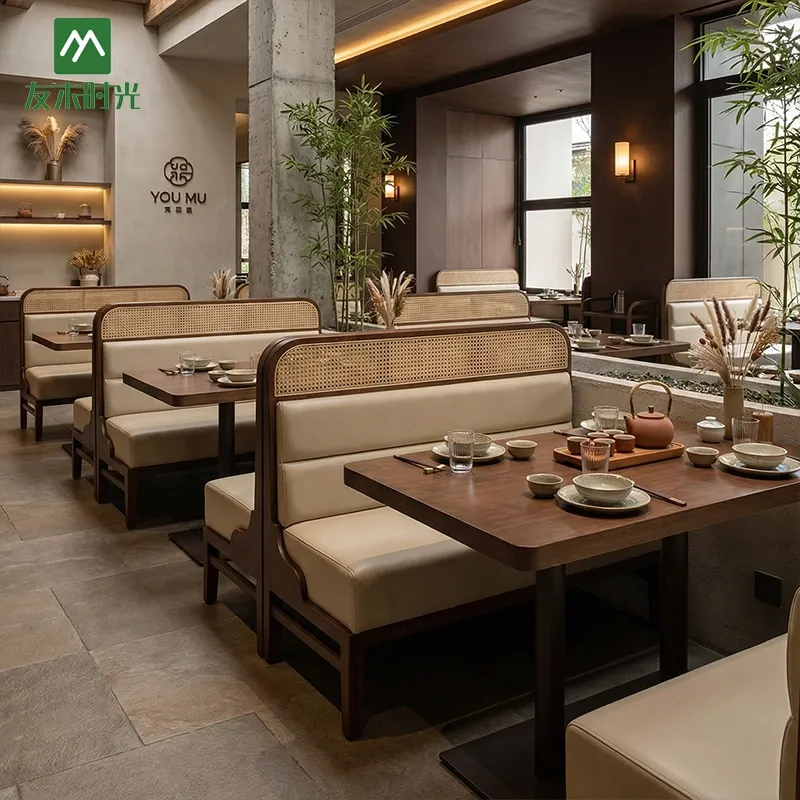
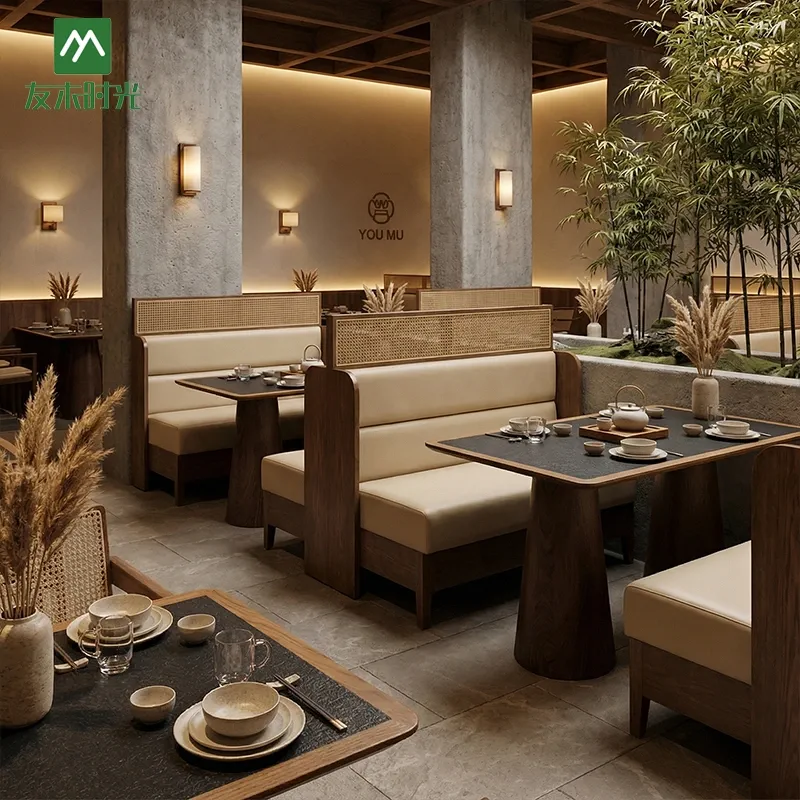
Photo Wall and Social Sharing: Turning Furniture into a Marketing Tool
In the social media era, restaurant design is no longer only for people who dine inside the space. It is also for people who see the restaurant online.
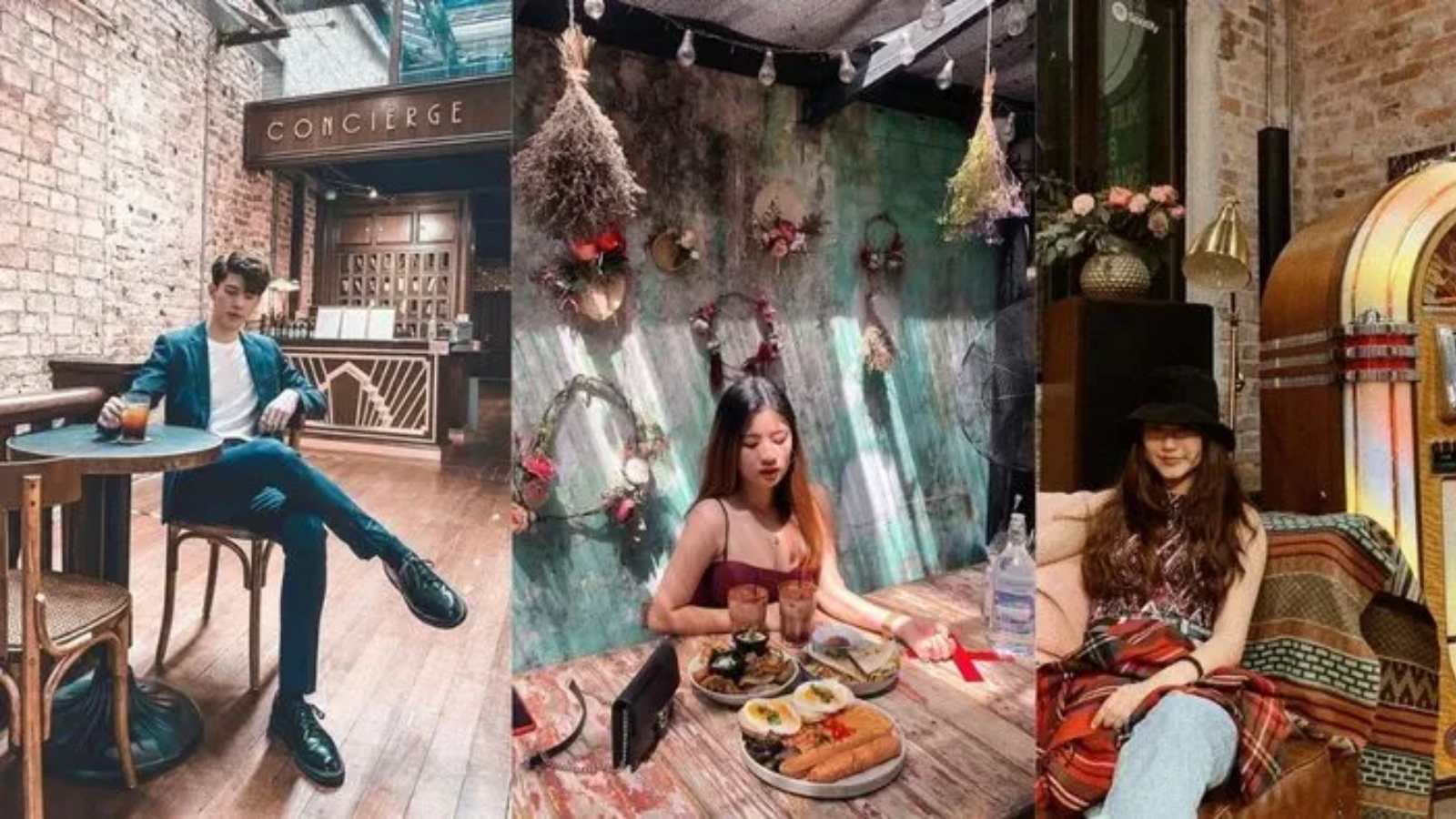
A photo posted by a customer can become free exposure. A beautiful booth, a distinctive chair, or a stylish corner can attract new visitors before they even read the menu.
This is why furniture can no longer be treated as a silent background. In many successful restaurants, furniture is part of the visual identity.
Creating a Strong Visual Focus
A “photo-worthy” restaurant usually has one or more memorable visual elements.
It could be a uniquely designed bar stool, a curved booth, a solid wood decorative frame, a colorful chair set, or a customized table design. These elements act like a visual hammer. Customers remember them quickly and are more willing to take photos.
For theme restaurants, cafés, dessert shops, milk tea shops, and trendy dining spaces, furniture can become one of the strongest tools for visual recognition.
When customers see the same style repeatedly online, they begin to associate it with the restaurant brand.
Using Color and Material Contrast
Good photos often come from contrast.
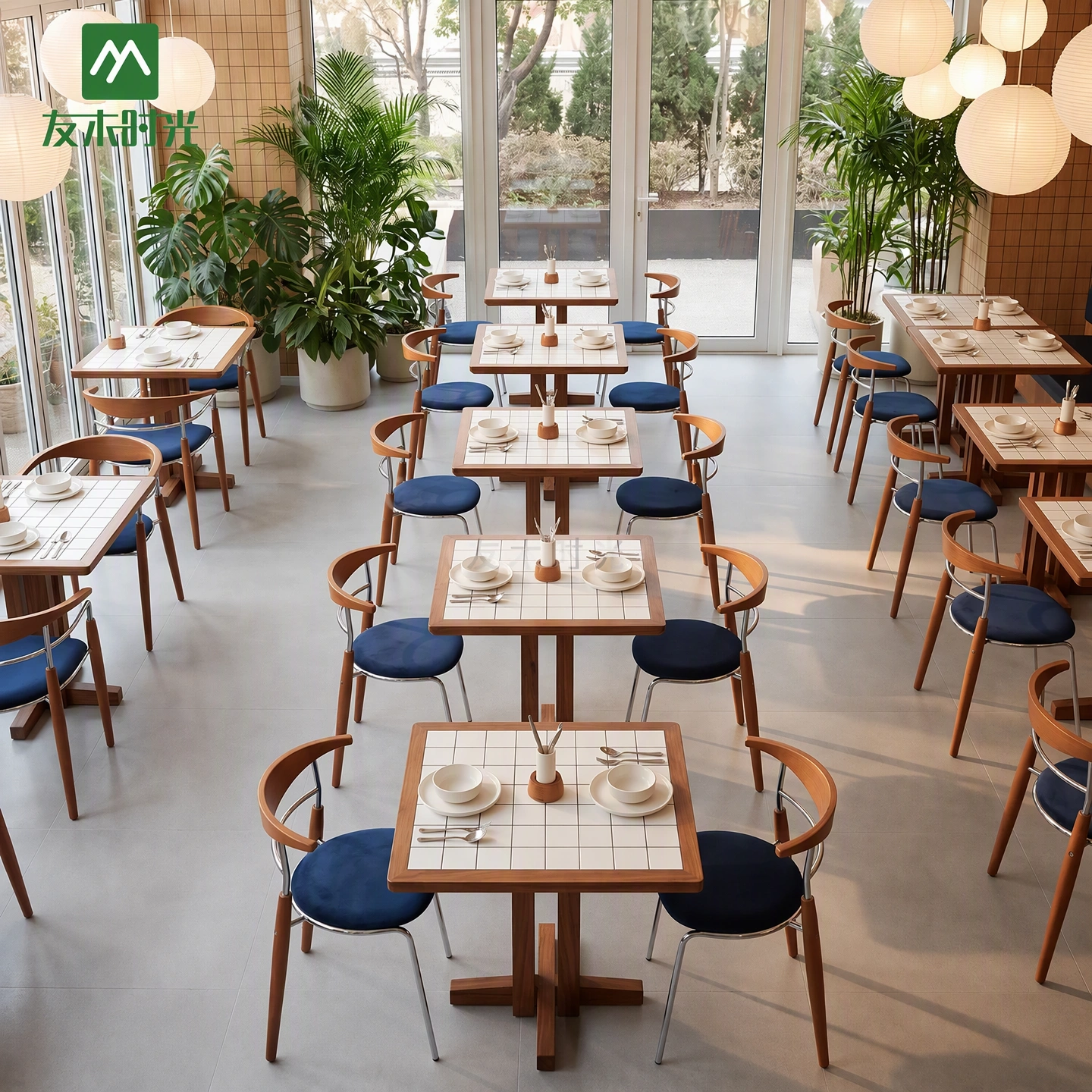
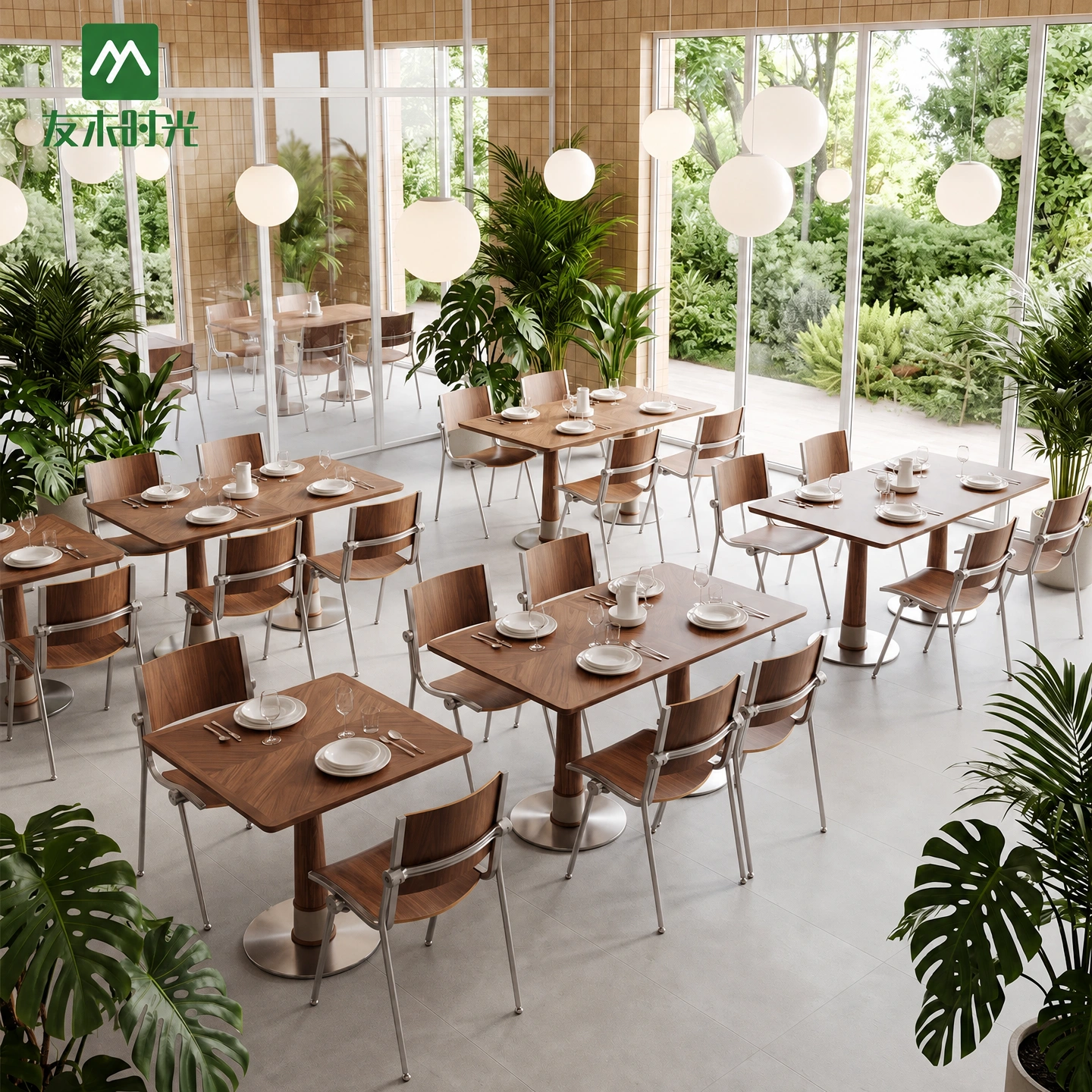
Dark wood tabletops paired with colorful metal chair frames can create a modern and lively look. Rattan chair backs combined with warm pendant lights can create a relaxed and natural atmosphere. Soft upholstered booths placed against textured walls can make the space feel more premium.
Material contrast also improves visual depth. Wood, metal, fabric, leather, stone, and rattan can be combined to create different moods.
For example:
Dark wood + black metal creates an industrial style.
Light wood + beige upholstery creates a warm café style.
Rattan + warm lighting creates a natural leisure style.
Marble tabletops + velvet chairs create a more luxurious dining atmosphere.
When furniture design matches the restaurant’s brand positioning, customers can understand the style of the restaurant even before tasting the food.
Designing Details for Easy Photo Taking
Photo-friendly furniture is not only about appearance. It is also about convenience.
Small details can encourage customers to take photos and share them. For example, a small shelf near the table can hold drinks or decorative items. A hook under the table can hold bags. A wider tabletop can make food presentation easier. A booth corner with good lighting can naturally become a popular photo spot.
Some restaurants even reserve certain seats as “best photo seats,” using special chair colors, wall decorations, or table shapes to create a shareable corner.
These details make customers feel that the restaurant understands their behavior. When taking photos becomes easier, sharing also becomes more likely.
In short, furniture is not just the background of a customer’s photo. It can become both the protagonist and the supporting role of social media content.
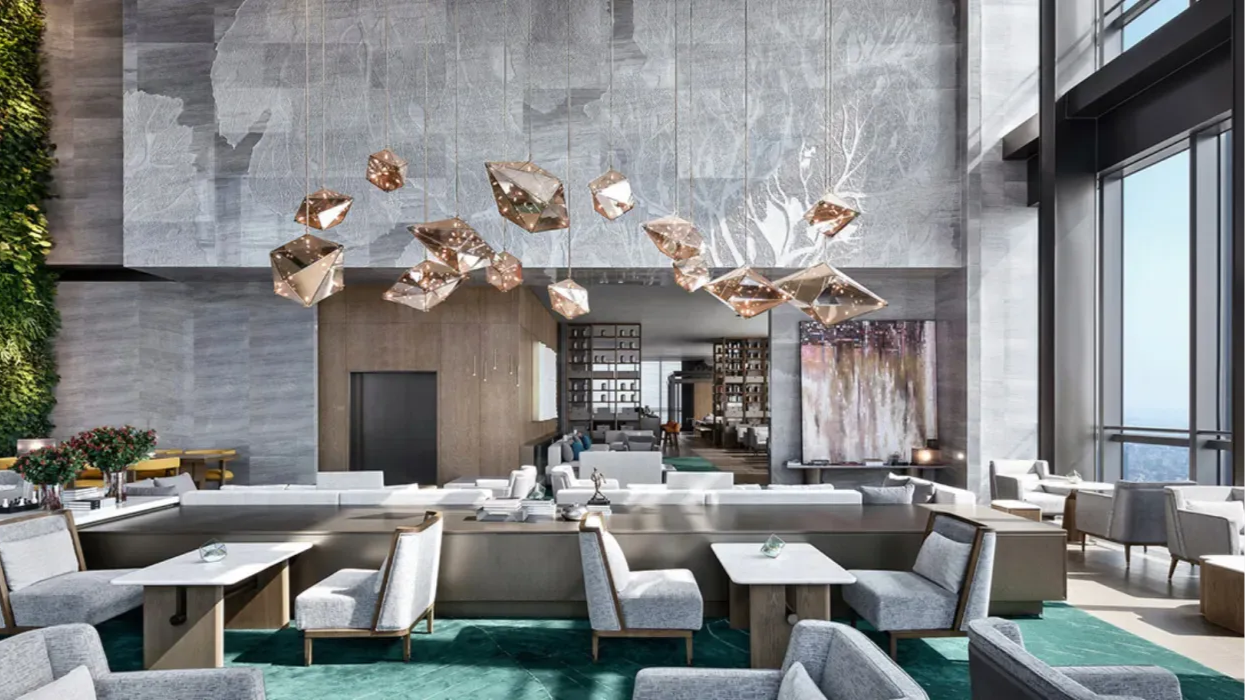
How Furniture Connects Customer Experience and Restaurant Business
Mobiliário de restaurante design should not be separated from business goals.
For restaurant owners, furniture affects at least four important areas:
Customer Retention
A comfortable waiting area helps reduce customer loss during peak hours. When customers are willing to sit and wait, the restaurant has more chances to convert them into paying diners.
Spending Potential
Comfortable dining furniture can encourage customers to stay longer and order more. This is especially important for restaurants that rely on drinks, desserts, side dishes, or premium dining experiences.
Operational Efficiency
Durable, easy-to-clean, and stable furniture can reduce maintenance pressure. For high-traffic restaurants, good furniture helps staff clean faster, move tables more easily, and maintain a better dining environment.
Brand Communication
Distinctive furniture helps customers remember the restaurant. When the furniture style is strong enough, it can become part of the restaurant’s brand identity and social media presence.
This is why choosing restaurant furniture is not only a purchasing decision. It is also a customer experience decision and a business strategy decision.
Conclusion: Restaurant Furniture Has Become Experience Design
As an experienced restaurant furniture manufacturer, the commercial furniture has evolved from simple functional equipment into a key part of experience design, according to data from our sales team.
In the waiting area, furniture helps retain customers through comfort and anticipation.
In the dining area, furniture controls the rhythm of the meal through structure, size, material, and comfort.
In the photo area, furniture encourages customers to take photos, share online, and spread the restaurant brand.
For restaurants, great restaurant furniture should not only look beautiful. It should also support operations, strengthen brand identity, and create a better customer journey.
From waiting chairs to dining tables, from booths to photo walls, every piece of furniture can participate in customer experience design.
The best restaurant furniture is not just something customers use.
It is something customers feel, remember, and share.
About Youmu Shiguang – One-stop Custom & Wholesale Restaurant Furniture Supplier
Youmu Shiguang is a one-stop custom and wholesale restaurant furniture supplier dedicated to creating exceptional dining environments for restaurants, cafés, hotels, tea houses, and commercial hospitality projects worldwide.
We go beyond furniture manufacturing by offering comprehensive services, including space planning, layout optimization, furniture style customization, and tailored design solutions. Our experienced team works closely with clients to transform ideas into functional, attractive, and brand-focused spaces that enhance both customer experience and operational efficiency.
Whether you need bulk restaurant furniture supply or a fully customized furnishing solution, Youmu Shiguang is your reliable partner from concept and design to production and delivery.